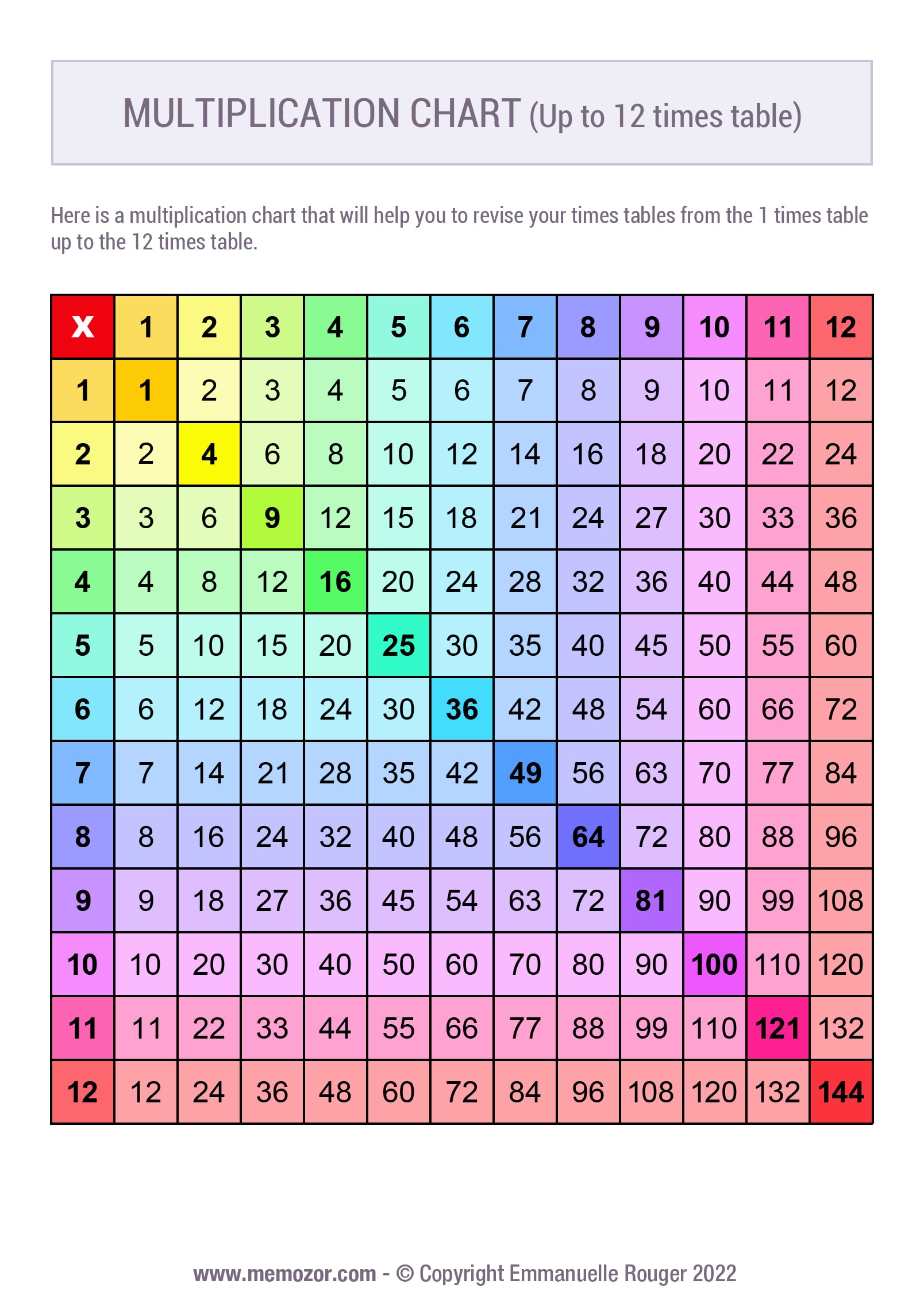
One of the most effective tools for mastering multiplication is the 1 12 multiplication chart printable. This resource provides a clear visual representation of multiplication facts from 1 to 12, making it easy for learners of all ages to reference and practice. Whether you’re a parent helping your child with homework or a teacher looking for classroom resources, a multiplication chart is an essential tool that simplifies the learning process.
Understanding the Layout of the Multiplication Chart
The 1 12 multiplication chart typically features a grid layout where numbers 1 through 12 are listed along the top as columns and along the left side as rows. Each cell within the grid represents the product of the corresponding row and column numbers. This layout allows for quick lookup and helps students make connections between numbers.
For example, if you want to find the product of 7 and 8, you would locate row 7 and column 8, where they intersect to reveal the answer—56. This straightforward design minimizes confusion and encourages learners to engage with multiplication in a structured way.
How to Use the Printable Effectively
When using the 1 12 multiplication chart printable, it’s helpful to follow a few steps to maximize its effectiveness:
- Print the Chart: Ensure you print the chart in a legible size. A standard letter size (8.5 x 11 inches) usually works best for most home printers, but you can adjust the size based on your needs.
- Familiarize with the Layout: Before diving into practice, take a moment to explore the chart. Understand where each number lies, and try to memorize some of the basic products.
- Practice Regularly: Use the chart as a reference while practicing multiplication problems. Over time, aim to recall products without looking at the chart.
- Color Coding: Consider using markers to highlight specific sections of the chart as you learn different multiplication tables. For instance, you might color all the products of 2 in blue, 3 in green, and so forth. This visual aid can enhance memory retention.
- Create Worksheets: Use the chart to create your own multiplication worksheets. You can write down problems and reference the chart to check your answers, reinforcing learning.
Adapting the Chart for Different Learning Styles
Everyone learns differently, and the 1 12 multiplication chart can be adapted to suit various learning styles. Here are some ways to customize its use:
- Visual Learners: For those who learn best through visualization, color coding and using highlighters can make the chart more engaging. You might also print additional charts in different colors to create a more dynamic learning environment.
- Kinesthetic Learners: If you or your child learns best through movement, consider using the chart as a game. For example, you can create flashcards with multiplication problems and race to find the answers on the chart.
- Auditory Learners: For those who retain information better through listening, try saying the multiplication facts out loud while pointing to the corresponding numbers on the chart. This reinforces memory through auditory feedback.
Where to Find and Download Your Chart
Finding a high-quality 1 12 multiplication chart printable is easy. Many educational websites offer free downloads, often in PDF format, which ensures that the layout remains intact when printed. Here are a few places to look:
- Educational Resource Websites: Websites like Teachers Pay Teachers or Education.com frequently provide free and paid resources, including multiplication charts.
- Printable Worksheets Sites: Websites dedicated to printable worksheets often have a section for math resources, where you can find a variety of multiplication charts.
- DIY Options: If you prefer a more personalized chart, consider creating your own using a word processor or spreadsheet software. This allows you to customize the dimensions and colors according to your preferences.
Incorporating the Chart Into Daily Learning Routines
Integrating the 1 12 multiplication chart into daily learning routines can significantly enhance multiplication skills over time. Here are some practical tips:
- Daily Practice: Spend a few minutes each day reviewing the chart. You can set a timer and challenge yourself to recite as many products as possible within that time.
- Homework Helper: Keep the chart handy during homework sessions. It’s a great way to provide immediate support without relying on calculators.
- Games and Quizzes: Turn learning into a game by quizzing each other on multiplication facts using the chart as a reference. This can be a fun way to engage with family or classmates.
- Visual Reminders: Consider hanging the chart on a wall or in a frequently used space, like a study corner or kitchen. This constant visual reminder can help reinforce learning without requiring active study.
Tips for Printing and Storing Your Chart
When it comes to printing and storing your 1 12 multiplication chart printable, here are some practical considerations:
- Paper Type: Print on standard printer paper for everyday use, but if you plan to use the chart frequently, consider printing on heavier cardstock. This will make it more durable and resistant to wear and tear.
- Laminating: If you want to extend the life of your chart, laminating it is a great option. This allows for dry-erase markers to be used, enabling you to write notes or highlight specific facts without damaging the chart.
- Storage Solutions: Store your printable in a binder or folder for easy access. You can also create a math resource section in your home where all related materials, including the multiplication chart, can be found.
The 1 12 multiplication chart printable is not just a tool; it’s a cornerstone of multiplication learning that can be adapted to various learning styles and used in numerous creative ways. A well-printed, well-used chart not only aids in learning but also builds confidence in math skills over time.