When it comes to teaching young children the fundamentals of numbers, a Printable Number Chart 1 50 is an invaluable resource. This chart provides an easy-to-read visual aid that helps children recognize and understand numbers in a structured way. Unlike other resources that may be cluttered or overwhelming, this chart presents numbers in a clear sequence, making it perfect for early learners. If you are a parent looking to support your child’s education at home or a teacher seeking effective classroom tools, this printable chart can significantly enhance number recognition skills.
Understanding the Layout of the Printable Number Chart 1 50
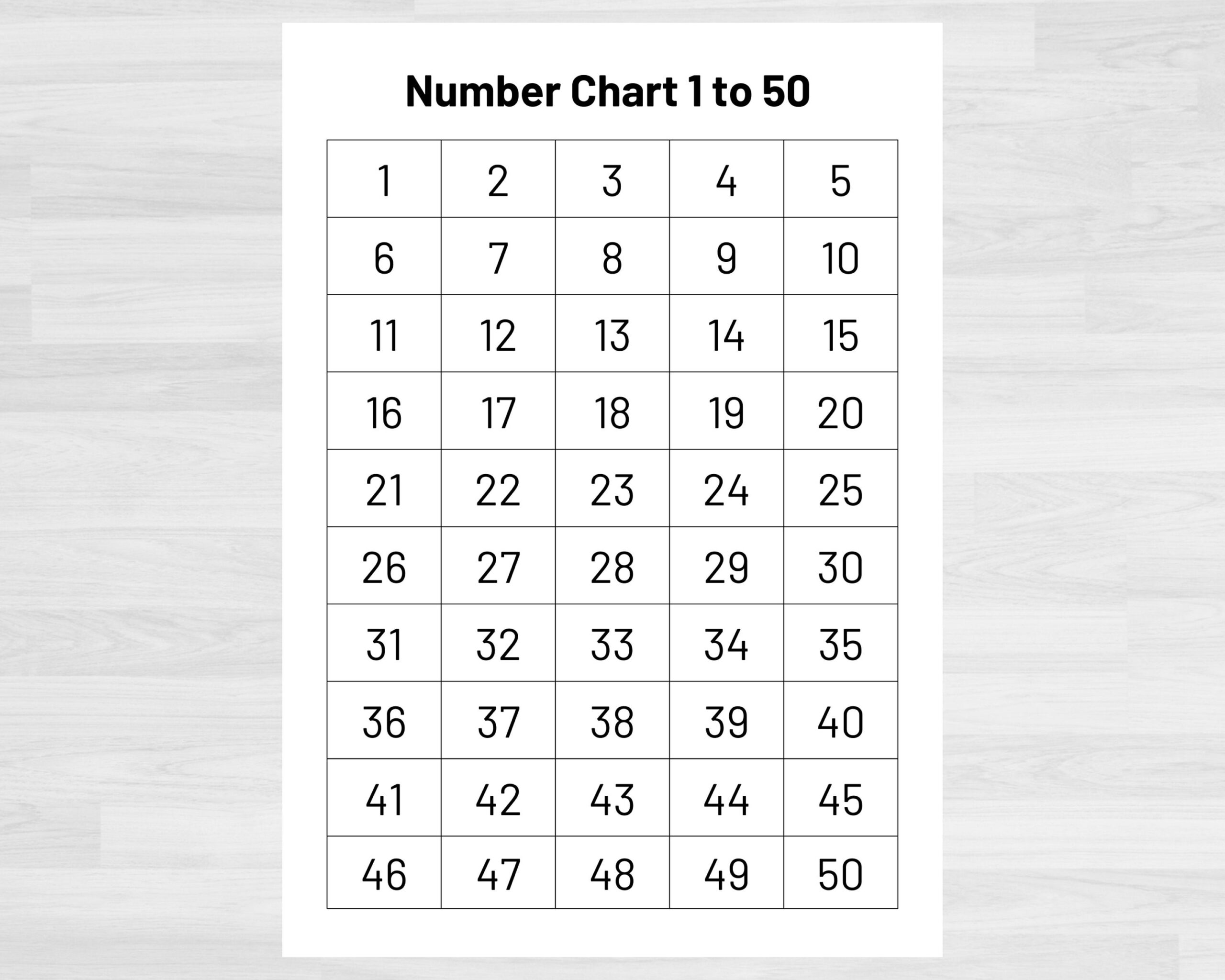
The layout of the Printable Number Chart 1 50 is designed with simplicity and clarity in mind. The chart typically features the numbers 1 through 50 arranged in a grid format, which allows for easy viewing and reference. You’ll notice that each number is clearly delineated, often in a large font that makes it easy for little eyes to focus on.
This organized structure serves multiple purposes. First, it allows children to see the progression of numbers, which is crucial for understanding counting and basic math concepts. The chart is usually printed in a portrait orientation, which is optimal for most home printers. You can easily hang it on a wall, place it on a classroom board, or keep it in a workbook for quick access.
How to Use the Printable Number Chart 1 50 Effectively
Using the Printable Number Chart 1 50 is straightforward, but there are several ways to maximize its effectiveness. Here are some practical applications:
- Daily Counting Practice: Incorporate the chart into your daily routine by counting items around the house or classroom. Point to the numbers as you count, reinforcing the connection between the numeral and the quantity.
- Number Recognition Games: Turn learning into a game by asking your child to find specific numbers on the chart. You could say, “Can you point to the number 27?” This engages them and promotes active learning.
- Color Coding and Marking: Have your child use different colored markers to highlight even numbers, odd numbers, or specific sequences. This hands-on approach can make the learning process more interactive and enjoyable.
- Math Foundations: As your child becomes familiar with numbers, you can start introducing simple math problems using the chart. For example, ask them, “What is 5 plus 3?” and have them find the answer on the chart.
Choosing the Right Paper and Printing Options
When it comes to printing your Printable Number Chart 1 50, the quality of paper and print settings can make a significant difference in its durability and usability. Here are some tips to consider:
- Paper Type: Using cardstock is a great option if you’re planning to laminate the chart for longevity. It holds up better than regular printer paper and is less likely to tear or wear out with frequent use.
- Print Settings: For the best results, adjust your printer settings to the highest quality. This will ensure that the numbers are crisp and clear. If you’re using a color printer, vibrant colors can make the chart more visually appealing to children.
- Size Matters: Most charts are designed to fit standard paper sizes such as 8.5 x 11 inches. If you want a larger version, check your printer’s capabilities. Some printers can handle larger paper sizes, which can make the numbers even easier to read from a distance.
Incorporating the Chart Into Daily Learning Routines
Integrating the Printable Number Chart 1 50 into your daily learning routines can provide consistent reinforcement of number concepts. Here are a few suggestions to seamlessly weave it into your day:
- Morning Routine: Start your day by reviewing the chart. It could be a simple “What number comes after 10?” or “How many days are in a week?” to engage your child’s mind right from the get-go.
- Snack Time Counting: Use snack time as an opportunity to count pieces of fruit or crackers, pointing to the corresponding numbers on the chart. This makes learning feel natural and relevant.
- Story Time Integration: When reading books that involve counting or numbers, refer back to the chart. This connection helps solidify what your child learns in different contexts.
Adapting the Chart for Various Learning Needs
The Printable Number Chart 1 50 can be adapted for children at different learning levels or those with special needs. Here’s how:
- Visual Learners: For children who learn best through visuals, consider adding stickers or images next to certain numbers. This can create associations that enhance memory retention.
- For Older Kids: As children advance in their number skills, you can use the chart for more complex math problems. Challenge them to find patterns or even create their own number sequences.
- For Special Needs: If you’re working with children who have learning disabilities, consider using the chart in conjunction with tactile resources. For example, you might use counters or blocks to represent the numbers physically.