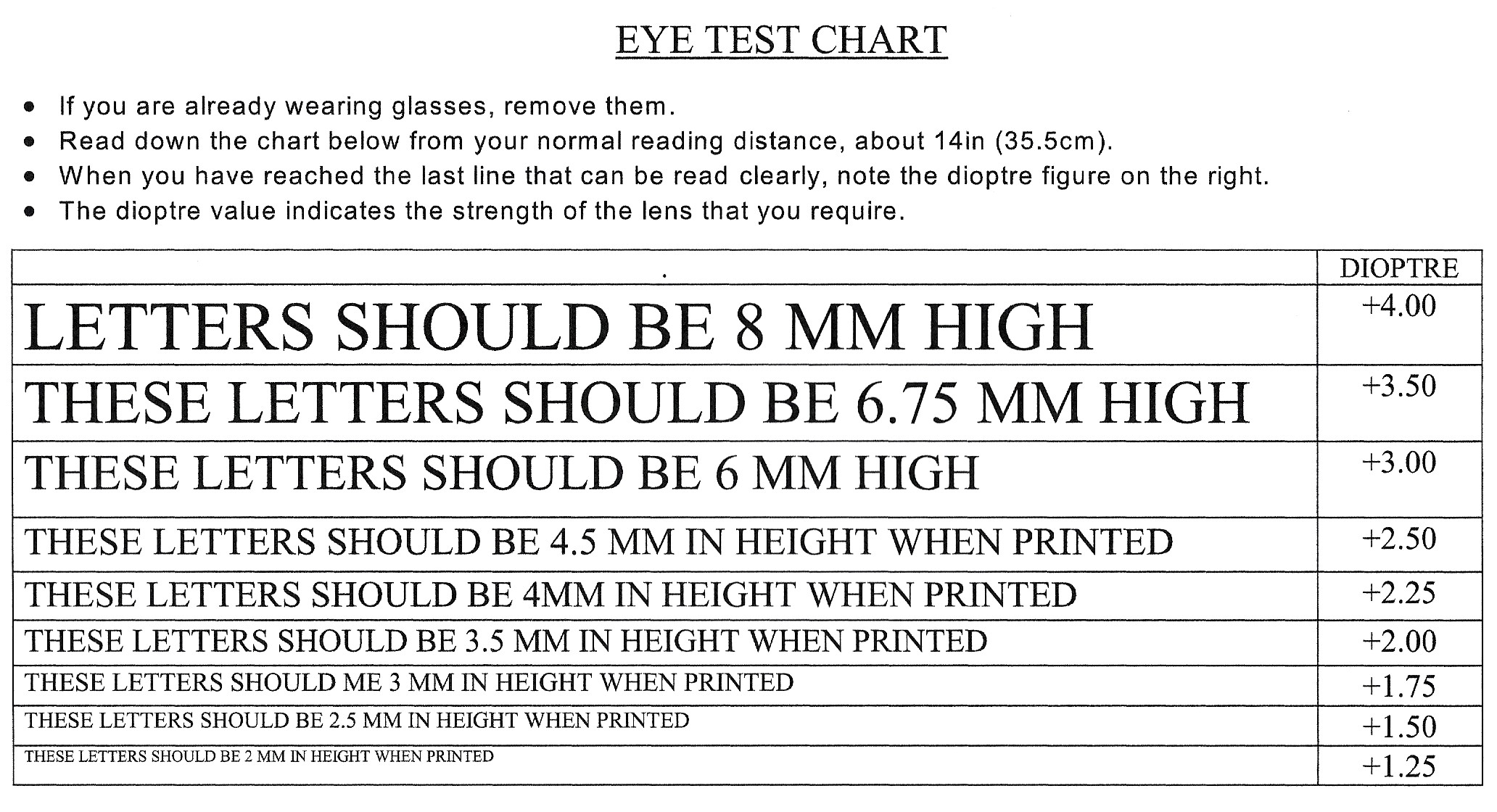
One of the best ways to check your vision at home is by using a Printable Eye Chart For Reading Glasses. These charts are designed to help you assess your eyesight and determine whether you may need reading glasses or an updated prescription. They’re easy to download, print, and use, making them a practical resource for anyone looking to keep track of their vision health.
Understanding the Layout of an Eye Chart
Typically, an eye chart consists of rows of letters that decrease in size as you move down the chart. This design helps you assess your visual acuity, commonly measured using the Snellen scale, which is the standard for eye tests.
When you’re ready to use your eye chart, you’ll want to ensure you print it at the right size. Most charts are designed for standard paper sizes like A4 or Letter (8.5 x 11 inches). The correct scaling is crucial; if the chart is too small or too large, the results won’t be accurate.
To read the chart, stand about 20 feet away if possible, or adjust your distance based on the chart’s specifications. Cover one eye and read the smallest line of text you can see clearly. Record your results — this will help you keep track of any changes in your vision over time.
How to Prepare for Using Your Eye Chart
Before you begin, it’s essential to gather a few details that will make the process smoother:
- Lighting Conditions: Ensure you’re in a well-lit area. Natural light works best, but if that’s not available, use bright, white light to avoid glare.
- Distance Measurements: Know the distance from which you’ll be reading the chart. If you’re using a printed chart, measure out 20 feet (or the recommended distance for your specific chart).
- Covering Your Eyes: Have a way to cover one eye while testing your vision, such as a blindfold or a piece of paper.
By preparing these elements in advance, you’ll be set for a successful vision check.
Choosing the Right Printable Eye Chart
There are various types of eye charts available, each serving a slightly different purpose. Here are a few types you might consider:
- Standard Snellen Eye Chart: The most common type, suitable for adults and children.
- LogMAR Chart: This is used primarily in clinical settings and is ideal for more precise measurements.
- Tumbling E Chart: Great for children or those who may not read yet, as it uses the letter “E” in different orientations.
- Picture Charts: These are designed for younger children who may not yet recognize letters.
When selecting a printable eye chart, consider your audience and the purpose of the test. For adults, a standard Snellen chart will likely suffice, while a picture chart may be better for children.
Printing Your Eye Chart
Once you’ve chosen a printable eye chart, it’s time to print it. Here are a few tips to ensure you get the best results:
- Use High-Quality Paper: Regular printer paper is typically fine, but if you want durability, consider using cardstock. This material holds up better and can be laminated for longevity.
- Check Printer Settings: Make sure your printer is set to print at 100% scale to ensure the chart maintains its intended size. Portrait layout usually works best for most home printers.
- Test Multiple Copies: If you’re testing multiple people, print several copies of the chart. This way, you can avoid wear and tear on one copy and have backups if needed.
Tracking Your Vision Progress
Using a Printable Eye Chart For Reading Glasses is not just about a one-time test; it’s also about tracking your vision over time. Here’s how to do it effectively:
- Record Results: After each test, write down the smallest line you could read clearly for both eyes. This will help you notice any changes in your vision.
- Set a Schedule: Consider testing your vision every six months or as recommended by your eye care professional. Keeping a consistent schedule ensures you stay informed about your eye health.
- Note Any Symptoms: If you notice any difficulties or symptoms (like headaches or eye strain), make a note of these as well. This information can be helpful when discussing your vision with a healthcare provider.
By keeping a log of your eye tests, you can better understand your vision trends and provide useful information to your eye doctor during your next visit.
Common Mistakes to Avoid
When using a printable eye chart, here are a few mistakes to watch out for:
- Incorrect Distance: Standing too close or too far from the chart can lead to inaccurate results. Always measure out the proper distance.
- Poor Lighting: Dim lighting can affect your ability to see the letters clearly. Ensure that the area is well-lit.
- Not Covering Your Eye Properly: If you’re not covering one eye completely, it can lead to misleading results. Make sure the covered eye is fully obstructed during the test.
Being aware of these common pitfalls can help you achieve more accurate results and maintain a better understanding of your vision health.