Managing household chores can often feel overwhelming, especially when you have kids to guide and tasks to track. A generic chore list might help, but it typically lacks the visual appeal and structured approach that keeps everyone engaged. That’s where a Free Printable Weekly Chore Chart comes in handy. This resource not only organizes tasks but also motivates kids to contribute, making chores feel less like a punishment and more like a shared responsibility.
Why Use a Chore Chart?
Chore charts serve a dual purpose: they provide structure and promote accountability. When you have a visual representation of tasks, it’s easier for everyone to understand their responsibilities. A well-designed chore chart can also reduce arguments about who should do what and when.
Having a chore chart printed and displayed prominently in your home—like on the fridge or in the mudroom—can remind everyone of their duties. Plus, kids often love the idea of checking off tasks, which can make the experience more rewarding for them. This sense of accomplishment not only helps them learn responsibility but also fosters a sense of teamwork within the family.
Features of the Free Printable Weekly Chore Chart
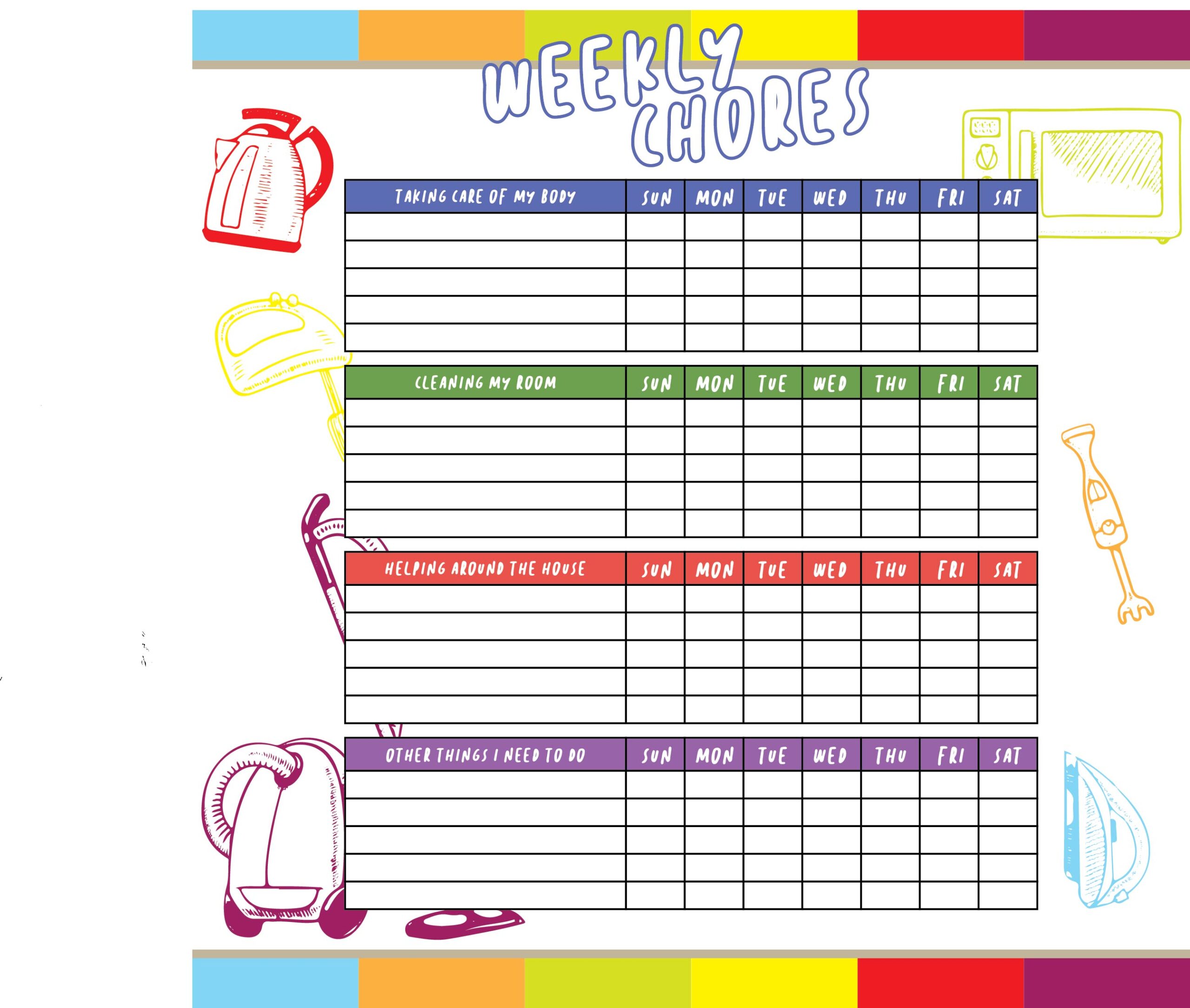
The Free Printable Weekly Chore Chart typically includes several key features that make it user-friendly and effective:
- Days of the Week: Clearly marked columns for each day allow for easy tracking of daily responsibilities.
- Task Categories: Sections for different tasks—like cleaning, homework, and chores—make it easier for kids to know what’s expected of them.
- Check Boxes: Kids can check off completed tasks, which adds an element of fun and accomplishment.
- Space for Names: You can customize each chart for your children, making them feel more ownership over their responsibilities.
How to Use the Chore Chart Effectively
To get the most out of your Free Printable Weekly Chore Chart, follow these practical steps to integrate it into your family routine.
1. Customize the Chart
Once you download the chart, take a moment to customize it. Add your children’s names and adjust the tasks according to their age and capabilities. For younger kids, you might include simple tasks like “Make Bed” or “Feed Pets.” For older kids, you can add more complex responsibilities like “Clean Bathroom” or “Do Laundry.”
2. Print and Laminate
For durability, consider printing the chart on cardstock and laminating it. This way, you can use dry-erase markers to check off tasks each week, allowing for easy reuse. Lamination also protects against spills or accidental tears, keeping the chart looking fresh.
3. Choose a Prime Location
Think about where you spend most of your time and where it would be easiest for everyone to see the chart. The refrigerator is a popular choice since it’s a central hub in many homes. Alternatively, a bulletin board in the mudroom could serve as a great spot, especially if you have kids coming in and out frequently.
4. Set Weekly Family Meetings
Once the chart is in place, hold a family meeting each week to discuss the tasks. This allows everyone to have a say in what they’re responsible for, and it gives you a chance to address any concerns or challenges. Encourage your kids to express which tasks they enjoy and which ones they find challenging. This feedback can help you adjust the chart as needed.
5. Reward Completed Tasks
To motivate your kids, establish a reward system for completed tasks. This could be a sticker chart where they earn stickers for each task completed, or a family outing after a week of successful chore management. Finding ways to celebrate their efforts reinforces the importance of teamwork and responsibility.
Adapting the Chart for Different Ages
One of the fantastic aspects of a Free Printable Weekly Chore Chart is its adaptability for different age groups. Here’s how you can modify it based on your children’s ages:
Toddlers (Ages 2-4)
At this age, tasks should be simple and visual. Use pictures alongside words for tasks like “Pick Up Toys” or “Help Set the Table.” Make it colorful and engaging to hold their attention.
Preschoolers (Ages 4-5)
Preschoolers can handle slightly more responsibility. Their chart could include tasks like “Put Clothes in Hamper” or “Help with Dusting.” Keep instructions clear and simple.
Elementary School Kids (Ages 6-12)
Kids in this age group can manage a wider range of chores. You can assign tasks like “Empty the Dishwasher” or “Sweep the Floor.” Encourage them to take pride in their work, and consider allowing them to choose tasks they want to tackle from a list.
Teenagers (Ages 13 and Up)
Teenagers should be treated more like adults. Their chore chart can include tasks like “Clean Your Bathroom” or “Prepare Dinner Once a Week.” At this stage, it’s essential to allow them a sense of independence and ownership over their responsibilities.
Tips for Making Chore Charts More Engaging
If you notice that your kids are losing interest in their chore chart, here are some quick tips to keep them engaged:
- Incorporate Themes: Occasionally change up the tasks or the chart’s design based on seasons or holidays. A Halloween-themed chart can add excitement.
- Use Color Coding: Assign colors to different task categories. This visual aid can make the chart more appealing and easier to read.
- Daily or Weekly Challenges: Introduce friendly competitions, like who can complete their chores in the shortest time or who can earn the most stickers in a week.
Troubleshooting Common Chore Chart Issues
Even with the best intentions, challenges may arise when using a chore chart. Here are some common issues and how to address them:
Lack of Motivation
If your kids aren’t motivated to complete their chores, consider revisiting the reward system. Make sure the rewards are enticing enough to encourage them to engage. Sometimes, a simple reward like a movie night can do wonders.
Confusion About Tasks
If your children are confused about their responsibilities, take time to review the chart together. Ensure they understand what’s expected and feel free to adjust tasks as necessary.
Arguments Over Responsibilities
If disputes arise about who should do what, remind everyone that the chart is a tool for cooperation. Encourage kids to negotiate and swap chores if they prefer a different task for the week.