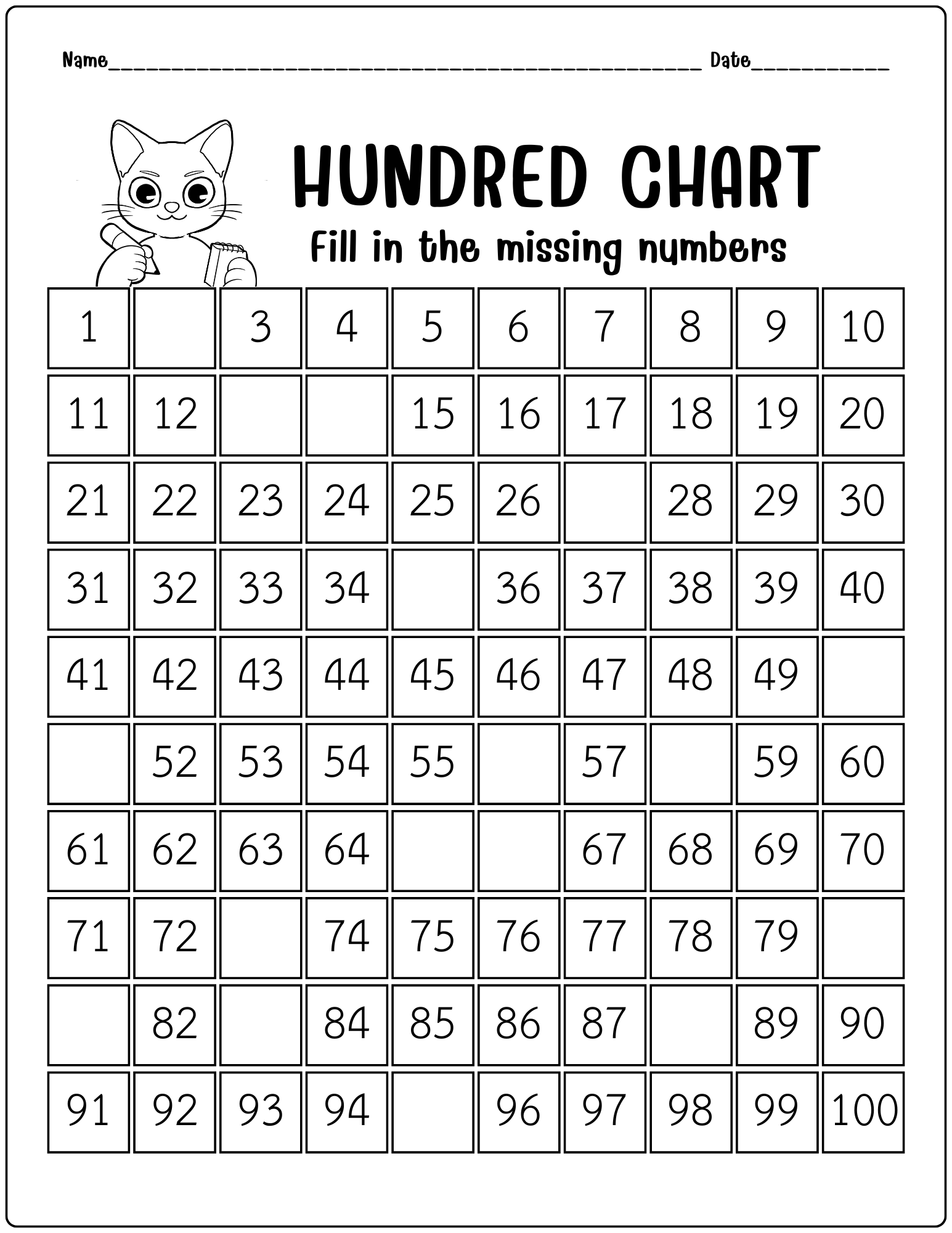
Using a Fill In Hundreds Chart Printable can significantly enhance your child’s understanding of numbers and basic math concepts. This resource is a fantastic tool for parents looking to support their children’s learning at home. It provides a visual representation of numbers 1 through 100, helping kids grasp the concept of counting, addition, and patterns. In this article, we’ll explore how to use this printable effectively and what you need to know before downloading and printing.
Understanding the Fill In Hundreds Chart
A Fill In Hundreds Chart is a grid that displays numbers from 1 to 100 in a structured format. Typically, it consists of ten rows and ten columns, allowing children to see the relationships between numbers. For example, you can demonstrate how 10 + 1 equals 11 by showing that 11 is directly below 10 in the grid.
How to Read the Chart
To read the chart, you’ll start at the top left corner, which usually contains the number 1. As you move across each row from left to right, the numbers increase sequentially. When you reach the end of a row, you drop down to the beginning of the next row. This layout helps children visualize the flow of numbers and understand basic arithmetic concepts.
Downloading and Printing the Chart
When you’re ready to get started, downloading your Fill In Hundreds Chart Printable is simple. Here are a few steps to follow:
- Select a Format: Most printables are available in PDF format, which is ideal because it preserves the layout. Make sure to choose a version that meets your needs.
- Printer Settings: Before printing, adjust your printer settings. If you have a choice, print on standard letter-sized paper (8.5 x 11 inches) for the best fit. Using portrait orientation typically works best for this type of resource.
- Paper Quality: Consider using heavier paper or cardstock if you want the chart to be durable, especially if your child will be using markers or coloring supplies on it.
Preparing to Use the Chart
Before diving into activities with your child, it’s helpful to prepare. Here are some tips on what information to have ready:
- Writing Tools: Gather colored pencils, markers, or crayons. Using different colors can make the activity more engaging for your child.
- Example Numbers: It can be beneficial to have a few example numbers in mind that you want your child to fill in first. Starting with easy numbers like 1, 5, and 10 can help build confidence.
- Understanding Patterns: Discuss with your child what patterns they notice as they fill in the chart. For example, ask them to look for all the numbers that end in 0 or 5.
Engaging Activities With the Chart
Using the Fill In Hundreds Chart Printable can be fun and educational. Here are some engaging activities you can do with your child:
Fill In the Blanks
Start with a partially filled chart and ask your child to fill in the missing numbers. This exercise can help reinforce their counting skills and number recognition.
Color Coding
Assign certain colors to specific groups of numbers. For example, you can have all even numbers colored in blue and odd numbers in red. This visual distinction helps children understand concepts of even and odd numbers.
Addition and Subtraction Practice
Use the chart to practice basic addition and subtraction. For instance, you could ask your child to add 2 to a number and then find the result on the chart. This helps them connect abstract math operations with visual representations.
Where to Use the Chart
You can implement the Fill In Hundreds Chart Printable in various settings:
- At Home: Use it during homework time or as a fun activity on weekends.
- In Class: Teachers can use this resource for group activities or individual practice during math lessons.
- On the Go: If you’re traveling, print a few copies to keep your child engaged with educational activities while away from home.
Tips for Effective Use
To maximize the benefits of the Fill In Hundreds Chart Printable, consider these practical tips:
- Daily Practice: Incorporate short, daily sessions using the chart. Consistency helps reinforce learning.
- Encourage Independence: Allow your child to fill in the chart on their own initially; offer help only when necessary. This builds confidence and independence.
- Discuss Mistakes: If your child makes mistakes, discuss them together. This can be a great learning opportunity to reinforce concepts.