Understanding measurements is essential in our daily lives, If you are cooking, crafting, or working on home projects. A Free Printable Metric Conversion Chart can be a handy tool to have on hand, helping you quickly convert between metric and imperial units without needing to pull out your phone or calculator. Let’s explore the various aspects of this printable resource and how to best utilize it in your everyday tasks.
What is a Metric Conversion Chart?
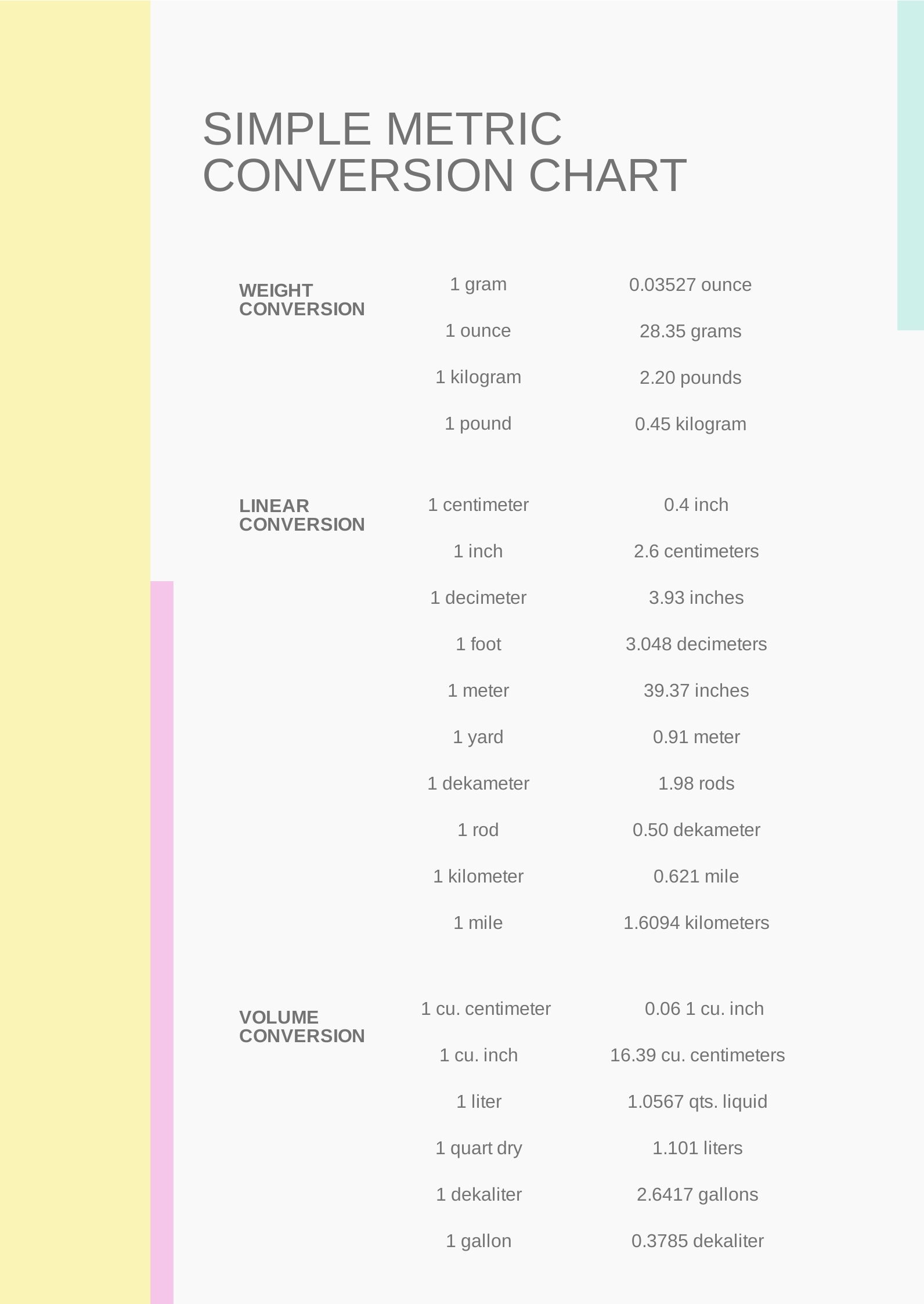
A metric conversion chart is a reference tool that shows the relationships between different units of measurement within the metric system (like meters, liters, and grams) and between metric and imperial units (like inches, gallons, and pounds). The chart typically lists conversions for length, volume, weight, and temperature, allowing for quick and easy reference.
The layout of a metric conversion chart is generally organized into sections, each dedicated to a specific type of measurement. For example, you might see one column for metric units and another for their imperial counterparts. This format makes it easy to find the conversion you need at a glance, saving you time and reducing the chances of error.
Key Sections in the Free Printable Metric Conversion Chart
When you download your Free Printable Metric Conversion Chart, you’ll notice several key sections. Each section is designed to help you quickly locate the information you need. Here’s a breakdown of what to expect in each part of the chart:
Length Conversions
This section provides conversions for various lengths, such as centimeters to inches, meters to feet, and kilometers to miles. You’ll find:
- Centimeters to Inches: Easy conversions to help with everyday tasks like measuring fabric or furniture.
- Meters to Feet: Useful for construction projects where imperial measurements are often preferred.
- Kilometers to Miles: Handy for travel planning, especially if you’re navigating in a different country.
Volume Conversions
Volume conversions are crucial for cooking and baking, where accuracy can make or break a recipe. This part of the chart includes:
- Milliliters to Ounces: Perfect for measuring liquids in recipes.
- Liters to Gallons: Helpful for bulk purchasing and storage solutions.
Weight Conversions
If you’re tracking nutrition or working on health goals, weight conversions are essential. In this section, you’ll find:
- Grams to Ounces: Useful for food labels and portion control.
- Kilograms to Pounds: Commonly used in fitness and weight management.
Temperature Conversions
Temperature can often be a tricky conversion, especially when dealing with cooking or scientific experiments. This section typically covers:
- Celsius to Fahrenheit: Vital for recipes and understanding weather reports in various countries.
How to Use the Free Printable Metric Conversion Chart
Using the Free Printable Metric Conversion Chart is straightforward, but there are some practical tips to maximize its effectiveness:
- Keep it Accessible: Print the chart and place it in a visible location in your kitchen, workspace, or study area. Having it handy means you won’t waste time searching for conversions when you need them.
- Familiarize Yourself with the Layout: Before you find yourself in a situation where you need to use the chart, take a moment to review its structure. Knowing where to look for specific conversions can save you time.
- Practice Common Conversions: If you frequently use certain conversions, try memorizing them. For example, knowing that 1 liter is approximately 0.26 gallons can speed things up when you’re cooking or filling up containers.
- Use It for DIY Projects: If you’re into home improvement or crafting, the metric conversion chart can be a lifesaver. Use it when measuring materials to ensure you buy the correct amounts.
Best Practices for Printing Your Chart
When you’re ready to print your Free Printable Metric Conversion Chart, there are a few considerations to make the most of your resource:
- Paper Type: Using standard printer paper is fine, but if you want durability, consider printing on cardstock. It holds up better and is less likely to tear or crumple.
- Orientation: Most charts are designed to print in landscape orientation, which gives you more space to display the information clearly. Check your printer settings to ensure the chart prints correctly.
- Size: Standard letter size (8.5″ x 11″) is typical, but if you want a larger version for easier reading, consider scaling up when printing. Just make sure that the text remains legible.
- Laminating: If you foresee frequent use, laminating the chart can protect it from spills and wear. This is especially useful in kitchens or workshops where messes can happen.
Incorporating the Chart Into Your Routine
Integrating the Free Printable Metric Conversion Chart into your daily routines can enhance your efficiency. Here are some ideas on how to incorporate it seamlessly:
- Cooking and Baking: Keep the chart near your cooking area. Use it to convert measurements while preparing meals, which can help you experiment with international recipes.
- Home Projects: If you’re working on DIY projects, refer to the chart for precise measurements. This can be particularly helpful when dealing with materials sold in metric units.
- Educational Use: Parents and teachers can use the chart to help students understand metric conversions better. It’s a great visual aid for lessons in mathematics and science.
- Travel Planning: If you’re planning a trip abroad, familiarize yourself with the conversions you might need. Having the chart handy can help you navigate distances and fuel measurements in different countries.