Organizing a home library or classroom can feel overwhelming, especially with all the different subjects and genres available. That’s where a Free Printable Dewey Decimal System Chart comes in handy! This chart can simplify the process of categorizing books, making it easier to find and shelve them correctly. In this article, I’ll guide you through the steps to effectively use this resource, ensuring your books are well-organized and easy to access.
Understanding the Dewey Decimal System
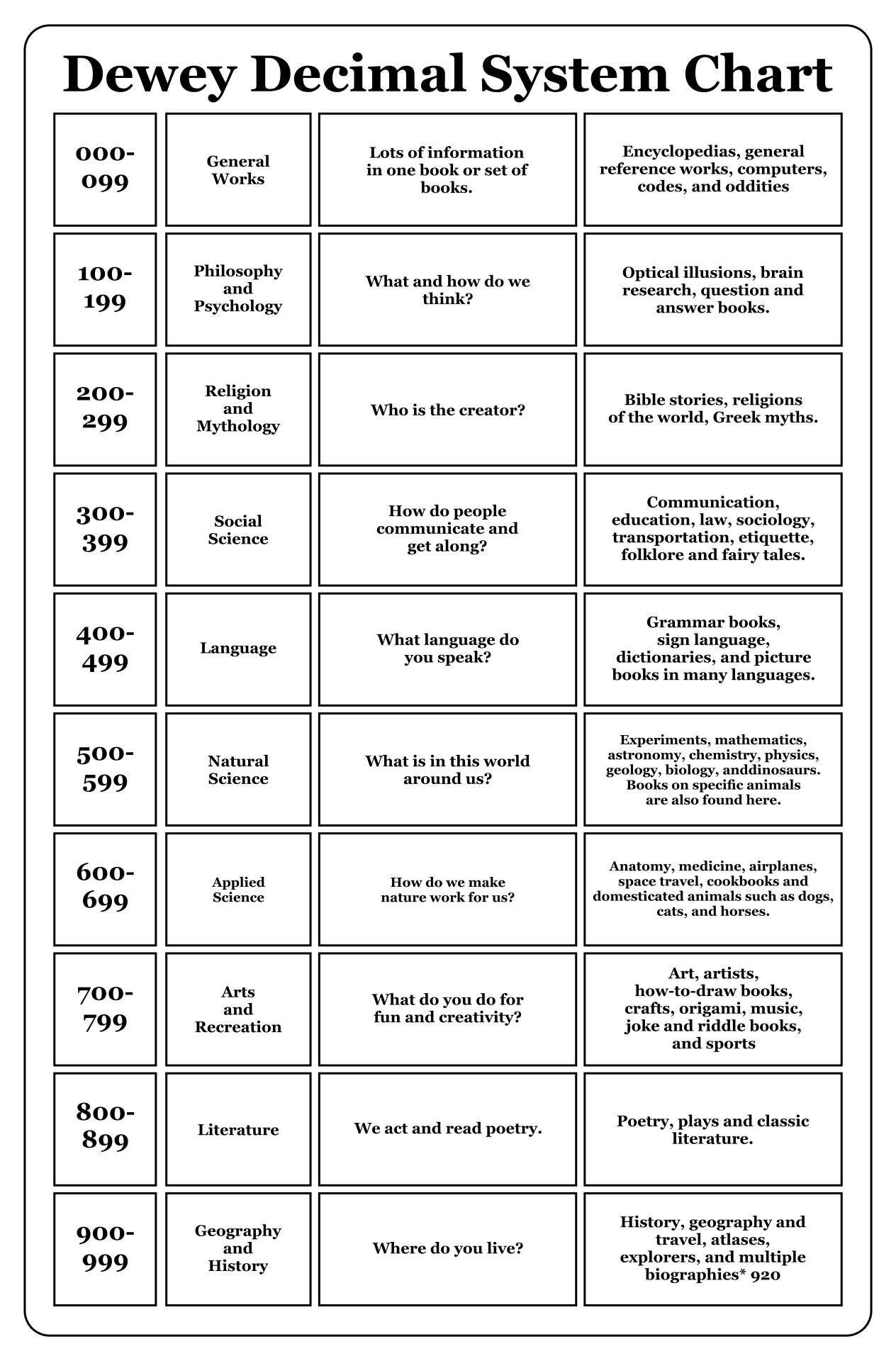
The Dewey Decimal System is a library classification system developed by Melvil Dewey in 1876. It organizes books into ten main classes, each represented by a three-digit number. Here’s a brief overview of the main classes:
- 000 – Generalities
- 100 – Philosophy and Psychology
- 200 – Religion
- 300 – Social Sciences
- 400 – Language
- 500 – Science
- 600 – Technology
- 700 – Arts
- 800 – Literature
- 900 – History and Geography
Each of these classes can be further divided into more specific categories, allowing for detailed classification of books. Understanding this structure is crucial before you begin using your Free Printable Dewey Decimal System Chart.
Downloading Your Free Printable Dewey Decimal System Chart
Before you can get started, you’ll need to download the chart. Here’s how:
- Locate the chart: Visit a reliable printable-resource website that offers the Free Printable Dewey Decimal System Chart.
- Select the format: Choose the format that works best for you. PDF is typically preferred because it maintains the formatting and layout.
- Download the file: Click the download button. Ensure that your device has enough storage space for the file.
- Open the file: Once downloaded, open the file to check that it is formatted correctly and all information is visible.
Having the chart in hand will make organizing books much more manageable.
Printing the Chart
Now that you have your chart downloaded, it’s time to print it out. Here are some tips to ensure the best results:
- Choose the right paper: Standard printer paper works fine, but if you want a more durable option, consider using cardstock. It holds up better, especially if you plan to use the chart frequently or display it in a busy area.
- Check your printer settings: Ensure your printer is set to the correct paper size (usually 8.5 x 11 inches for standard printouts) and that the quality settings are adjusted for clarity.
- Print a test page: Before printing the full chart, print a test page to check alignment and color quality.
- Print the chart: Once you’re satisfied with your test print, go ahead and print the full chart.
Having a physical copy will help you easily refer to it while organizing your books.
Setting Up Your Library
With your Free Printable Dewey Decimal System Chart printed, you’re ready to organize your library. Here’s a step-by-step guide on how to set it up:
- Gather all your books: Collect all the books you want to organize. This includes picture books, chapter books, reference materials, and any other reading material you have.
- Sort by category: Begin by sorting your books into the ten main classes of the Dewey Decimal System. This initial sorting will make the next steps easier.
- Use the chart to assign numbers: Refer to your chart as you decide on the specific Dewey numbers for each book. For example, if you have a book on marine biology, it would fall under the 500s (Science).
- Label your shelves: Once you’ve assigned numbers, label your shelves accordingly. You can use simple tape and a marker or create more decorative labels.
- Arrange books on shelves: Start placing your books on the shelves according to their assigned Dewey numbers. Keep in mind the order of the numbers; for example, books in the 500s should come before those in the 600s.
This method will help you maintain an organized library, making it easier for your children or students to find their favorite books.
Maintaining Your Library Organization
Once your library is set up, it’s essential to maintain that organization. Here are some tips to keep everything in order:
- Regularly assess your collection: Every few months, take a moment to review your books. Remove any that are damaged or no longer needed.
- Update your chart: If you add new books, refer back to your chart to assign them appropriate Dewey numbers.
- Encourage kids to return books: Teach your children or students to return books to their proper places after reading. This will help keep your library tidy.
- Use a checkout system: If you have multiple children accessing the library, consider implementing a simple checkout system to track who has borrowed which book.
With these steps, you can ensure that your library remains organized and accessible.
Expanding Your Library With New Resources
As your library grows, you might find the need to expand your resources. Here are some suggestions on how to do that effectively:
- Explore different genres: Encourage your children to explore books from various subjects within the Dewey Decimal categories. This can help foster a love for reading and learning.
- Incorporate digital resources: Consider adding e-books or audiobooks to your collection. You can create a separate section in your library for these formats, using the same Dewey classification.
- Host a book swap: Organizing a book swap with friends or family can be a fun way to refresh your library. Just remember to assign Dewey numbers to any new additions.
- Visit local libraries: Regular trips to the local library can introduce your children to new authors and genres, inspiring them to read more.
By continually expanding your collection and involving your kids in the process, you’ll create a dynamic and engaging library environment.
Using a Free Printable Dewey Decimal System Chart can significantly enhance your ability to organize and maintain your home or classroom library. By following these steps, you’ll create a space where books are easily accessible, fostering a love for reading and learning in your children. And remember, keeping your library organized isn’t just about aesthetics; it’s about creating an environment that encourages exploration and discovery.