When it comes to helping our kids grasp the concept of decimals, a Place Value Chart Printable Decimals can be an invaluable tool. These charts provide a clear structure for understanding how decimals fit into the broader picture of numbers. By organizing numbers into their respective place values, children can better comprehend the significance of each digit in a decimal, whether it’s tenths, hundredths, or thousandths. Let’s explore how to use this resource effectively, the benefits it brings, and how you can integrate it into your home learning routine.
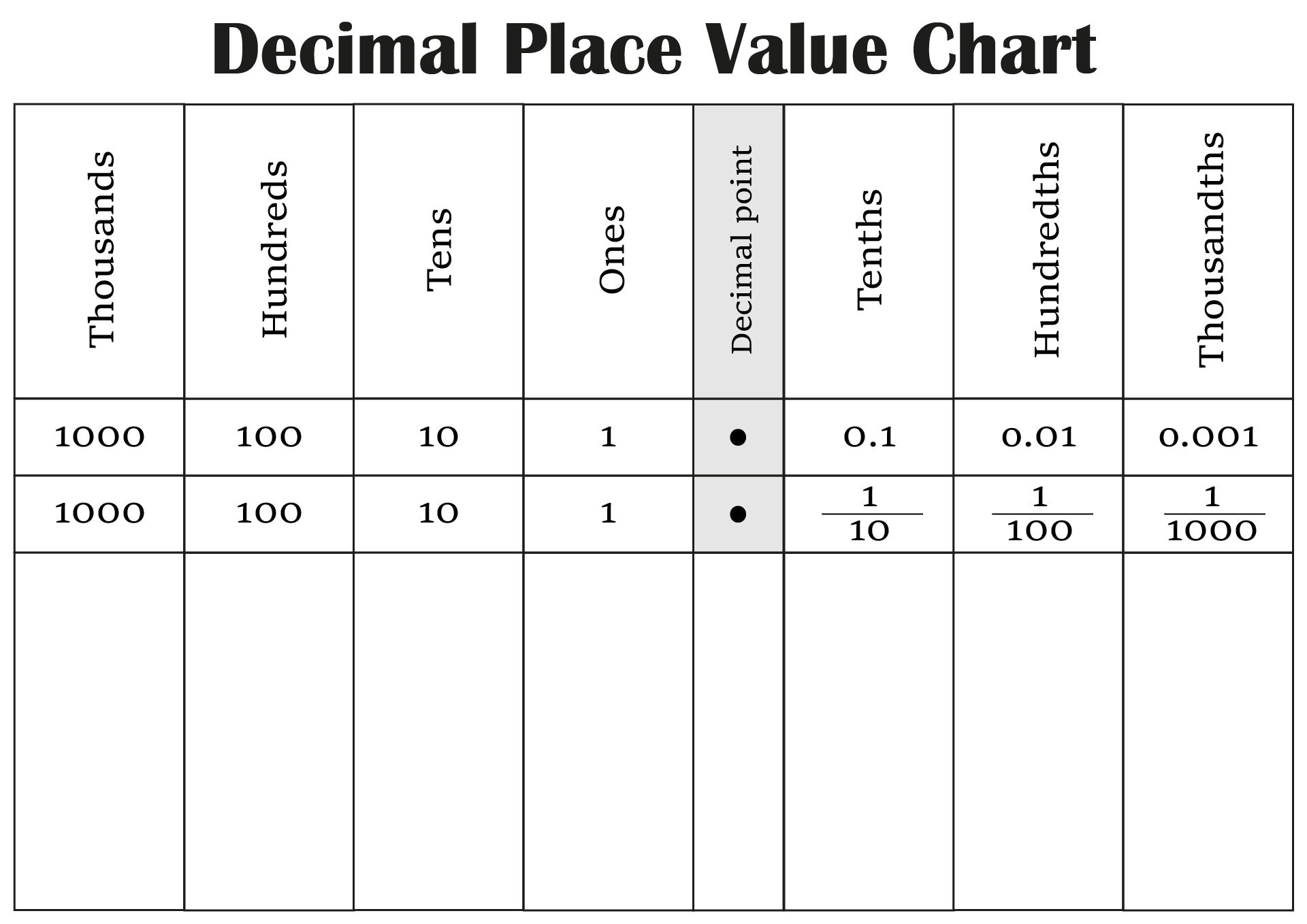
Understanding the Place Value Chart
A place value chart is designed to visually represent the value of each digit in a number based on its position. For decimals, the chart typically includes columns for whole numbers (ones, tens, hundreds) and decimal places (tenths, hundredths, thousandths).
When you look at a number like 3.47, the chart helps break it down:
- The ‘3’ is in the ‘ones’ place.
- The ‘4’ is in the ‘tenths’ place.
- The ‘7’ is in the ‘hundredths’ place.
This visual aid is essential for children, as it clarifies how each digit contributes to the whole number and its decimal parts. By using a printable chart, you can easily write in numbers, making it interactive and engaging.
How to Use the Place Value Chart Printable Decimals
To get the most out of your printable place value chart, consider the following steps:
- Download and Print: Choose a chart that suits your child’s grade level and print it out. For many home printers, a standard letter size (8.5” x 11”) works best. If you want it to last longer, consider printing it on cardstock.
- Filling it Out: Encourage your child to fill in the chart with numbers. Start with simple decimals, like 0.5 or 1.25, and gradually move on to more complex examples. This practice reinforces their understanding of place value.
- Use in Daily Math: Incorporate the chart into daily math activities. For instance, when working on math problems, have your child refer to the chart to identify the place value of different digits. This reinforces their learning and provides a quick reference.
- Games and Activities: Turn learning into a fun experience by creating games. For example, you can call out a decimal, and your child must write it on their place value chart. This not only makes learning enjoyable but also helps to solidify their understanding.
- Review Regularly: Regular review is key to mastery. Use the chart to revisit concepts periodically, ensuring your child retains what they’ve learned.
Benefits of Using a Place Value Chart
There are several advantages to incorporating a Place Value Chart Printable Decimals into your child’s learning routine:
- Visual Learning: Many children are visual learners. A chart provides a clear representation of concepts that can often be abstract, making them easier to grasp.
- Organizational Skills: Using a place value chart helps children develop organizational skills as they learn to categorize numbers based on their place values.
- Confidence Building: As your child becomes more proficient with decimals, their confidence in math will grow. This newfound confidence can translate to other areas of learning as well.
- Customizable Learning: You can easily adjust the complexity of the numbers you use with the chart based on your child’s current understanding, allowing for personalized learning.
Common Formats for Place Value Charts
When selecting a place value chart for decimals, you’ll find various formats available. Here are some common options:
- Standard Grid Layout: This layout typically includes columns for each place value, making it easy to fill in numbers. It’s straightforward and effective for most learners.
- Interactive Worksheets: Some printable resources come with spaces to write in numbers and practice problems. These can be particularly useful for hands-on learning.
- Color-Coded Charts: These charts use colors to differentiate between whole numbers and decimal places, which can help younger children visually separate the two.
- Blank Templates: If you prefer a more creative approach, blank templates allow children to draw or design their own charts, fostering engagement and creativity.
Key Considerations When Using a Printable Chart
When implementing a place value chart in your home, keep these practical considerations in mind:
- Paper Type: If you’re printing the chart for repeated use, consider using heavier paper or laminating it. This way, your child can write on it with dry-erase markers and reuse it multiple times.
- Printer Settings: Portrait layout generally works best for charts, as it allows for a taller design that accommodates all decimal places clearly.
- Age Appropriateness: Ensure that the chart you choose is suitable for your child’s current learning level. Younger children may benefit from simpler charts, while older students can handle more complex layouts.
- Integration with Curriculum: If your child is following a specific curriculum, try to align the use of the chart with what they’re learning in school. This reinforces classroom concepts and helps with homework.
Tracking Progress With the Place Value Chart
One of the most effective ways to measure your child’s understanding of decimals is through regular assessments using the place value chart. Here’s how you can track their progress:
- Set Goals: Establish clear learning objectives. For instance, your goal could be for your child to understand decimal places up to the thousandths by a certain date.
- Regular Check-Ins: Schedule weekly or bi-weekly check-ins to see how your child is progressing. Use the place value chart to create problems that assess their understanding.
- Adjust Learning as Needed: If you notice areas where your child is struggling, don’t hesitate to revisit those concepts. Use the chart to break down the information further and provide additional practice.
- Celebrate Achievements: As your child masters new concepts, take time to celebrate their progress. This positive reinforcement will encourage them to continue learning.
Incorporating a Place Value Chart Printable Decimals into your child’s learning routine can be a useful option. It not only makes decimal concepts clearer but also fosters a more engaging and interactive learning environment. By following these tips and regularly tracking progress, you’re setting your child up for success in understanding this fundamental aspect of mathematics.