The Printable Multiplication Chart 1 12 is an essential tool for anyone looking to master multiplication facts from 1 to 12. If you are a parent helping your child with homework, a teacher preparing materials for your classroom, or an adult brushing up on your math skills, this chart can make learning multiplication straightforward and effective. In this article, we’ll explore how to use this chart, its benefits, and practical tips for maximizing its effectiveness.
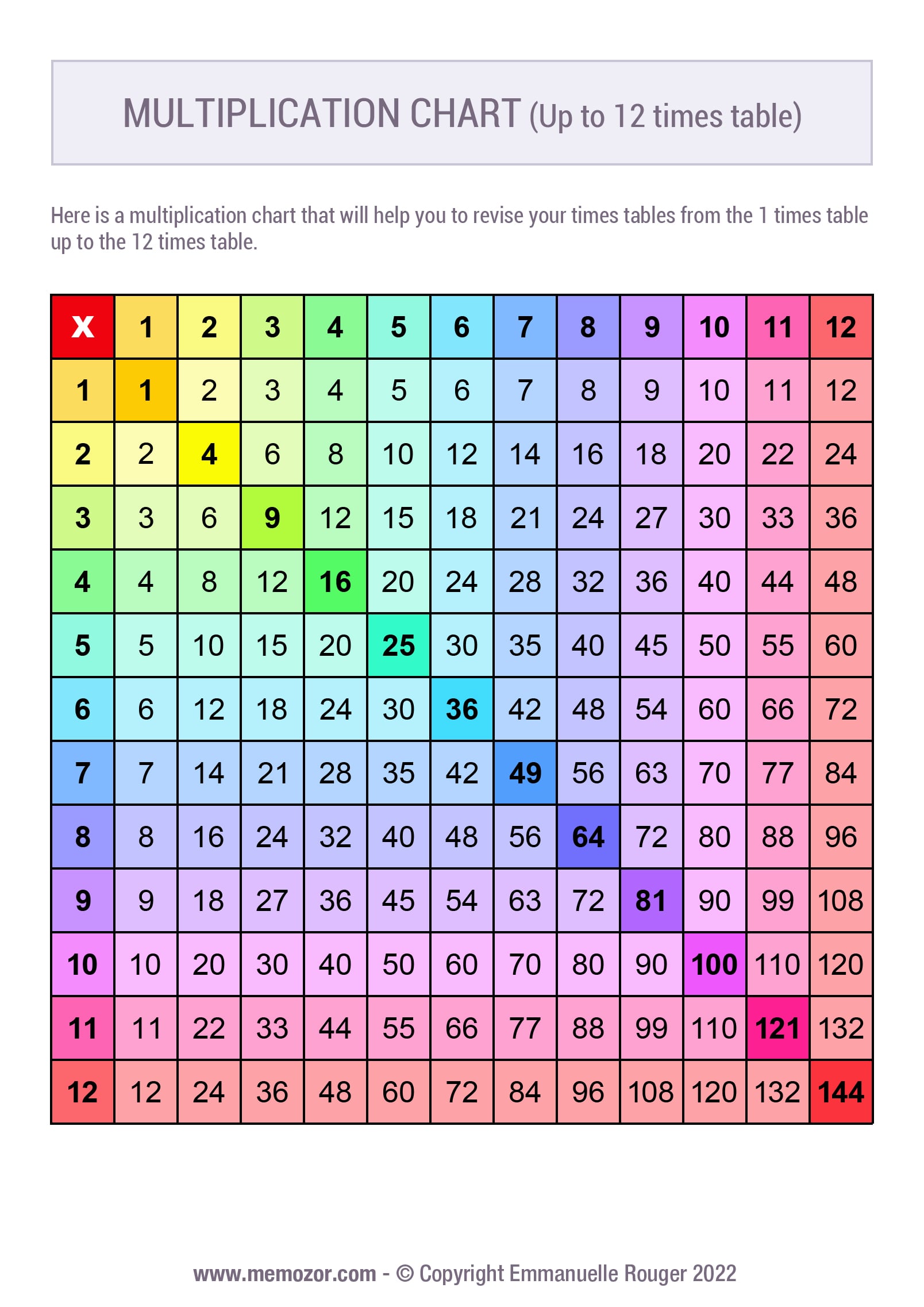
Understanding the Printable Multiplication Chart 1 12
At its core, a multiplication chart is a grid that displays the results of multiplying numbers together. The Printable Multiplication Chart 1 12 typically features numbers 1 through 12 along both the top and the side, with the intersection showing the product of the two numbers. This layout helps organize multiplication facts visually, making it easier for learners to see patterns and relationships between numbers.
You can use this chart in various ways: as a reference tool while solving problems, as a study aid for memorization, or as a teaching resource for explaining multiplication concepts to others. It’s particularly useful for elementary school students, but it can also support older learners who want to reinforce their multiplication skills.
When to Use the Printable Multiplication Chart
There are several scenarios where a Printable Multiplication Chart 1 12 can prove invaluable:
- Homework Help: If your child struggles with multiplication homework, having this chart handy can provide them with immediate assistance.
- Math Centers: For teachers, this chart can be a great addition to math centers, allowing students to work independently or in groups while practicing multiplication.
- Test Preparation: Using the chart while studying can help reinforce memory and understanding before tests.
- Everyday Life: Adults can use the chart for quick calculations when needed, like adjusting recipes or budgeting.
How to Fill in and Read the Chart
Using the Printable Multiplication Chart 1 12 is straightforward. Here’s how to fill it in and read it effectively:
- Locate the Numbers: Find the number you want to multiply on the left side and the number on the top. For example, if you want to calculate 8 x 7, find 8 on the left and 7 across the top.
- Identify the Product: Follow the row and column to their intersection. In this case, you would find the number 56 where the row for 8 meets the column for 7.
- Practice: Encourage learners to fill in the chart themselves, either by using it to find products or by filling in the blanks to reinforce their memory.
Best Practices for Using the Chart
To get the most out of your Printable Multiplication Chart 1 12, consider the following tips:
- Print Quality: Use a good quality printer to ensure the chart is clear and easy to read. A standard letter-sized paper (8.5 x 11 inches) works well for most home printers.
- Paper Type: Consider printing on cardstock for durability, especially if the chart will be used frequently. Laminating the chart can also protect it from wear and tear.
- Layout: A landscape orientation often provides more space for the numbers and makes them easier to locate, but portrait format works too depending on your preference.
- Color Coding: If you’re using the chart for teaching, consider color-coding specific rows or columns to highlight multiplication patterns (like all multiples of 5).
Incorporating the Chart Into Daily Learning
To effectively integrate the Printable Multiplication Chart into daily learning routines, try these methods:
- Daily Practice: Set aside a few minutes each day for students to practice multiplication using the chart. This can be done through verbal quizzes or written exercises.
- Games and Activities: Turn learning into a game. For example, you can challenge your child to find products as quickly as possible or create a matching game using flashcards based on the chart.
- Integration with Other Subjects: Use the multiplication chart alongside other subjects, such as science or art, where math skills apply. For instance, when discussing measurements in art projects, refer back to the chart for calculations.
Tracking Progress With the Chart
Using the Printable Multiplication Chart 1 12 effectively also involves tracking progress. Here are some strategies to consider:
- Checklists: Create a checklist of multiplication facts to focus on each week. Mark off facts as they are mastered.
- Progress Charts: Use a separate chart to track which multiplication facts have been learned and which need more practice.
- Incorporate Technology: There are several apps and online games that can complement the use of this chart. After some practice with the chart, these tools can provide interactive ways to reinforce learning.
The Printable Multiplication Chart 1 12 is more than just a reference sheet; it’s a versatile learning tool that can aid in mastering multiplication in various educational settings. By understanding how to use it, when to incorporate it, and how to track progress, you can enhance your learning experience or that of your children effectively.