When it comes to measuring heights, having a reliable and easy-to-use reference can save you time and confusion. A Free Printable Height Conversion Chart is an invaluable tool for parents, teachers, and anyone who needs to convert measurements between different units, such as inches, centimeters, and meters. This chart allows you to quickly get accurate height conversions without the hassle of doing the math yourself.
Understanding the Importance of Height Conversion
Height conversion is crucial in many situations. Parents might need to track their children’s growth accurately, especially during school check-ups or sports activities. Teachers may require height conversions for physical education classes, while health professionals need precise measurements for assessments. Understanding how to utilize a height conversion chart ensures that you can transition between different measurement systems effortlessly.
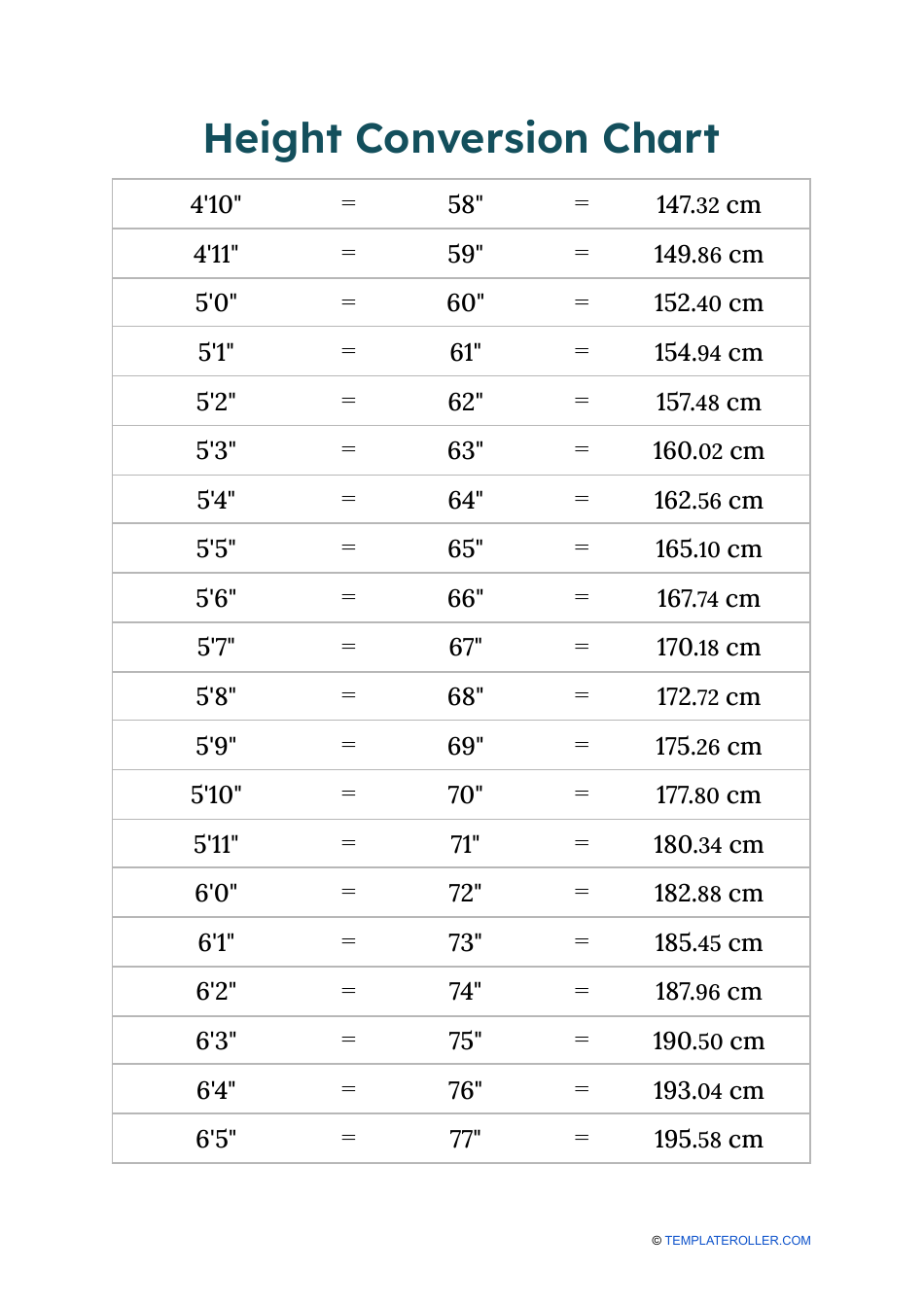
The Free Printable Height Conversion Chart typically includes common height ranges in both inches and centimeters, making it easy to find the corresponding values. Knowing how to read this chart will help you make sense of various height measurements, whether you are comparing your child’s height to a growth chart or determining whether a piece of furniture fits in a designated space.
Choosing the Right Printable Format
When you decide to use a Free Printable Height Conversion Chart, you’ll want to ensure that the format you choose suits your needs. Most printable resources come in PDF format, which is ideal for maintaining layout consistency when printed. Here are a few tips on choosing the right format:
- PDF vs. Image Files: PDFs usually avoid reformatting issues that can occur with image files. They maintain the integrity of the design, ensuring that all measurements are clearly visible and easy to read.
- Size Matters: Make sure to select a chart that fits well on standard paper sizes like A4 or letter size. This ensures that it’s easy to print and can be displayed without any awkward cropping.
- Portrait vs. Landscape: For height conversion charts, portrait layout tends to work better for most home printers, as it allows for a more straightforward presentation of height ranges.
Downloading and Printing Your Chart
Once you’ve found the perfect Free Printable Height Conversion Chart, downloading and printing it is the next step. Here’s how to do it effectively:
- Locate the Chart: Search for a reputable website that offers free printable resources. Many educational sites or parenting blogs provide these charts. Be sure to check that the chart is up to date.
- Download the File: Click on the download link. If it’s a PDF, it should open in your PDF viewer. You can also right-click the link and select “Save Link As” to save it directly to your computer.
- Open the File: Open the downloaded file to ensure it displays correctly. Check that you can read all the measurements and that nothing is cut off.
- Print Settings: Before printing, check your printer settings. Set the paper size to match your chart (A4 or letter) and ensure it’s set to “Actual Size” or “100% Scale” to avoid any resizing issues.
- Print: Once everything looks good, go ahead and hit print. If you have cardstock available, use it for better durability, especially if you plan to use the chart frequently.
Utilizing the Height Conversion Chart
Now that you have your Free Printable Height Conversion Chart ready, understanding how to use it effectively is the next step. Here’s a practical guide on how to fill it in or reference it:
Measuring Heights
- Direct Measurement: If you’re measuring someone’s height, start by using a tape measure. Record the height in inches or centimeters, whichever is more convenient for you.
- Referencing the Chart: If you have the height in one unit (e.g., inches), find that measurement on the chart. The corresponding measurement in centimeters will be right next to it. This makes it easy to convert without any calculations.
Tracking Growth
For parents tracking their children’s growth, you might want to keep a record. Here’s how to do that:
- Create a Growth Log: Next to your printed chart, keep a small notebook or a digital file where you can log heights over time. Each time you take a measurement, note the date and height in both inches and centimeters.
- Regular Updates: Consider measuring your child’s height every few months. This is especially important during growth spurts.
Digital Vs. Print Completion
When it comes to using your Free Printable Height Conversion Chart, you have the option of digital or print completion. Here’s how to decide which method suits your needs best:
- Digital Completion: If you have a fillable PDF version of the chart, you can fill in heights directly on your device. This is handy for quick updates and can be saved for future reference. You won’t have to reprint every time you need to make a change.
- Printed Completion: For those who prefer a hands-on approach, printing the chart allows for easy tracking with a pen or pencil. You can jot down notes, highlight important measurements, or even laminate it for durability.
Choosing between digital and print completion depends on your personal preference and how you plan to use the chart. If you’re likely to be updating it frequently, a digital format might save you time and resources.
Where to Use Your Height Conversion Chart
The versatility of a Free Printable Height Conversion Chart means you can use it in various settings. Here are some practical applications:
- Home Use: Keep it handy in your child’s room or near your measuring tape for quick reference. This can be especially useful during family gatherings when kids are often measured.
- School Environment: Teachers can utilize these charts during physical education classes or when documenting student heights for health assessments.
- Sports Teams: If your child is involved in sports, coaches might need to know heights for team selections or equipment sizing.
- Health Check-Ups: Having this chart ready for doctor visits can facilitate accurate communication about your child’s growth and development.