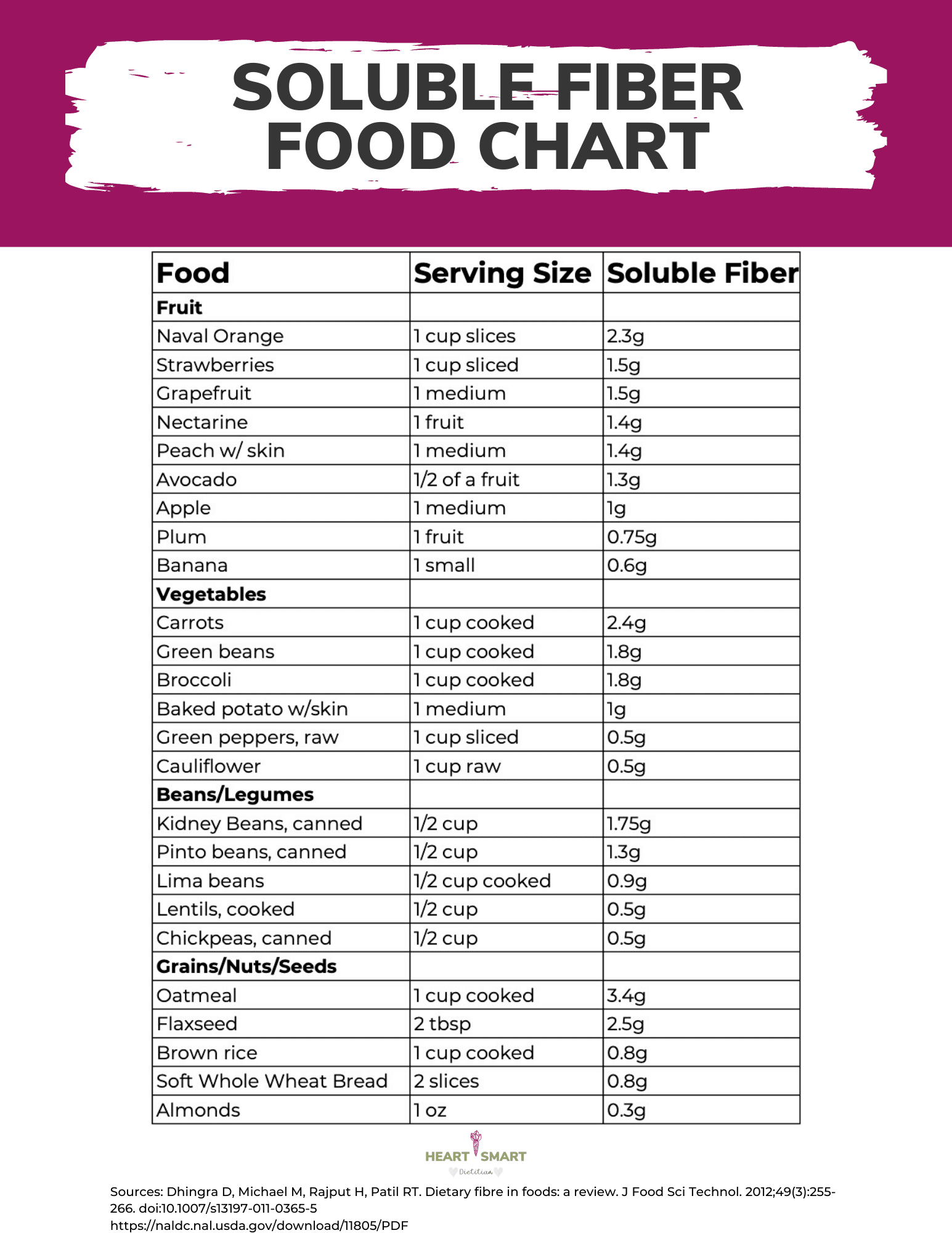
A Printable Soluble Fiber Foods Chart is an excellent tool for anyone looking to improve their diet and manage their fiber intake. This chart categorizes various foods high in soluble fiber, making it easier for you to identify and incorporate them into your meals. If you’re aiming to increase your soluble fiber consumption for better digestive health, weight management, or heart health, this resource is a must-have.
Understanding Soluble Fiber
Before diving into the specifics of the chart, let’s clarify what soluble fiber is and why it matters. Soluble fiber dissolves in water and forms a gel-like substance in the gut. It helps lower cholesterol levels, regulate blood sugar, and promote a healthy gut microbiome. Foods rich in soluble fiber include fruits, vegetables, oats, legumes, and some nuts and seeds.
What the Printable Soluble Fiber Foods Chart Includes
The Printable Soluble Fiber Foods Chart organizes various foods into categories, providing a clear view of soluble fiber sources. It typically includes:
- Fruits: Apples, bananas, oranges, and berries.
- Vegetables: Carrots, sweet potatoes, and peas.
- Grains: Oats, barley, and some whole grain products.
- Legumes: Beans, lentils, and chickpeas.
- Nuts and Seeds: Chia seeds, flaxseeds, and psyllium husk.
Each category lists the fiber content per serving, making it easy to see which foods will help you meet your daily fiber goals.
How to Use the Chart Effectively
To maximize the benefits of the Printable Soluble Fiber Foods Chart, follow these steps:
- Print It Out: Use a standard letter-size (8.5 x 11 inches) paper for easy handling. Portrait layout generally works best for readability.
- Daily Meal Planning: Refer to the chart when planning meals. Aim to include a variety of foods from each category to ensure a well-rounded intake of soluble fiber.
- Track Your Intake: After each meal, jot down what you’ve eaten. This tracking will help you visualize your fiber consumption and adjust as needed.
- Set Goals: Based on your dietary needs, set specific fiber intake goals. The general recommendation for adults is about 25-30 grams of fiber per day, with a focus on soluble fiber sources.
- Adapt Recipes: Incorporate high-soluble-fiber foods into your favorite recipes. For instance, add chia seeds to smoothies or oatmeal, or include lentils in soups and salads.
Common Mistakes to Avoid
While using the Printable Soluble Fiber Foods Chart, be mindful of these common pitfalls:
- Ignoring Serving Sizes: Always check the serving size listed next to each food item. Eating larger portions can lead to unintentional overconsumption of calories.
- Sudden Increases in Fiber Intake: If you’re not used to consuming a lot of fiber, increase your intake gradually. A sudden spike can lead to digestive discomfort.
- Neglecting Hydration: Fiber needs water to do its job effectively. Ensure you’re drinking enough fluids throughout the day, especially when increasing fiber intake.
Where to Store Your Chart
Once you’ve printed the chart, consider where you’ll keep it for quick access:
- On the Fridge: A magnetic clip can hold the chart right on your refrigerator, making it easy to reference while cooking.
- In a Planner or Binder: If you prefer a more organized approach, consider placing the chart in a meal planner or binder dedicated to health and nutrition.
- Digital Copy: If you prefer digital resources, scan the printed chart and save it on your device for quick access while grocery shopping.
Adapting the Chart for Your Needs
Feel free to modify the Printable Soluble Fiber Foods Chart to suit your dietary preferences and needs. Here are a few ideas:
- Highlight Favorite Foods: Use a highlighter to mark your favorite soluble fiber foods, making them easy to find when planning meals.
- Add Personal Notes: Write down your favorite recipes or meal combinations next to the relevant foods on the chart.
- Create a Weekly Meal Plan: Use the chart to draft a weekly meal plan, ensuring you include a variety of soluble fiber sources throughout the week.