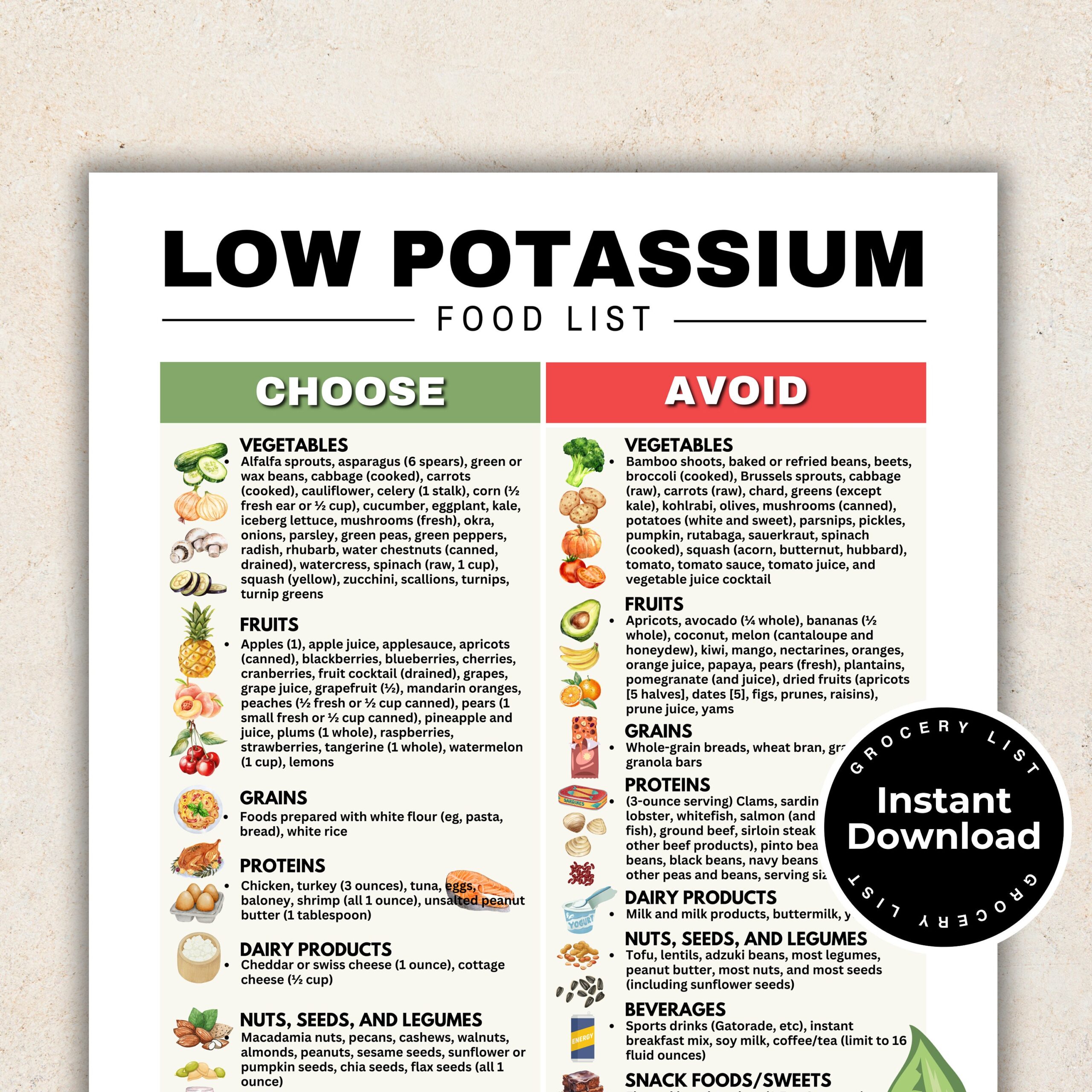
Managing dietary potassium intake is essential for many individuals, especially those with kidney issues or specific health conditions. A Printable Low Potassium Foods Chart serves as a handy resource to help you identify which foods are lower in potassium, making meal planning easier and more effective. This chart can help you track your potassium consumption and ensure you’re making healthy choices without overwhelming yourself.
Understanding Potassium and Its Importance
Potassium is a vital mineral that plays several roles in the body, including maintaining fluid balance, transmitting nerve signals, and regulating muscle contractions. However, for some individuals, particularly those with kidney disease, managing potassium intake becomes crucial. High potassium levels can lead to serious health complications, including heart problems.
By using a printable low potassium foods chart, you can easily identify foods that are safe for your diet. This chart typically categorizes foods into three groups: low, moderate, and high potassium content. Understanding these categories is essential for making informed choices about what to eat.
How to Use the Printable Low Potassium Foods Chart
When you download and print your chart, it’s helpful to have a clear plan for how to use it effectively. Here are some practical steps:
- Familiarize Yourself with the Categories: Take some time to review the chart. Understand which foods fall under the low, moderate, and high potassium categories. This knowledge will help you make quick decisions while grocery shopping or meal prepping.
- Create a Meal Plan: Use the chart to plan your meals for the week. Focus on low potassium foods and incorporate them into your diet. This not only helps with potassium management but also introduces variety into your meals.
- Track Your Intake: Keep a record of what you eat each day. By checking off foods from the chart, you can monitor your potassium levels more effectively. This tracking can also be beneficial for discussions with healthcare providers.
- Keep It Accessible: Place the printed chart in a visible spot in your kitchen or on your fridge. This way, you can reference it easily while cooking or snacking.
Key Components of the Printable Low Potassium Foods Chart
A well-designed printable low potassium foods chart typically includes several key components to enhance usability:
- Food Categories: Foods are usually divided into categories, such as fruits, vegetables, grains, proteins, and dairy. This organization allows for quick reference.
- Potassium Content: Each food item is listed along with its potassium content, often measured in milligrams. This information is crucial for understanding how much potassium you are consuming.
- Serving Sizes: Many charts will specify serving sizes, which is vital for accurate potassium measurement. Knowing how much of a food constitutes a serving can help you keep your intake within recommended limits.
- Cooking Methods: Some charts may offer tips on how to prepare certain foods to reduce potassium levels, such as soaking or leaching vegetables before cooking.
Foods to Include on Your Low Potassium Diet
Incorporating low potassium foods into your diet can be both delicious and nutritious. Here are some examples of foods that are typically low in potassium:
- Fruits: Apples, berries, grapes, and peaches.
- Vegetables: Carrots, green beans, and cabbage (avoid potatoes and tomatoes, which are higher in potassium).
- Grains: White rice, pasta, and bread (watch out for whole grains, as they often contain more potassium).
- Proteins: Eggs, chicken, and fish (red meats can be higher in potassium).
- Dairy: Cream cheese and certain types of yogurt (limit milk and cheese).
Tips for Printing and Using Your Chart
When you’re ready to print your chart, consider the following tips to ensure the best results:
- Paper Type: Use a heavier weight paper, like cardstock, if you plan to laminate it for durability. This will help the chart withstand frequent handling in the kitchen.
- Printer Settings: Print in portrait orientation for easier handling, and choose high-quality print settings to ensure the text is clear and readable.
- Size Matters: If you have limited space, consider printing the chart in a smaller size, like A5, so it’s easy to store or carry with you.
- Color Coding: If your chart is color-coded, it can make it easier to differentiate between food categories at a glance.
Incorporating the Chart Into Daily Life
Once you’ve printed your chart and set it up, integrating it into your daily routine can help you stay on track with your potassium management. Here are some practical ways to do this:
- Meal Prep: When preparing meals for the week, consult your chart to select low potassium ingredients. This can streamline your cooking process and make grocery shopping more efficient.
- Family Involvement: If you share meals with family or friends, involve them in your meal planning. Teaching them about low potassium foods can foster a supportive environment for your dietary needs.
- Cooking Together: Make cooking a fun activity by trying new low potassium recipes. Use your chart to explore new ingredients, and don’t hesitate to experiment with flavors and preparations.
Finding Additional Resources
While the Printable Low Potassium Foods Chart is a fantastic starting point, you may want to explore additional resources to enhance your understanding and management of potassium intake. Here are some suggestions:
- Dietitian Consultation: Consider consulting a registered dietitian who specializes in renal nutrition. They can offer personalized advice and help tailor your diet to your specific needs.
- Cookbooks and Websites: Look for cookbooks or online resources that focus on low potassium recipes. These can provide new ideas and help diversify your meals.
- Support Groups: Joining a support group for individuals managing similar dietary restrictions can provide encouragement and practical tips from others who understand your situation.
By utilizing these additional resources, you can deepen your understanding of low potassium diets and find new ways to enjoy your meals while managing your health.