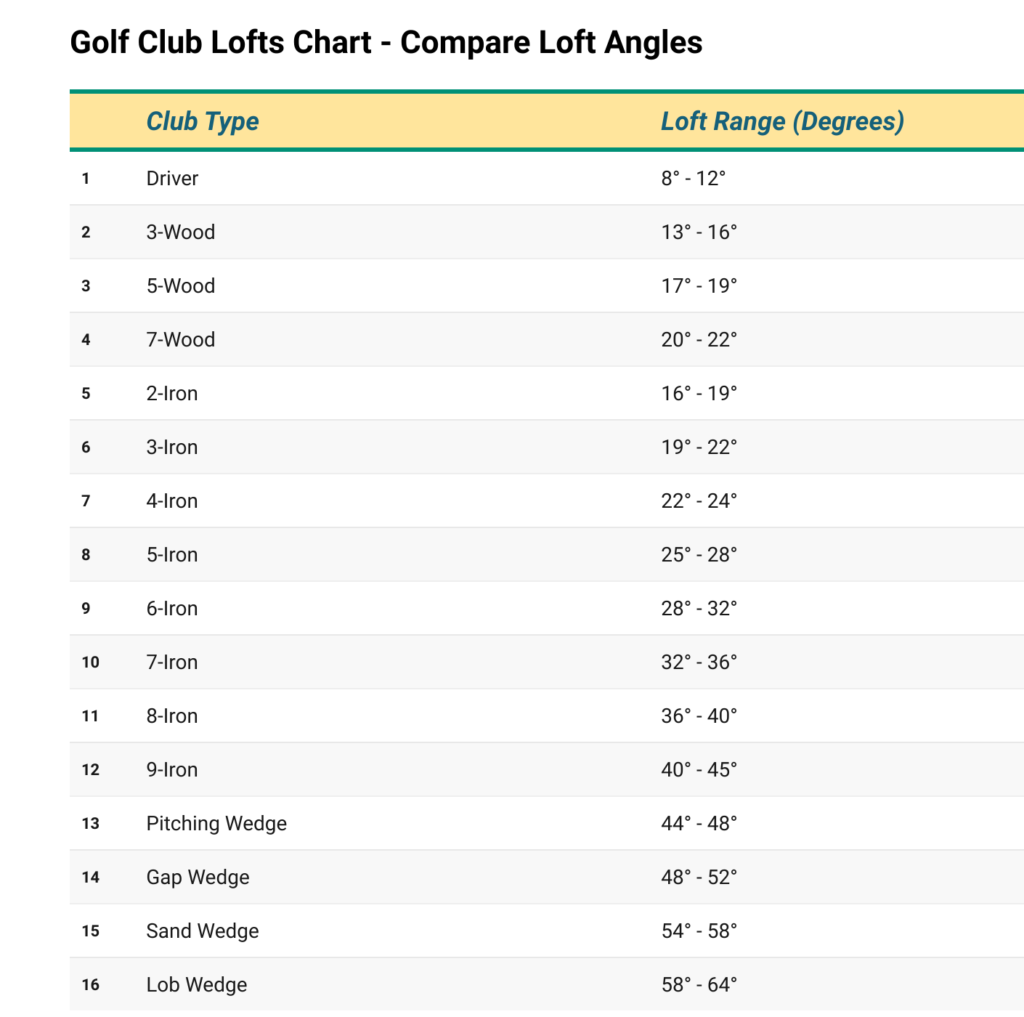
Understanding the nuances of your golf clubs can significantly impact your game. That’s where the Printable Golf Club Loft Chart comes in handy. This chart is designed to help you track the loft angles of your clubs, which is essential for making precise adjustments and improving your performance on the course. It’s a straightforward resource that can help you or your child become more knowledgeable about their golf equipment.
What Is a Golf Club Loft Chart?
A golf club loft chart is a reference tool that lists the loft angles for various golf clubs. Loft refers to the angle of the clubface relative to the ground, influencing the trajectory and distance of the ball. Knowing the loft angles of your clubs can help you select the right club for each shot, leading to better accuracy and control.
This chart typically includes information about different types of clubs, such as drivers, woods, irons, wedges, and putters. By having a printable version, you can easily keep it handy for quick reference during practice sessions or on the course.
Who Can Benefit From a Printable Golf Club Loft Chart?
Parents who are helping their children learn the game of golf or beginners looking to understand their equipment can benefit greatly from this resource. It’s not just for seasoned players; a loft chart is valuable for anyone who wants to improve their game or simply know more about their clubs.
If your child is just starting with golf, having a clear understanding of club specifications can help them make informed choices while developing their swing. For more experienced players, tracking loft changes can help refine techniques and adapt to different course conditions.
How to Use the Printable Golf Club Loft Chart
Using the Printable Golf Club Loft Chart is straightforward and can be done in a few simple steps:
- Download and Print: Start by downloading the chart from a reputable resource. Ensure that you select a format that suits your printer, typically PDF is preferred for easy printing without reformatting issues.
- Fill in Your Club Details: Once printed, write down the loft angles of each club you own. If you’re unsure of the loft, many manufacturers list this information on their websites or in product manuals.
- Track Adjustments: As you make changes to your clubs, such as adding new ones or adjusting lofts, update the chart accordingly. This will help you keep track of your equipment and make informed decisions about which clubs to use during your rounds.
- Use During Practice: Take the chart with you to the driving range or course. Refer to it when deciding which club to use for specific shots. This can help solidify your understanding of each club’s capabilities.
Common Mistakes to Avoid
When using your Printable Golf Club Loft Chart, it’s easy to overlook some key details. Here are a few common pitfalls to watch out for:
- Not Updating the Chart: If you purchase new clubs or make adjustments, ensure you update your chart. An outdated chart can lead to confusion on the course.
- Ignoring Manufacturer Specifications: Different brands may have varying loft specifications. Always refer to the manufacturer’s guidelines for the most accurate information.
- Neglecting to Practice with the Chart: It’s one thing to have the chart, but another to use it regularly. Incorporate it into your practice so you can become more familiar with your equipment.
Where to Find Your Printable Golf Club Loft Chart
You can find a Printable Golf Club Loft Chart on various printable resource websites. Make sure to choose one that offers high-quality downloads and is easy to print. Look for a layout that suits your needs; some charts are designed to be filled out by hand, while others may come pre-filled with standard loft angles.
When searching online, try using terms like “golf club loft chart PDF” or “printable golf club specifications” to locate a reliable resource. It’s also helpful to read reviews or check the website’s credibility to ensure you’re getting accurate information.
Adapting the Chart for Personal Use
Every golfer has unique preferences and needs, so feel free to adapt your Printable Golf Club Loft Chart. You might want to add columns for additional notes, such as the club’s performance in different weather conditions or specific distances achieved with each club.
Also, consider printing multiple copies if you have different sets of clubs for various types of play, such as casual rounds, competitive play, or practice sessions. Having separate charts can help you focus on the specific needs of each set.