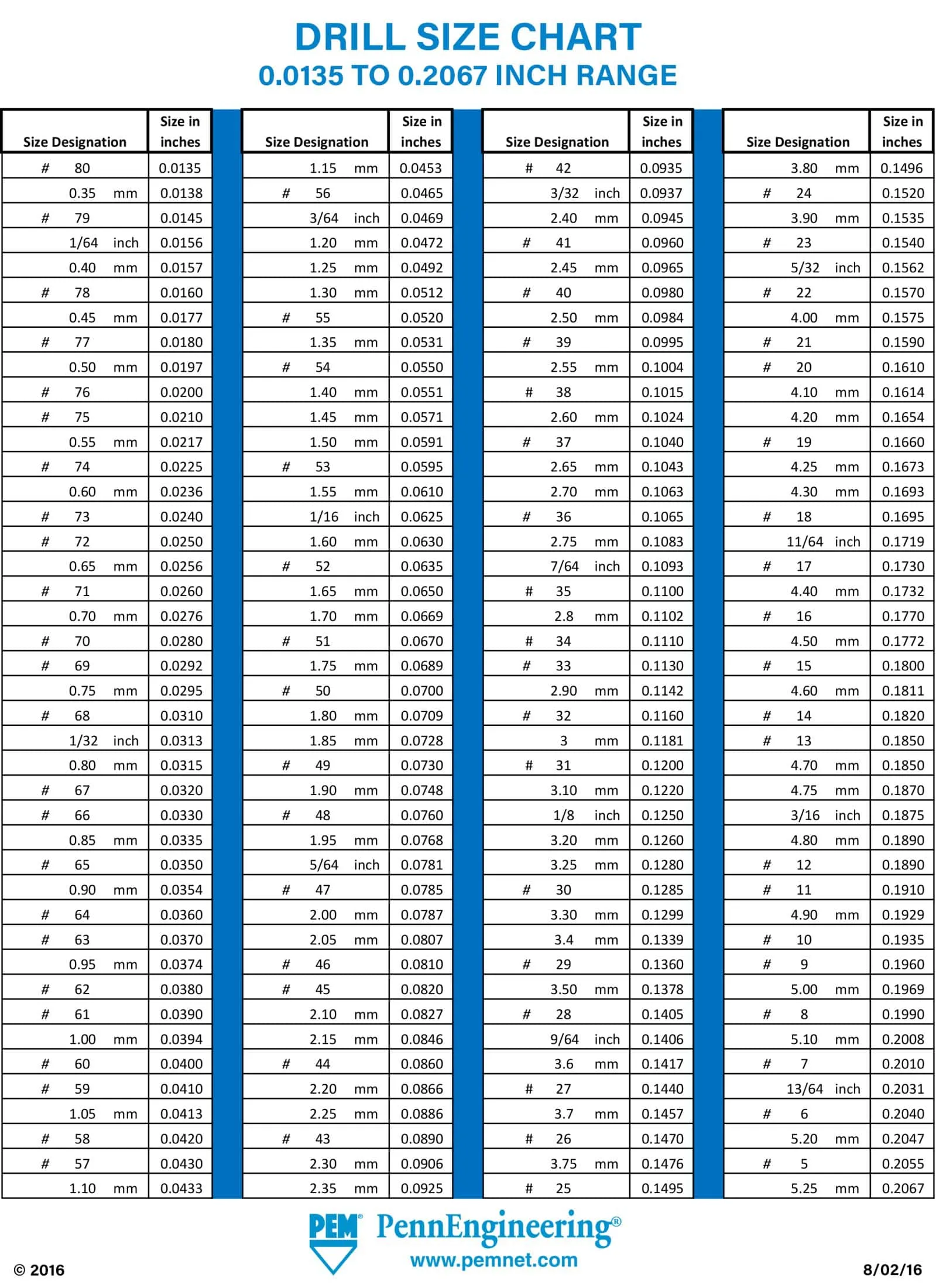
When you’re tackling a DIY project, having a reliable Printable Drill Bit Size Chart can make all the difference. This chart not only helps you quickly determine the correct size of drill bits you need for various tasks but also streamlines your workflow, saving you time and frustration. In this article, I’ll walk you through the essential components of this printable resource, ensuring you understand how to make the most of it in your home projects.
Understanding Drill Bit Sizes
Drill bits come in various sizes and types, each designed for specific materials and tasks. The sizes are typically measured in either inches or millimeters, depending on your project needs. A Printable Drill Bit Size Chart organizes this information clearly, allowing you to easily reference it while you work.
When you look at the chart, you will see a range of common drill bit sizes, often listed from the smallest to the largest. This can include fractional inch sizes (like 1/16″, 1/8″, etc.) alongside metric sizes (such as 1mm, 2mm, etc.). Understanding these sizes will help you select the right bit for the job, whether you’re drilling into wood, metal, or plastic.
Layout of the Drill Bit Size Chart
A well-designed Printable Drill Bit Size Chart typically features a straightforward layout that makes it easy to read at a glance. Here’s what you can expect to find:
- Size Column: This column lists the drill bit sizes, usually in both metric and imperial measurements.
- Type Column: Here, you may see the type of drill bit associated with each size, such as twist bits, spade bits, or masonry bits.
- Material Column: Some charts may also indicate the best material to use each drill bit on, like wood, metal, or concrete.
The arrangement of these columns allows you to quickly find the information you need without flipping through multiple pages or searching online.
How to Use the Drill Bit Size Chart
Using the Printable Drill Bit Size Chart is straightforward. Here’s a step-by-step guide to help you get started:
- Download and Print: First, download the chart from a reliable source and print it out. Consider printing it on cardstock for durability.
- Identify Your Project Needs: Before starting, think about the materials you’ll be working with and the size of the holes you need to drill.
- Match Sizes: Refer to the chart to find the appropriate drill bit size for your specific task. If you’re unsure, start with a smaller size and work your way up to avoid over-drilling.
- Keep It Handy: Hang the chart near your workbench or store it in your toolbox for quick access during your projects.
This systematic approach ensures that you can work efficiently and accurately, reducing the risk of mistakes.
Common Mistakes to Avoid
While using a Printable Drill Bit Size Chart can simplify your drilling tasks, there are common pitfalls to avoid:
- Ignoring Material Compatibility: Always check the material column in the chart. Using the wrong type of drill bit can lead to damage or poor results.
- Not Checking for Wear: If you’re using older bits, ensure they’re in good condition. Worn-out bits can lead to inaccurate holes.
- Neglecting Bit Depth: The size of the drill bit is important, but so is the depth of the hole. Make sure your drill can handle the depth required for your project.
By being mindful of these factors, you’ll improve your drilling accuracy and extend the life of your tools.
Additional Resources for DIY Enthusiasts
Alongside your Printable Drill Bit Size Chart, consider other resources that can enhance your DIY experience:
- Project Plans: Look for printable project plans that provide step-by-step instructions and include the necessary drill bit sizes.
- Safety Checklists: A safety checklist can help ensure you have the right gear and precautions in place before starting any drilling project.
- Material Guides: Understanding different materials and their drilling requirements can be crucial. A material guide can help you choose compatible drill bits.
These additional resources complement your drill bit chart, making your home improvement tasks more manageable and enjoyable.