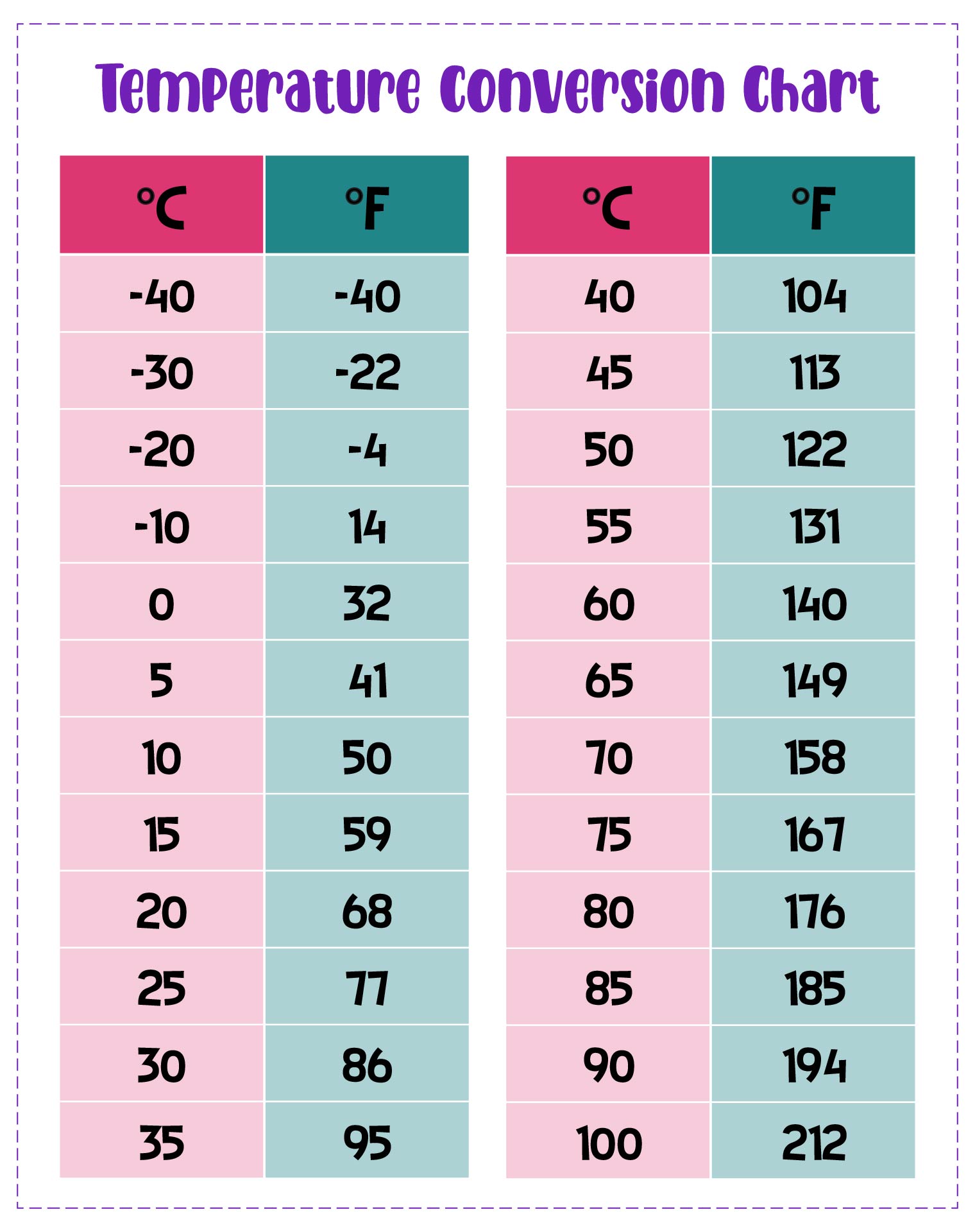
If you’re looking for a Printable Celsius To Fahrenheit Conversion Chart, you’ve come to the right place. This handy chart is an essential tool for anyone who needs to convert temperatures quickly and accurately. If you are cooking, working on a science project, or simply trying to understand weather reports from different countries, having this chart at your fingertips can make life a lot easier.
Why You Need a Celsius to Fahrenheit Conversion Chart
Understanding temperature conversions is crucial, especially in our globalized world. Many countries use Celsius, while others, like the United States, primarily use Fahrenheit. This can be confusing when you’re trying to follow a recipe from a different country or checking the weather. Having a conversion chart readily available allows you to make these conversions effortlessly.
My experience with temperature conversions has often highlighted the importance of having an easy reference. For example, when preparing a dish that requires specific cooking temperatures, knowing how to convert Celsius to Fahrenheit can be the difference between a perfectly cooked meal and a culinary disaster.
How to Use the Printable Celsius to Fahrenheit Conversion Chart
Using the chart is straightforward. Here’s how you can utilize it effectively:
- Locate the Celsius Temperature: Start by finding the Celsius temperature you want to convert on the left side of the chart.
- Read Across to the Fahrenheit Column: Once you’ve located your Celsius temperature, follow the row across to the Fahrenheit column to find the equivalent temperature.
- Double-Check Your Work: It’s always a good idea to double-check your conversions, especially if you’re working on something critical.
For example, if you see 100°C on the chart, you will find that it converts to 212°F. This is particularly useful when you’re looking at boiling points or baking recipes.
Downloading and Printing Your Chart
When it comes to downloading and printing your Printable Celsius To Fahrenheit Conversion Chart, here are some practical tips:
- Choose the Right Format: Ensure that you download a PDF version if available, as this format is less likely to have formatting issues during printing.
- Paper Size: Most home printers work well with standard A4 or letter-sized paper. If you want to save space, consider printing it at a smaller size, but remember that smaller text may be harder to read.
- Quality of Paper: If you plan to use the chart frequently, consider printing it on cardstock for durability. This way, it can withstand wear and tear, especially in a busy kitchen.
Tips for Effective Use
- Laminating: If you laminate the chart, it can be used with dry-erase markers. This allows you to make notes or highlight certain temperatures as needed, which can be particularly helpful for educational purposes.
- Placement: Hang your chart in a visible area, like your kitchen wall or on the fridge. This makes it easy to reference when you need it most.
Common Temperature Conversions You Should Know
While the chart provides a comprehensive list, here are some common conversions that are frequently used:
- 0°C = 32°F (Freezing point of water)
- 25°C = 77°F (Room temperature)
- 37°C = 98.6°F (Normal human body temperature)
- 100°C = 212°F (Boiling point of water)
These key temperatures can serve as a quick reference point when you’re cooking or conducting science experiments.
Where to Use the Celsius to Fahrenheit Conversion Chart
This conversion chart is not just for the kitchen. Here are some practical scenarios where it could be beneficial:
- Cooking and Baking: Many recipes are written in Celsius, especially if they originate from Europe or other countries that use the metric system.
- Science Projects: If your child is working on a science project that involves temperature measurements, having this chart can help them understand their findings better.
- Travel Planning: If you’re traveling to a country that uses Celsius, knowing how to convert temperatures can help you pack appropriately for the weather.