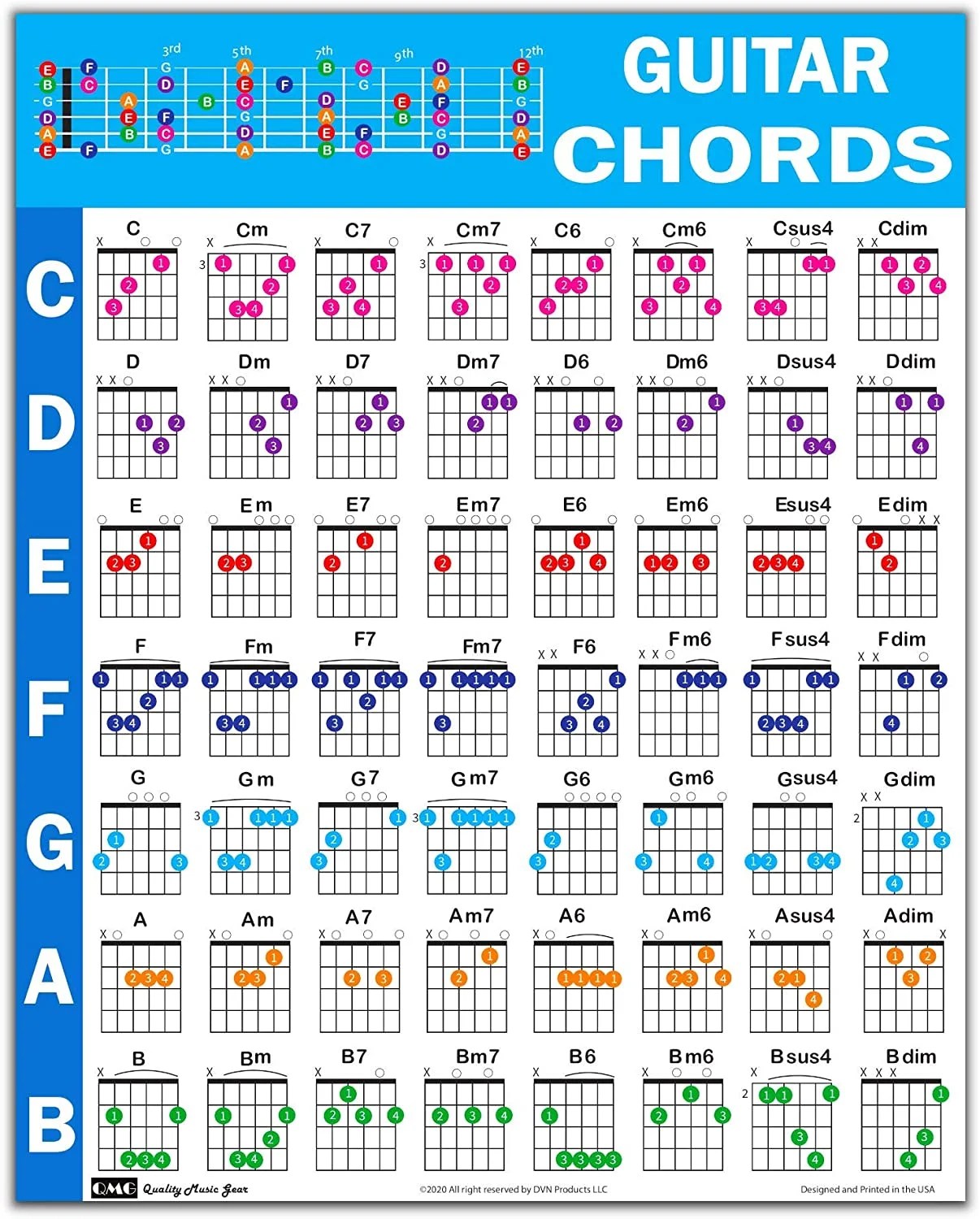
When it comes to learning guitar, navigating bar chords can feel daunting for many beginners. Thankfully, a Free Printable Guitar Bar Chord Chart can simplify this process. With this chart, you’ll have a handy reference that not only helps you understand various bar chord shapes but also supports your practice sessions. If you’re a parent encouraging your child’s musical journey, having this resource at hand can make a significant difference in their learning experience.
Understanding Bar Chords
Bar chords are a fundamental part of guitar playing. They allow you to play chords in different keys without having to learn entirely new finger positions. Bar chords use one finger to press down multiple strings, effectively creating a “bar” across the fretboard. This technique can be challenging at first, but with the right guidance and practice, it becomes second nature.
Having a clear visual representation of these chords is incredibly beneficial. A well-structured bar chord chart shows you where to place your fingers, which strings to strum, and how to transition smoothly between chords. A Free Printable Guitar Bar Chord Chart serves this exact purpose, making it easier for your child to grasp these concepts.
Choosing the Right Chart
When selecting a Free Printable Guitar Bar Chord Chart, consider the following aspects:
- Clarity: Ensure that the chart is easy to read. Look for a layout with clear diagrams.
- Comprehensiveness: A good chart should cover major, minor, and seventh chords. It may also include variations like diminished and augmented chords.
- Size: The printable format should be large enough to read without straining your eyes. A full-page layout typically works best for most home printers.
Take a moment to browse through different options available online. Look for a chart that resonates with your learning style or that of your child. Once you find a suitable one, downloading it is usually straightforward.
Downloading and Printing Your Chart
After choosing a chart, the next step is to download and print it. Here’s how to ensure you get the best results:
- Download: Click on the download link provided on the website. Most charts are available in PDF format, which preserves the layout and quality.
- Open the File: Make sure to open the PDF with a compatible program, like Adobe Reader, to avoid formatting issues.
- Print Settings:
- Choose “Actual Size” in your printer settings to maintain the chart’s proportions.
- Select a high-quality print option for clearer visuals.
- If possible, print on cardstock for durability, especially if your child will use it frequently.
Printing in portrait orientation typically works best for chord charts, as it allows for a larger visual area.
Setting Up Your Practice Space
Once you have your chart printed, it’s time to set up a dedicated practice space for your child. Here are some tips:
- Visibility: Place the chart in a location where it can be easily seen while playing. A music stand works well for this purpose.
- Accessibility: Keep the chart within reach, so your child can refer to it during practice without interrupting their flow.
- Environment: Ensure the space is free from distractions. A quiet area helps your child focus on learning the chords.
Encouraging your child to integrate the chart into their daily practice routine will enhance their progress. Make it a habit for them to glance at the chart as they play, reinforcing their memory of each chord shape.
Practicing With the Chart
Using the chart effectively is crucial for mastering bar chords. Here’s a step-by-step approach to practice:
- Choose a Chord: Start with one chord from the chart, such as the F major.
- Finger Placement: Refer to the chart to identify where each finger should go.
- Strumming: Strum the chord slowly, ensuring each string rings clearly. If any strings sound muted, adjust your finger positioning.
- Transitioning: After feeling comfortable with one chord, practice transitioning to another. This helps in developing muscle memory.
- Repetition: Consistent practice is key. Spend a few minutes daily working on different chords from the chart.
Set aside a specific time each day for practice. Consistency will yield better results, and your child will feel more accomplished as they progress.
Common Mistakes to Avoid
While practicing bar chords, it’s easy to fall into certain traps. Here are some common mistakes and how to avoid them:
- Incorrect Finger Placement: Ensure that your child places their index finger firmly across the strings. If they are struggling, encourage them to adjust their hand position slightly.
- Overusing Strength: Some beginners press too hard on the strings. Remind your child that a firm but relaxed grip is more effective.
- Neglecting Rhythm: Focus on strumming patterns as well. Playing the chords in time with a metronome or backing track can help develop a sense of rhythm.
Encouragement is vital. Celebrate small victories, such as correctly playing a chord for the first time. This positive reinforcement will motivate your child to keep practicing.
Tracking Progress
As your child learns to use the Free Printable Guitar Bar Chord Chart, tracking their progress is beneficial. Consider implementing a simple system:
- Practice Journal: Encourage your child to maintain a practice journal. They can note down which chords they practiced, any challenges faced, and improvements made.
- Weekly Check-Ins: Set aside time each week to review their progress together. Discuss what they enjoyed and what they found challenging.
- Goal Setting: Help your child set realistic goals, like mastering a new chord each week or learning a simple song that uses bar chords.
This structured approach not only keeps them accountable but also reinforces their commitment to learning.
Expanding Beyond Bar Chords
Once your child feels comfortable with bar chords, it may be time to explore additional resources. Here are some suggestions:
- Other Chord Charts: Look for charts that include open chords or advanced techniques like fingerpicking.
- Songbooks: Choose beginner songbooks featuring songs that utilize bar chords. This makes practice fun and engaging.
- Online Lessons: Consider enrolling in online courses or watching tutorial videos. Visual learning can complement the use of charts effectively.
Encouraging exploration will help your child develop a well-rounded skill set. Learning guitar should be enjoyable, and resources like the Free Printable Guitar Bar Chord Chart can make the journey more manageable.
As your child continues to practice and grow as a musician, remind them to have fun with the process. Music is a lifelong journey, and each step taken with resources like these paves the way for future success. For immediate action, print that chart today and set up a dedicated practice space to start your child’s musical adventure!