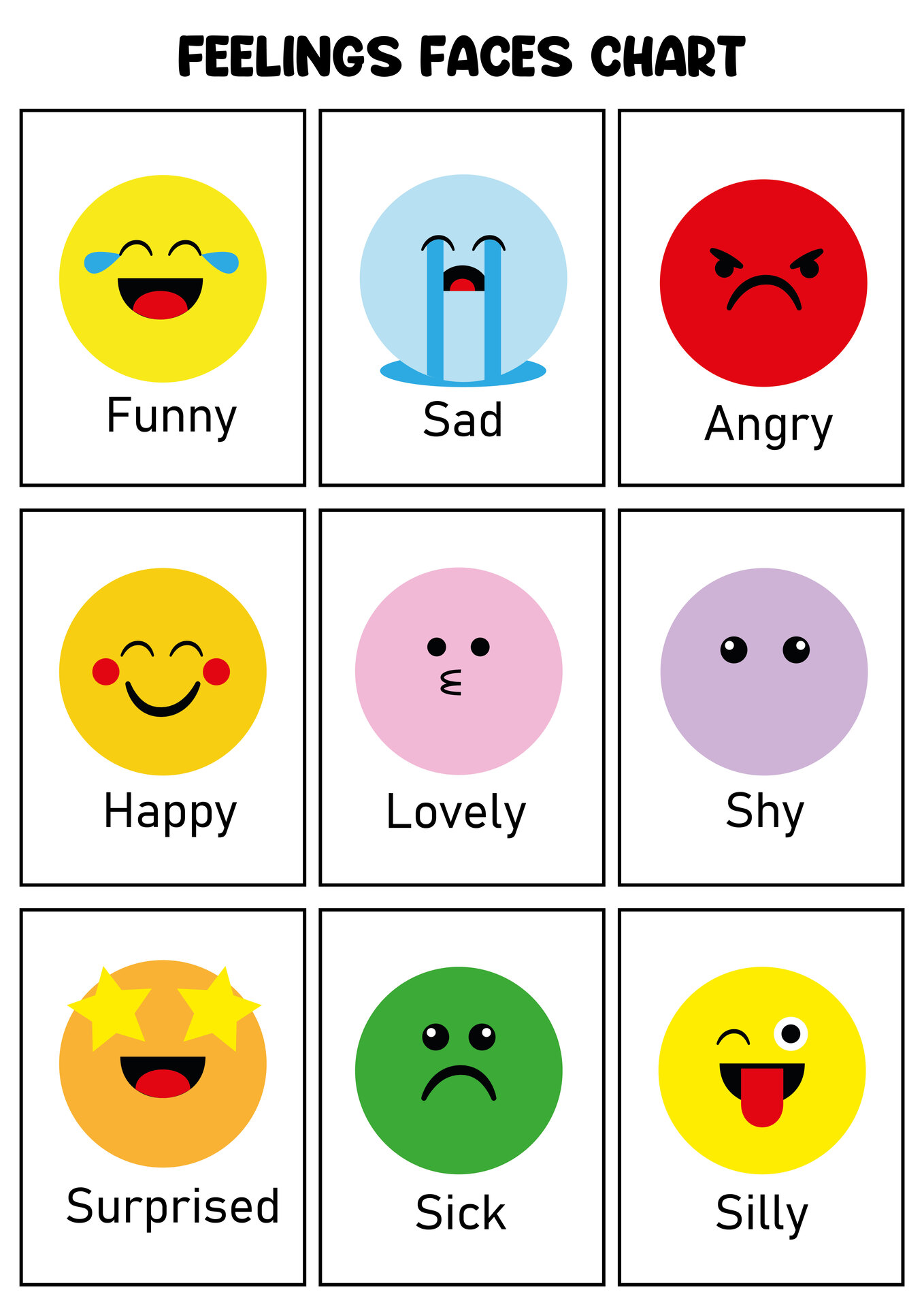
Understanding feelings can be challenging for preschoolers. That’s where a Free Printable Feelings Chart For Preschoolers comes into play. This resource is designed to help young children identify, express, and manage their emotions in a fun and engaging way. By incorporating this chart into your daily routine, you can foster emotional intelligence and communication skills in your child.
What Is a Feelings Chart?
A feelings chart is a visual tool that displays various emotions, often accompanied by facial expressions or illustrations. It helps children recognize and articulate their feelings. Typically, the chart includes emotions like happy, sad, angry, scared, and surprised, among others. By seeing these emotions represented visually, children can better understand what they are experiencing.
When using a feelings chart, preschoolers can point to or name the emotion they relate to at any given moment. This can be particularly useful during discussions about daily experiences or as a calming tool when they feel overwhelmed.
Why Use a Feelings Chart for Preschoolers?
Using a feelings chart can greatly benefit preschoolers for several reasons:
- Emotional Recognition: It helps children identify their emotions, which is the first step in managing them.
- Communication Skills: Encourages children to express what they feel, improving their verbal skills.
- Conflict Resolution: When children can articulate their feelings, they can better navigate conflicts with peers.
- Emotional Regulation: Understanding feelings can help children learn how to manage their reactions, reducing tantrums and frustrations.
By implementing a feelings chart, you create an opportunity for meaningful conversations about emotions.
How to Use the Feelings Chart
Integrating a Free Printable Feelings Chart For Preschoolers into your routine can be straightforward. Here are some practical steps:
- Print the Chart: Download and print the chart on sturdy paper. Cardstock is an excellent choice if you plan to laminate it for durability.
- Display It: Place the chart at eye level in a common area, like a playroom or bedroom, so it’s easily accessible.
- Daily Check-Ins: Incorporate a routine where you check in with your child about their feelings. Ask them to point to or describe how they’re feeling today.
- Role-Playing: Use the chart during playtime to act out different emotions. This can help reinforce what each emotion looks like and how to express it.
- Storytime Connection: Connect the chart with stories read during the day. Ask your child to identify how characters might be feeling at different points in the story.
By consistently using the feelings chart, children become more comfortable discussing their emotions.
Digital Vs. Print Completion
You might wonder whether it’s better to use a digital version of the feelings chart or print it out. Here are some considerations for each option:
Printed Version
- Tactile Experience: Physically pointing to emotions can create a more engaging experience for preschoolers.
- Laminating: You can laminate the printed chart for longevity, allowing children to use dry-erase markers to indicate their feelings daily.
- Customization: You can write on the printed chart to personalize it for your child, adding specific emotions or notes.
Digital Version
- Accessibility: A digital chart can be accessed on tablets or computers, which can be convenient for tech-savvy kids.
- Interactive Features: Some digital versions may include interactive elements, such as animations or sound effects, that can make learning about feelings more engaging.
- Easy Sharing: You can share a digital version with caregivers or teachers, ensuring consistency in emotional learning.
Ultimately, consider your child’s learning style and preferences when deciding between digital or print formats.
Adapting the Feelings Chart for Various Ages
While the Free Printable Feelings Chart For Preschoolers is specifically designed for young children, it can be adapted for different age groups:
- Toddlers: Use a simplified version with fewer emotions and more visual cues. Focus on basic feelings like happy, sad, and mad.
- Preschoolers: Include a wider range of emotions and more complex illustrations. Engage them in discussions about different scenarios that evoke various feelings.
- Early Elementary: Introduce more nuanced emotions, such as frustrated, excited, or anxious. Encourage children to relate these feelings to personal experiences or stories.
By adjusting the chart to suit developmental stages, you can maintain its relevance and effectiveness.
Tips for Parents and Educators
To maximize the benefits of using a feelings chart, consider these practical tips:
- Model Emotional Expression: Demonstrate how you express your own feelings. Use the chart to share what you’re feeling during various situations.
- Encourage Reflection: After a challenging day, encourage your child to reflect on their feelings. Ask guiding questions, like, “What made you feel happy today?”
- Create a Safe Space: Ensure your child feels safe to express their feelings without judgment. Reinforce that all emotions are valid.
- Use Reinforcement: Praise your child when they accurately identify and express their feelings. This positive reinforcement can motivate them to continue using the chart.