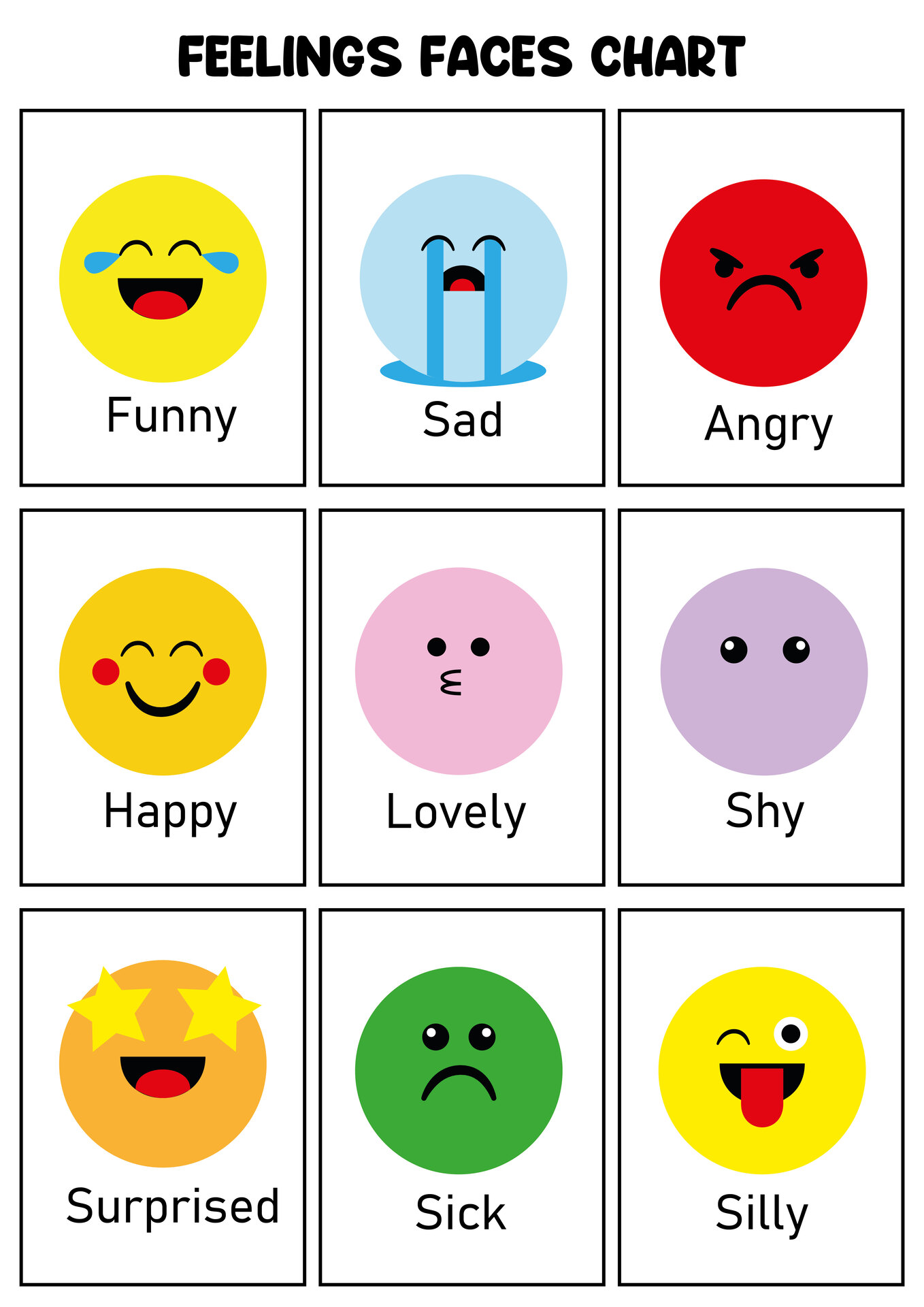
Understanding and expressing emotions can be challenging for kids. That’s where a Free Printable Feelings Chart For Kids comes in handy. This resource is not just a colorful tool; it can significantly enhance emotional awareness and communication in children. Designed with various facial expressions and emotion words, this chart helps kids identify and articulate their feelings in a fun, engaging way.
Why Use a Feelings Chart?
Utilizing a feelings chart can be a useful option when it comes to helping children navigate their emotions. Kids often struggle to express what they feel, leading to frustration and misunderstandings. A feelings chart provides a visual reference that simplifies the process of identifying and naming feelings.
Here are some benefits of using a feelings chart:
- Visual Learning: Children are often visual learners. A chart with pictures can make it easier for them to connect emotions with expressions.
- Facilitates Communication: It encourages children to talk about their feelings, which is essential for emotional development.
- Promotes Emotional Intelligence: Understanding emotions can lead to better social interactions and relationships as kids grow.
How to Download and Print the Feelings Chart
Getting your Free Printable Feelings Chart For Kids is straightforward. Follow these steps to ensure you get the most out of your download:
- Choose Your Version: Decide if you want a basic chart or one with more detailed emotions. Some versions include a wider range of feelings, while others focus on primary emotions.
- Download the File: Click the download link provided on the website. The chart is typically available in PDF format, which preserves the layout and colors when printed.
- Print Settings: For best results, set your printer to “Portrait” mode. Use standard letter-sized paper (8.5 x 11 inches) or cardstock for durability. If you plan to use it frequently, consider laminating it for long-term use.
- Cutting and Displaying: After printing, you may want to trim any excess paper. Hang the chart in a place where your child can easily see it, like their bedroom or a play area.
How to Use the Feelings Chart in Daily Life
Once you have your chart ready, it’s time to incorporate it into your daily routine. Here are practical ways to use the feelings chart effectively:
Morning Check-Ins
Start your day with a morning check-in. Ask your child how they are feeling today and encourage them to point to the corresponding image on the chart. This simple exercise helps children articulate their feelings right from the start of the day.
During Emotional Moments
When your child is upset or frustrated, gently guide them to the feelings chart. Ask them to identify what they are feeling. This can help them process their emotions and calm down.
Create a Routine
Make the feelings chart part of your daily routine. You could have a “feelings time” during dinner or bedtime where everyone shares how they felt during the day. This encourages open dialogue and emotional literacy.
Role-Playing
Incorporate role-playing scenarios where your child can practice expressing emotions. Use the feelings chart as a reference point during these activities.
Variations of Feelings Charts
Not all feelings charts are created equal. Depending on your child’s age and developmental stage, you might want to consider different variations:
Simple Charts for Younger Kids
Younger children may benefit from simpler charts that focus on basic emotions like happy, sad, angry, and scared. These charts often feature exaggerated facial expressions that are easy for them to recognize.
Detailed Charts for Older Kids
Older children can handle more complex emotions. A detailed chart can include feelings like frustrated, anxious, or overwhelmed. This can help them develop a more nuanced understanding of their emotional landscape.
Digital Vs. Print: Which is Best?
When it comes to using a feelings chart, you have options: digital or print. Each format has its merits, depending on how you plan to use it.
Digital Options
With digital versions, you can fill in feelings directly on a tablet or computer. This is convenient for tech-savvy kids and can be fun for them to use. However, it may not provide the tactile experience some children benefit from when writing or coloring by hand.
Print Options
Printed charts are tangible and can be easily displayed in your home. Kids can physically point to their feelings or even draw on the chart if it’s laminated. This kind of interaction can be more engaging for younger children.
Tips for Making the Most of Your Feelings Chart
To maximize the effectiveness of your feelings chart, consider these practical tips:
- Incorporate Art: Encourage your child to decorate the chart with colors or stickers. This personal touch can make it more appealing to them.
- Regular Updates: Emotions can change daily. Make sure to revisit the chart regularly to keep it relevant and engaging.
- Model Emotional Expression: As a parent, model how you express your feelings. Share your emotions and reference the chart to show how it can be a useful tool.