Keeping track of medication can be a challenge, especially for elderly individuals who may be managing multiple prescriptions. A Free Printable Daily Medication Chart For Elderly is an essential tool that helps caregivers and family members ensure that medication is taken on time and in the correct dosage. In this article, I’ll walk you through the importance of this chart, how to use it effectively, and some practical tips for keeping your loved ones on track with their medications.
Why Use a Daily Medication Chart?
The use of a daily medication chart serves several important purposes. First and foremost, it helps prevent medication errors, which can have serious consequences. By providing a clear visual representation of when and what medications should be taken, it allows caregivers to monitor adherence more effectively.
Additionally, a daily chart can provide peace of mind not only for the elderly individual but also for their family members. Knowing that there is a system in place to track medication can alleviate anxiety about missed doses, especially in cases where medications are critical for health management.
Key Features of the Medication Chart
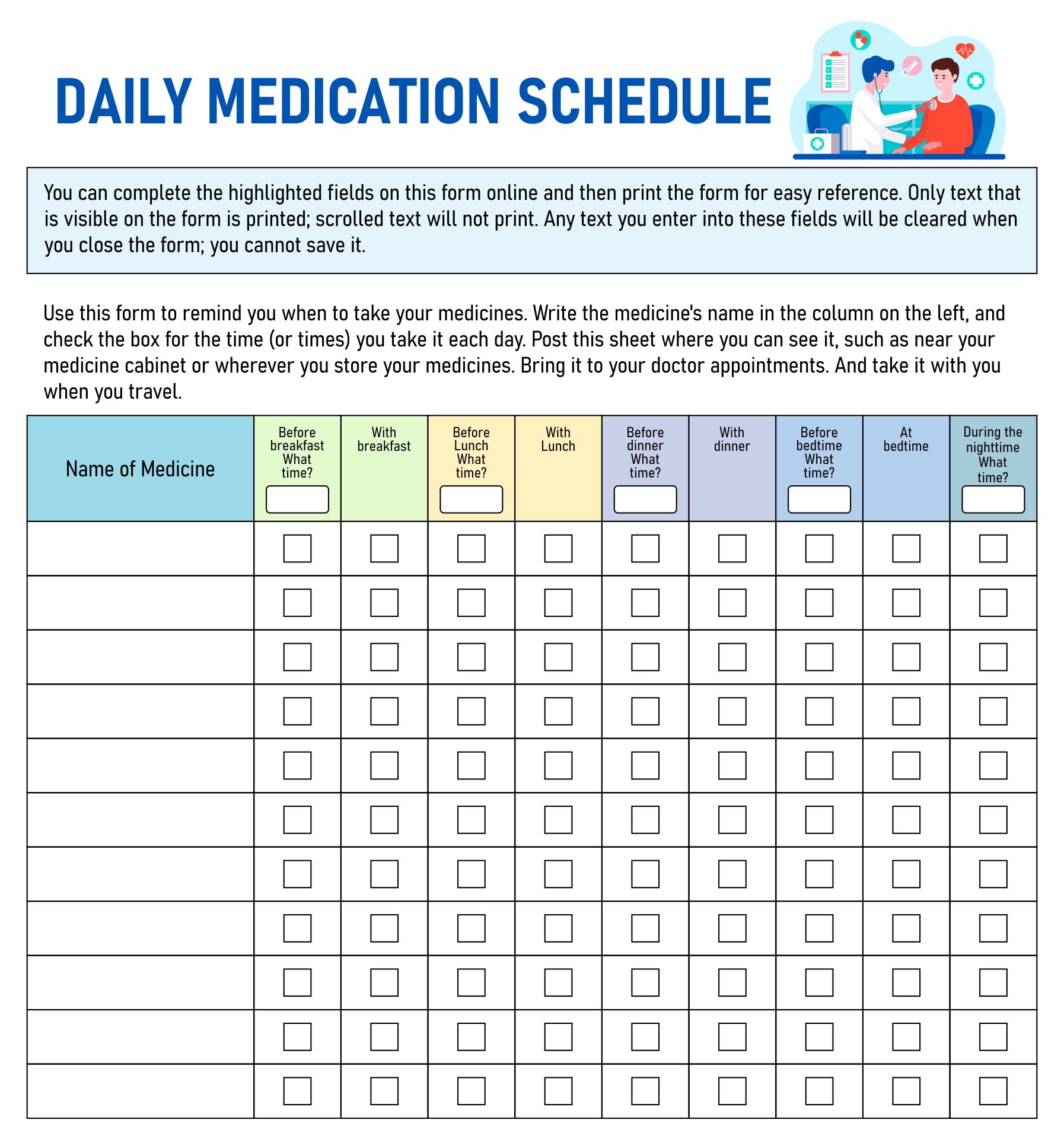
When looking for a Free Printable Daily Medication Chart For Elderly, there are some key features to keep in mind:
- Clear Layout: The chart should have a straightforward layout that is easy to read. Look for sections that clearly indicate the days of the week and time slots for each medication dose.
- Space for Notes: A good chart will include space for notes, which allows caregivers to jot down important information such as side effects, changes in medication, or doctor’s instructions.
- User-Friendly Design: The design should be user-friendly, meaning that it can be easily filled out in a way that doesn’t overwhelm the user. It’s helpful if the chart includes checkboxes or spaces that are large enough for easy visibility.
How to Fill Out the Medication Chart
Filling out the medication chart correctly is crucial for its effectiveness. Here’s a straightforward process to ensure the chart is filled out properly:
- List Medications: Start by listing all the medications the elderly individual is taking. This includes prescription medications, over-the-counter drugs, and supplements.
- Indicate Dosages: Next to each medication, write down the prescribed dosage. It can be helpful to include the specific instructions for each medication, such as whether it should be taken with food or at specific times of the day.
- Mark Timing: Divide the chart into time slots, such as morning, noon, evening, and bedtime. Place each medication in the appropriate time slot based on when it is supposed to be taken.
- Use Checkboxes: If the chart has checkboxes next to each medication and time, make it a routine to check them off as each dose is administered. This visual cue can help both the caregiver and the elderly person see what has been taken and what still needs to be.
- Review Regularly: Make it a habit to review the chart regularly, especially after doctor visits when medication changes might occur. This ensures that the chart is always up to date.
Best Practices for Using the Chart
To maximize the effectiveness of the Free Printable Daily Medication Chart For Elderly, consider these best practices:
- Keep It Visible: Place the medication chart in a location that is easily accessible, such as on the refrigerator or next to the elderly individual’s medication storage. This constant visibility serves as a reminder to take medications.
- Involve the Elderly Person: Whenever possible, involve the elderly individual in the process of filling out and using the chart. This promotes independence and can help them feel more in control of their health.
- Set Reminders: In addition to using the chart, setting up reminders through alarms or phone notifications can provide additional support in ensuring medications are taken on time.
- Regular Check-Ins: Schedule regular check-ins with the elderly individual to discuss their medication routine. This can provide an opportunity to address any issues they may be experiencing with their medications and to make necessary adjustments to the chart.
Quality of Paper and Printing
For optimal use, consider the quality of the paper and printing when you download and print the medication chart. Here are a few things to keep in mind:
- Use Cardstock: If you plan to laminate the chart for durability, cardstock is a great choice. It holds up well over time and can withstand daily handling.
- Consider Portrait Layout: A portrait layout tends to work better for most home printers and provides a familiar format that is easy to read.
- PDF Format: Whenever possible, download the chart in PDF format to avoid reformatting issues that can occur with image files. This ensures that the layout remains intact when printed.
Additional Resources and Support
In addition to using a daily medication chart, there are other resources that can support caregivers and elderly individuals in managing medications more effectively. Consider the following options:
- Medication Management Apps: There are various apps available that can help track medications, send reminders, and provide information about side effects and interactions.
- Consulting Healthcare Professionals: Regular consultations with healthcare providers can help ensure that the medication regimen is appropriate and effective. They can also provide guidance on how to manage any side effects or interactions.
- Support Groups: Joining support groups for caregivers can provide emotional support and practical advice from others who are in similar situations.
Using a Free Printable Daily Medication Chart For Elderly can significantly improve medication management and adherence. By following the steps outlined in this article and adopting best practices, you can help ensure that your loved ones remain safe and on track with their health needs.