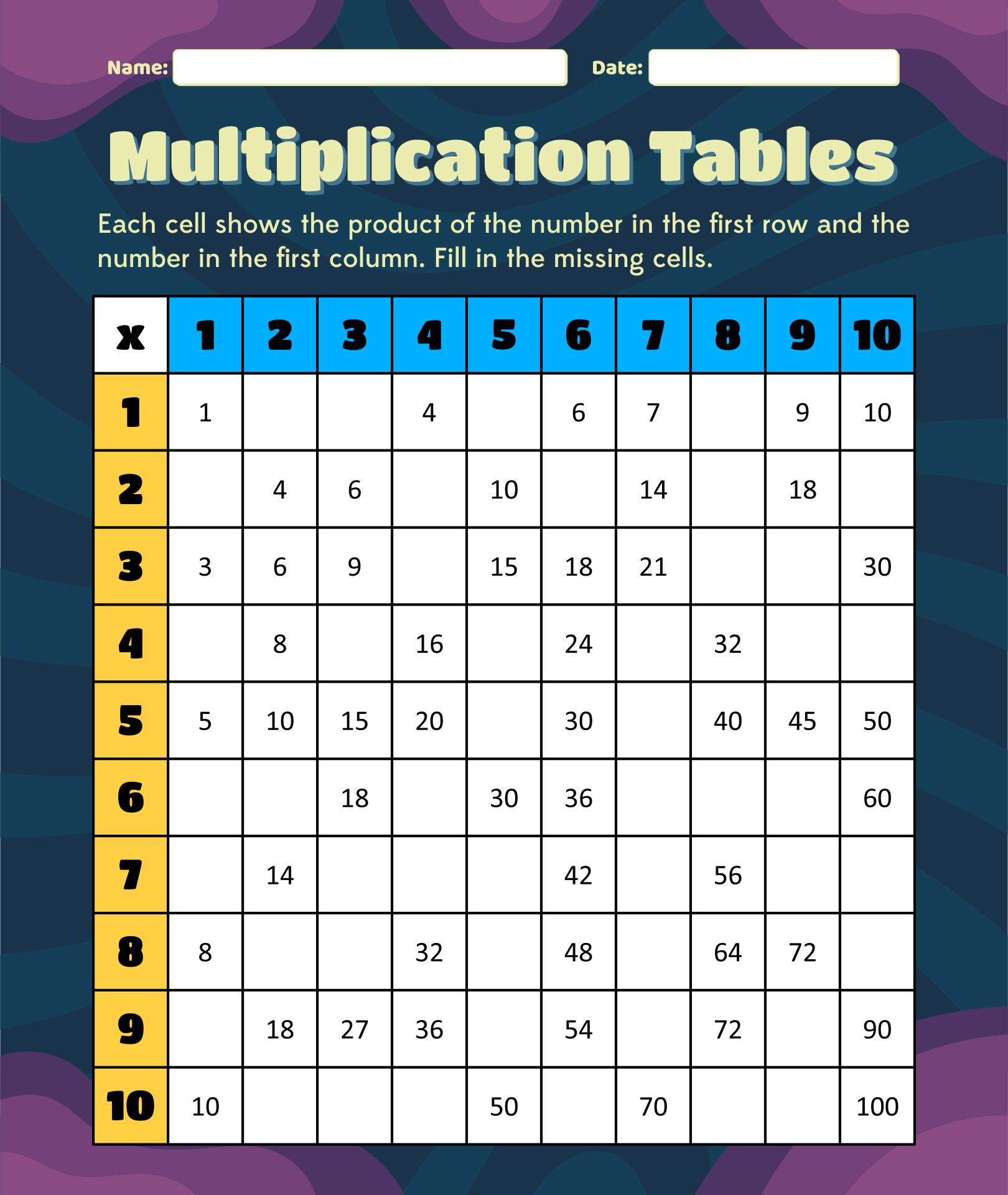
When it comes to helping kids grasp multiplication concepts, a Fill In The Blank Multiplication Chart Printable can be a useful option. Unlike traditional multiplication charts where all the answers are provided, this interactive resource encourages students to actively engage with the material. By filling in the blanks, kids can reinforce their understanding of multiplication facts, making it a valuable tool for both parents and educators.
The Layout and Design of the Chart
A well-designed multiplication chart is more than just rows and columns; it’s a visual aid that organizes information effectively. Typically, a fill-in-the-blank multiplication chart features a grid with numbers along the top and left side representing the multipliers. The cells within the grid are left blank, allowing students to write in the products. This design choice encourages critical thinking and problem-solving as they fill in the missing information.
Dimensions and Orientation
Most printable multiplication charts come in standard paper sizes, such as 8.5 x 11 inches (letter size) or A4. The portrait orientation is common, which is ideal for home printers. However, if you’re planning to use this resource in a classroom setting, a landscape orientation might fit better on a bulletin board or projector screen, allowing more visibility for everyone involved.
Digital Vs. Print Completion: Which is Better?
When deciding between filling out a digital PDF on-screen or printing the chart to fill in by hand, consider your goals and the learning environment.
Advantages of Digital Completion
Using a fillable PDF version of the multiplication chart can offer several advantages. For starters, it’s easy to distribute to multiple students at once via email or educational platforms. The digital format allows for easy corrections—if a mistake is made, it can simply be erased or altered without needing a new printout. Additionally, students can quickly save their progress and revisit the chart at any time.
Benefits of Handwriting
On the other hand, filling in the chart by hand can enhance memory retention. The physical act of writing helps reinforce learning. Plus, using colored pens or markers can make the activity more engaging. For younger children, the tactile experience of writing can be particularly beneficial, as it helps develop fine motor skills alongside math skills.
How to Use the Fill In The Blank Multiplication Chart
To maximize the effectiveness of the fill-in-the-blank multiplication chart, consider the following techniques:
Step-by-Step Approach
- Introduce the Chart: Start by explaining the layout. Show students how to read the chart and where to find the corresponding multipliers.
- Fill in the Easy Facts First: Encourage students to fill in the multiplication facts they already know, such as 1s and 2s. This builds confidence and provides a sense of accomplishment.
- Work Through the Blanks: Guide them through the remaining blanks. Use a collaborative approach where students can work in pairs or small groups to discuss their thought processes.
- Review and Discuss: After the chart is filled in, review the completed chart with the class. Discuss patterns they may notice, such as the repeated addition that multiplication represents.
Incorporating Games
Making learning fun can significantly enhance engagement. Turn filling in the chart into a game. For example, you could set a timer and see how many blanks students can fill in within a specific period. Alternatively, use the completed charts for a competitive quiz game, where students take turns answering questions about the multiplication facts they’ve filled in.
Best Practices for Printing Your Chart
If you decide to print your Fill In The Blank Multiplication Chart Printable, here are some best practices to ensure optimal results:
Paper Type and Printer Settings
- Choose the Right Paper: For durability, consider using cardstock, which holds up better if you plan to laminate the chart for repeated use.
- Print Quality: Set your printer to a higher quality setting when printing to ensure clear, legible text. This is especially important for younger students who may struggle with faint print.
Color Vs. Black and White
While black and white printing is cost-effective, consider printing in color if your chart includes color-coded sections. This can help differentiate between various multiplication facts and make the learning experience more visually appealing.
Customizing Your Multiplication Chart
A fill-in-the-blank multiplication chart can be customized to better fit your or your students’ needs. Here are some ideas:
Grade-Level Adjustments
For younger students, you might create a simpler chart that only includes the multiplication facts from 1 to 5. For older students, consider expanding the chart to include facts up to 12 or even 15.
Incorporating Visuals
Adding visuals can make the chart more engaging. For instance, you could include illustrations or icons that relate to the numbers. This not only beautifies the chart but can also serve as memory aids.
Tracking Progress and Reinforcement
Using a Fill In The Blank Multiplication Chart Printable is not just about filling in numbers; it’s also a tool for tracking progress.
Regular Check-Ins
Regularly review the filled charts with your students or children. This not only reinforces learning but also allows you to assess their understanding and identify areas where they may need extra help.
Reinforcement Activities
Once the chart is completed, you can create additional worksheets or activities that build on the multiplication facts learned. Flashcards, games, or quizzes are excellent ways to reinforce the material.
By incorporating a Fill In The Blank Multiplication Chart Printable into your educational routine, you can create a more interactive and engaging learning experience. This resource is flexible and adaptable, making it suitable for a variety of learning environments. Whether you choose to fill it out digitally or by hand, the key is to use it as a tool for empowerment in mastering multiplication facts.
One useful detail to remember: Always keep a few spare copies printed and ready for quick review sessions or for those unexpected moments when extra practice is needed.