Understanding decimal place value can be a tricky concept for kids, but having a well-designed Decimal Place Value Chart Printable can make all the difference. This resource is specifically crafted to help children visualize and comprehend how decimals work, making it an essential tool for parents and educators alike. Unlike many generic charts, this printable focuses on clarity and usability, ensuring your child gets the most out of their learning experience.
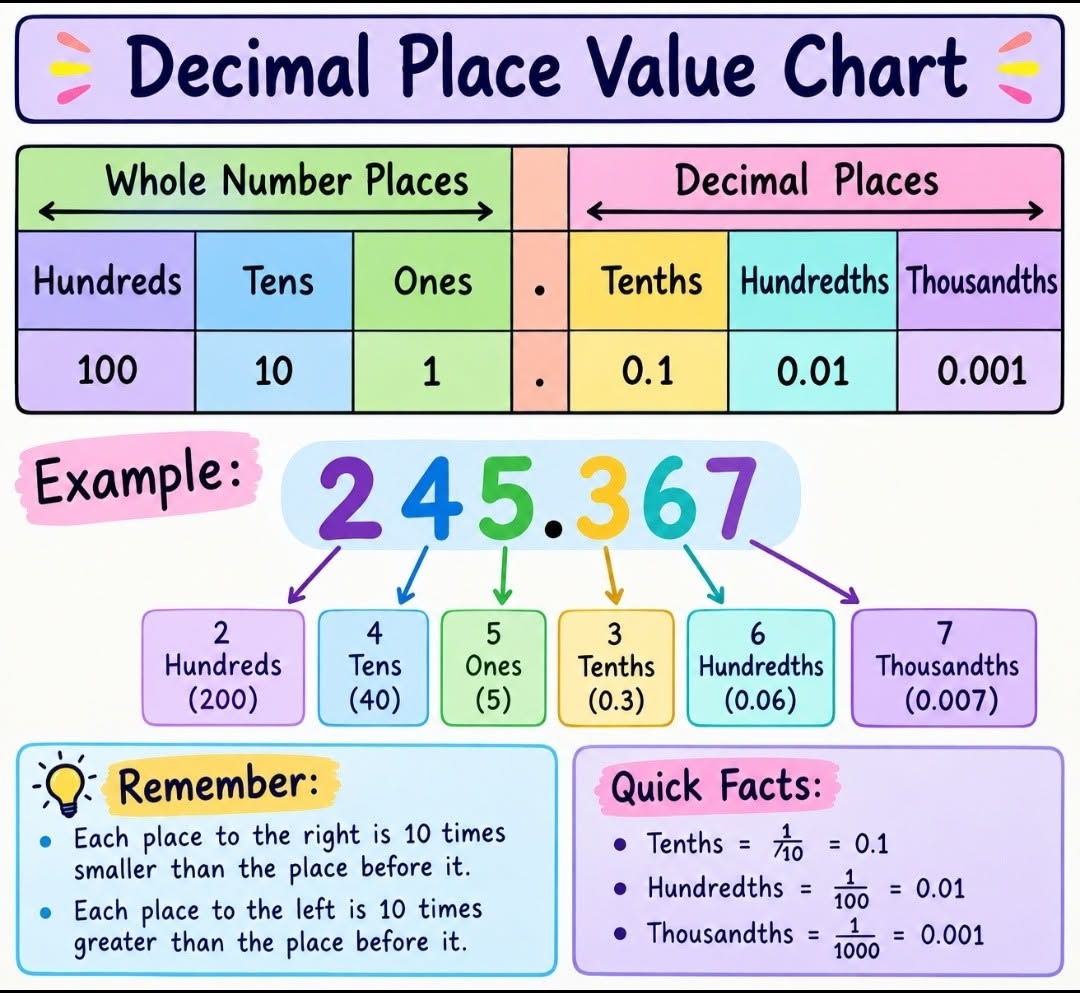
Understanding the Layout of the Decimal Place Value Chart
A Decimal Place Value Chart typically includes several key sections that help categorize numbers based on their position and value. At its core, the chart is divided into columns representing different decimal places, including ones, tenths, hundredths, and so on.
The layout usually starts with the whole numbers on the left side and moves right into the decimal points. This structure visually separates the integer values from the fractional values, which is crucial for understanding how decimals function in relation to whole numbers.
When using the printable, take note of the following sections:
- Whole Numbers: This area highlights the values from zero up to the highest number your child is working with.
- Decimal Places: Each column represents a different decimal place, making it simple for kids to see how numbers change as they move left or right across the decimal point.
- Examples: Some charts include examples of numbers in each column to provide context.
This clear structure is helpful for parents when explaining decimal concepts, as it allows for a direct visual reference.
How to Use the Decimal Place Value Chart Effectively
Once you’ve printed out the Decimal Place Value Chart, it’s essential to understand how to use it effectively. Here are some practical steps to ensure your child gets the most out of this resource:
- Introduce the Chart: Start by explaining each section of the chart. Go column by column, discussing what each place value represents. Use familiar examples, like money, to make the concept relatable.
- Practice with Real Numbers: After the introduction, have your child practice identifying numbers on the chart. You can write down a few decimal numbers and ask them to place them on the chart. This will reinforce their understanding.
- Interactive Activities: Turn this into a fun learning experience by creating games. For example, you could ask your child to come up with a decimal number and then find its representation on the chart.
- Regular Review: Keep the chart accessible for regular use. As your child progresses in their math skills, encourage them to refer back to the chart whenever they encounter decimals in their homework or daily life.
The Benefits of Using a Printable Resource
One of the most significant advantages of using a Decimal Place Value Chart Printable is its accessibility. You can easily print multiple copies for different subjects or even for your child to share with classmates. Here are some specific benefits:
- Cost-Effective: Instead of purchasing books or software, you can download and print this resource free or for a minimal cost, making it budget-friendly.
- Customizable: You can print the chart in various sizes depending on your needs. For example, a larger printout can be used for classroom displays, while a smaller one is perfect for home use.
- Immediate Use: Unlike digital resources that require technology, you can print this chart and use it immediately. This is particularly useful when you need a quick reference during homework time.
Choosing the Right Paper and Print Settings
When it comes to printing your Decimal Place Value Chart, the choice of paper and print settings can enhance its usability. Here are some tips:
- Paper Type: Using cardstock instead of standard printer paper can make the chart more durable, especially if your child will be using it frequently. Cardstock holds up better against wear and tear.
- Print Settings: For best results, set your printer to high-quality print settings. This ensures that the text and lines are sharp and easy to read. If your printer allows, use the “portrait” layout, which usually fits the chart better.
- Size Matters: Consider the size of the chart in relation to your workspace. A larger chart can be hung on the wall for constant reference, while a smaller version can be kept in a binder for easy access.
Integrating the Chart Into Daily Learning Routines
To reinforce learning, integrate the Decimal Place Value Chart into your daily routines. Here are a few ideas:
- Homework Help: Use the chart as a tool during homework sessions, helping your child refer back to it when they encounter decimals. This reinforces their understanding and builds confidence.
- Math Games: Create math games where your child has to use the chart to solve problems. For example, you could say, “What is 2.5 in the chart?” and have them find it.
- Daily Math Practice: Encourage your child to write down a new decimal number each day and find its place value on the chart. This not only reinforces the concept but also keeps the learning process active.
- Group Study: If your child has friends who are also learning about decimals, print multiple copies of the chart for a group study session. This encourages collaboration and makes learning more enjoyable.
By incorporating the Decimal Place Value Chart into everyday learning, you can help your child build a solid foundation in understanding decimals, which will benefit them in more advanced math topics later on.