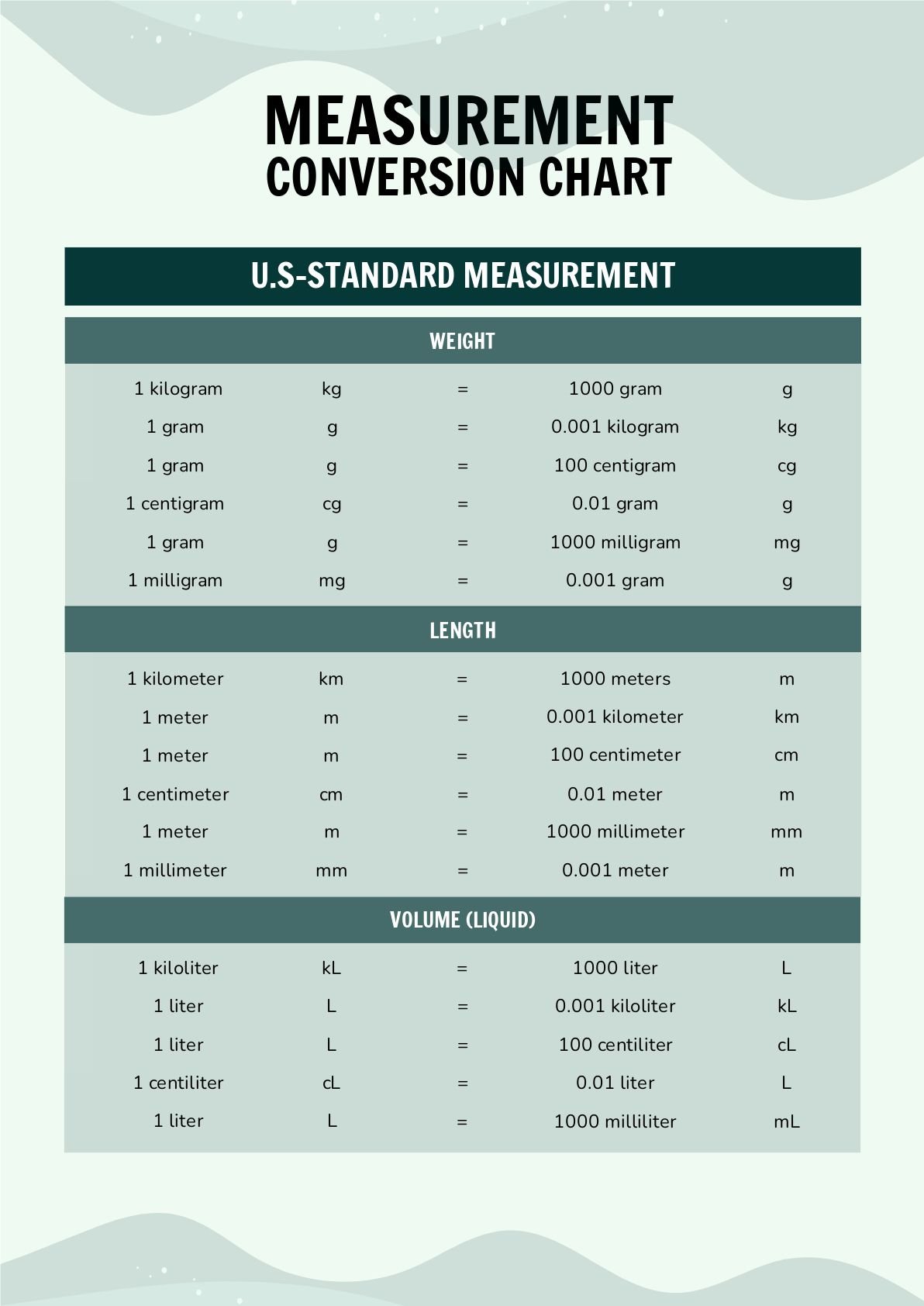
When it comes to cooking, crafting, or tackling DIY projects, having the right measurements is crucial. Printable Conversion Charts for Measurements serve as handy tools to simplify your tasks, helping you convert different units easily. If you are a home cook looking to adjust a recipe or a crafter needing precise dimensions, these charts are invaluable resources that can save you time and prevent errors.
Understanding Measurement Conversion
Measurement conversion charts help you translate one unit of measurement to another. This is especially important when working with ingredients in cooking or when you need to follow precise dimensions in crafting. Common conversions include:
- Volume: Fluid ounces, cups, pints, quarts, and gallons.
- Weight: Ounces, pounds, grams, and kilograms.
- Length: Inches, feet, centimeters, and meters.
For example, if a recipe calls for 2 cups of flour and you only have a tablespoon measurement, knowing that there are 16 tablespoons in a cup can make all the difference. Having a printable chart handy means you won’t have to scramble for your phone or a calculator in the middle of your cooking process.
Where to Find Printable Conversion Charts
You can find a variety of printable conversion charts online, often available for free on resource websites. Many educational sites, cooking blogs, and crafting platforms offer downloadable PDF versions that you can print out. Here are a few places to start your search:
- Educational Websites: Sites like Teachers Pay Teachers often provide conversion charts geared towards students and educators.
- Cooking Blogs: Many food bloggers create and share cooking resources that include measurement conversions tailored for home cooks.
- Crafting Communities: Websites dedicated to DIY projects and crafts often have customized charts for specific crafting needs.
When selecting a chart, ensure that it covers the specific conversions relevant to your needs, whether that’s cooking, crafting, or general measurement.
How to Use Printable Conversion Charts Effectively
To make the most out of your printable conversion charts, consider these practical tips:
- Choose the Right Format: Most charts come in PDF format, which is easy to print without losing quality. Make sure you select a chart that fits your needs—some charts are more comprehensive than others.
- Print in Convenient Sizes: Portrait layout tends to work better for most home printers, but if you have a larger workspace, consider printing in landscape for easier readability. Use standard letter-sized paper (8.5 x 11 inches) for convenience.
- Keep Them Accessible: Once printed, place your conversion charts in a binder or on a bulletin board in your kitchen or crafting area. This way, you can quickly reference them without digging through drawers or cabinets.
- Laminating for Durability: If you plan to use your charts frequently, consider laminating them. This will protect them from spills and wear, ensuring they last longer.
- Customize Your Charts: If you find that certain conversions are more relevant to your projects, don’t hesitate to create your own custom chart. You can include only the measurements you use most often.
Different Types of Conversion Charts to Consider
When exploring printable conversion charts, you’ll find they vary significantly based on their intended use. Here are the most common types to consider:
Cooking Conversion Charts
These charts focus on volume and weight conversions, including:
- Teaspoons to tablespoons
- Cups to ounces
- Metric conversions (grams to ounces)
Having a cooking conversion chart helps you adapt recipes easily, especially when scaling them up or down.
Crafting Measurement Charts
For crafters, accurate measurements are essential. Look for charts that convert:
- Inches to centimeters
- Feet to meters
- Fabric yardage to inches
These charts can assist in ensuring that your projects come out just right, If you are sewing, scrapbooking, or building.
General Measurement Conversion Charts
These charts cover a wide range of conversions, including:
- Length, weight, and volume across various systems (imperial and metric)
- Temperature conversions (Celsius to Fahrenheit)
General measurement conversion charts are versatile and can be useful in various contexts beyond cooking and crafting.
Tips for Downloading and Printing Your Charts
When you’re ready to download your chosen conversion charts, keep these tips in mind:
- Check File Compatibility: Ensure that the file format is compatible with your device. PDFs are typically the most user-friendly for printing.
- Preview Before Printing: Always preview your charts before printing to ensure they fit well on the page and are legible.
- Use Quality Paper: If you’re printing a chart you plan to use often, consider using heavier cardstock. It holds up better, especially if you’re in a messy kitchen or crafting environment.
Benefits of Using Printable Conversion Charts
Utilizing printable conversion charts offers several benefits that enhance your cooking and crafting experiences:
- Time-Saving: Quick conversion helps you focus on your project instead of calculating measurements.
- Accuracy: Having the correct measurements reduces the chance of errors in your recipes or projects.
- Convenience: Easily accessible charts mean you can work without interruptions, keeping your workflow smooth.
Creating Your Own Custom Conversion Chart
If you find that existing charts don’t quite meet your needs, consider creating your own. Here’s how:
- Identify Your Needs: Think about the specific measurements you use most often.
- Use Simple Design Tools: Programs like Microsoft Word or Google Docs are great for creating simple charts. You can easily input your measurements and format them to your liking.
- Print and Test: Print your custom chart and test it out in real-life scenarios. Adjust any measurements until it feels just right.
- Share with Others: If your chart works well, consider sharing it with friends or family. You can even upload it to a community resource site for others to benefit.
Having the right tools at your disposal can make all the difference in your cooking and crafting. By using Printable Conversion Charts for Measurements, you ensure that your projects run smoothly and efficiently, allowing you to focus on what really matters—creating something wonderful. Don’t forget to keep your charts visible and accessible, so they’re always at your fingertips when you need them!