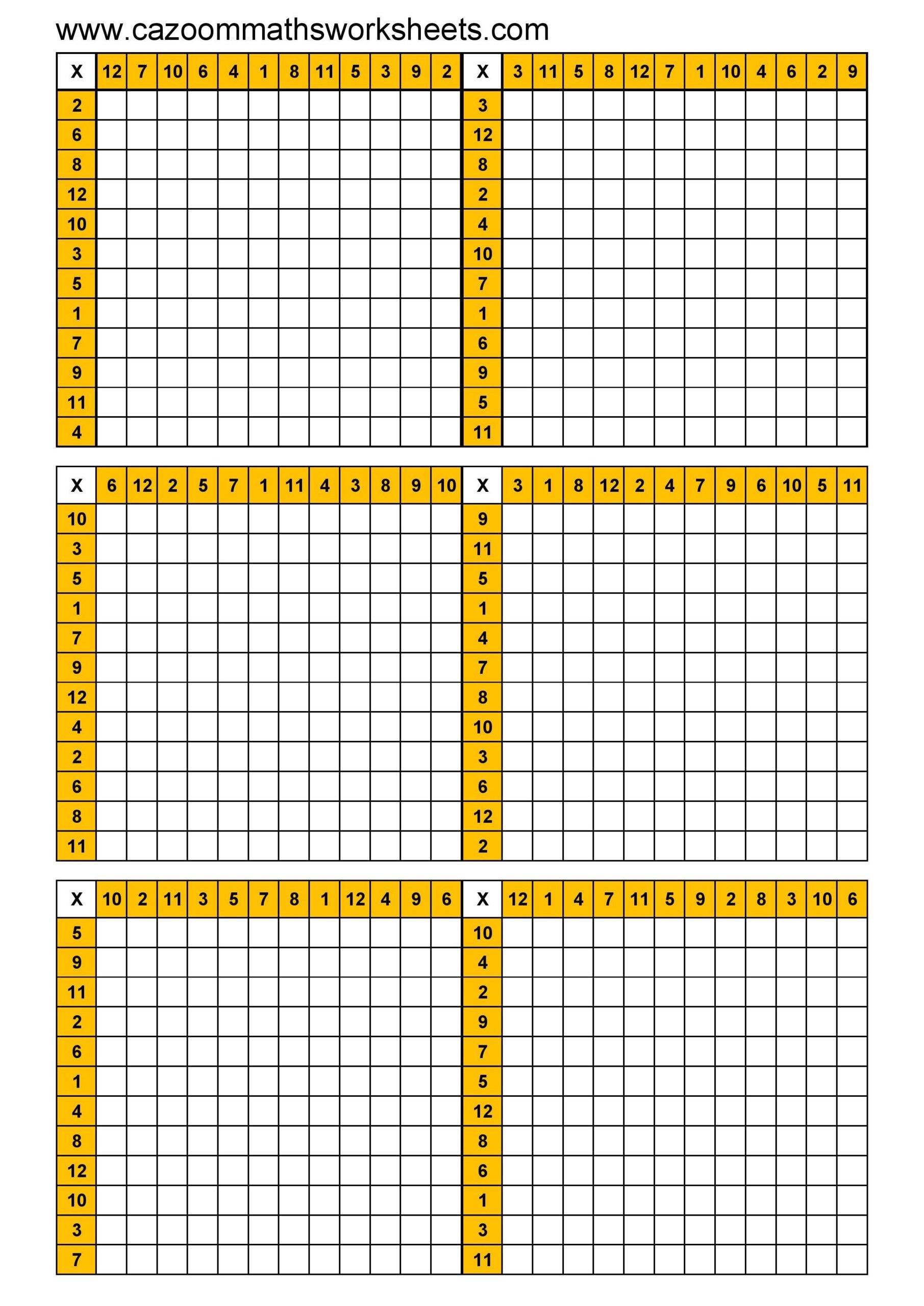
Having a multiplication chart at your fingertips can significantly enhance your math skills and boost your confidence, especially when tackling more complex problems. A Multiplication Chart Fill In Printable is a handy tool, not just for students but also for parents and educators who want to facilitate learning in a structured way. This resource typically comes in a simple, easy-to-read format that allows students to fill in the multiplication facts, reinforcing their understanding of the concepts.
Understanding the Layout of a Multiplication Chart
At first glance, a multiplication chart might seem straightforward, but its layout is designed to serve a specific purpose. Generally, the chart features rows and columns, where numbers from 1 to 12 (or higher) are listed along the top and side. This grid format allows users to easily find the product of two numbers by locating the row and column intersection.
For example, if you want to find the product of 6 and 7, you would locate 6 in the left column and 7 in the top row. The intersection of these two points reveals the answer, which is 42. This visual representation helps learners grasp the concept of multiplication as a form of repeated addition.
How to Fill In Your Multiplication Chart
Filling in a multiplication chart can be a fun and educational exercise. Here’s how to make the most of it:
- Start with the Basics: Begin with the numbers 1 through 10, as these are the foundation of multiplication. Write the products in the corresponding cells.
- Use Visual Aids: Color-coding different sections can help reinforce learning. For instance, you could use one color for products of 1 to 5 and another for 6 to 10. This helps in visual memory retention.
- Practice Regularly: Frequent practice is key to mastering multiplication. Make it a routine to fill in the chart a few times a week. This repetition reinforces memory and builds confidence.
- Incorporate Games: Turn filling in the chart into a game. For example, ask a friend or family member to quiz you on random multiplication facts, and fill in the chart as you go.
- Check Your Work: Once you’ve filled in the chart, it’s beneficial to go back and check your answers. This not only ensures accuracy but also helps you identify areas where you may need more practice.
When to Use a Multiplication Chart Fill In Printable
There are several scenarios where a Multiplication Chart Fill In Printable can be particularly useful:
- Homework Help: If you’re helping your child with their math homework, having a filled-out chart can provide a quick reference guide for multiplication facts.
- Classroom Activities: Teachers can use these printables during math lessons to facilitate group work. Students can collaborate to fill in the chart, sparking discussions about multiplication strategies.
- Test Preparation: Before quizzes or tests, students can fill in the chart as a study aid. The act of writing out the multiplication facts helps reinforce learning.
- Skill Development: For adults returning to school or needing a refresher, this printable can serve as a valuable tool to brush up on basic multiplication skills.
Quality Considerations for Your Printable
When downloading a Multiplication Chart Fill In Printable, pay attention to the quality of the file. Here are a few tips to ensure you get a high-quality resource:
- File Format: PDFs tend to be the best format for printables. They preserve the layout and prevent any reformatting issues that can occur with image files.
- Paper Size: Most charts are designed for standard letter size (8.5” x 11”). Make sure your printer settings are adjusted accordingly to avoid cutting off any parts of the chart.
- Print Quality: Use good-quality paper if you plan to laminate the chart for durability. Cardstock is often recommended, as it holds up better to repeated use.
- Color vs. Black and White: Decide if you want a color chart or black and white. Color can be more engaging, especially for younger learners, but black and white is often easier on the printer ink.
Additional Resources and Variations
Depending on your needs, you might find variations of the multiplication chart helpful. Here are a few options to consider:
- Blank Multiplication Charts: These are great for students who want to test their knowledge and fill in the chart from memory.
- Interactive Charts: Some online platforms offer interactive multiplication charts that can make learning more engaging through digital formats.
- Mini Charts: Smaller versions that can be used as flashcards or bookmarks, making it easier for students to carry them around for quick reference.
- Coloring Pages: Some printables combine learning with creativity, allowing students to color in sections of the chart as they complete them.
These variations can enhance the learning experience and cater to different styles of learning.