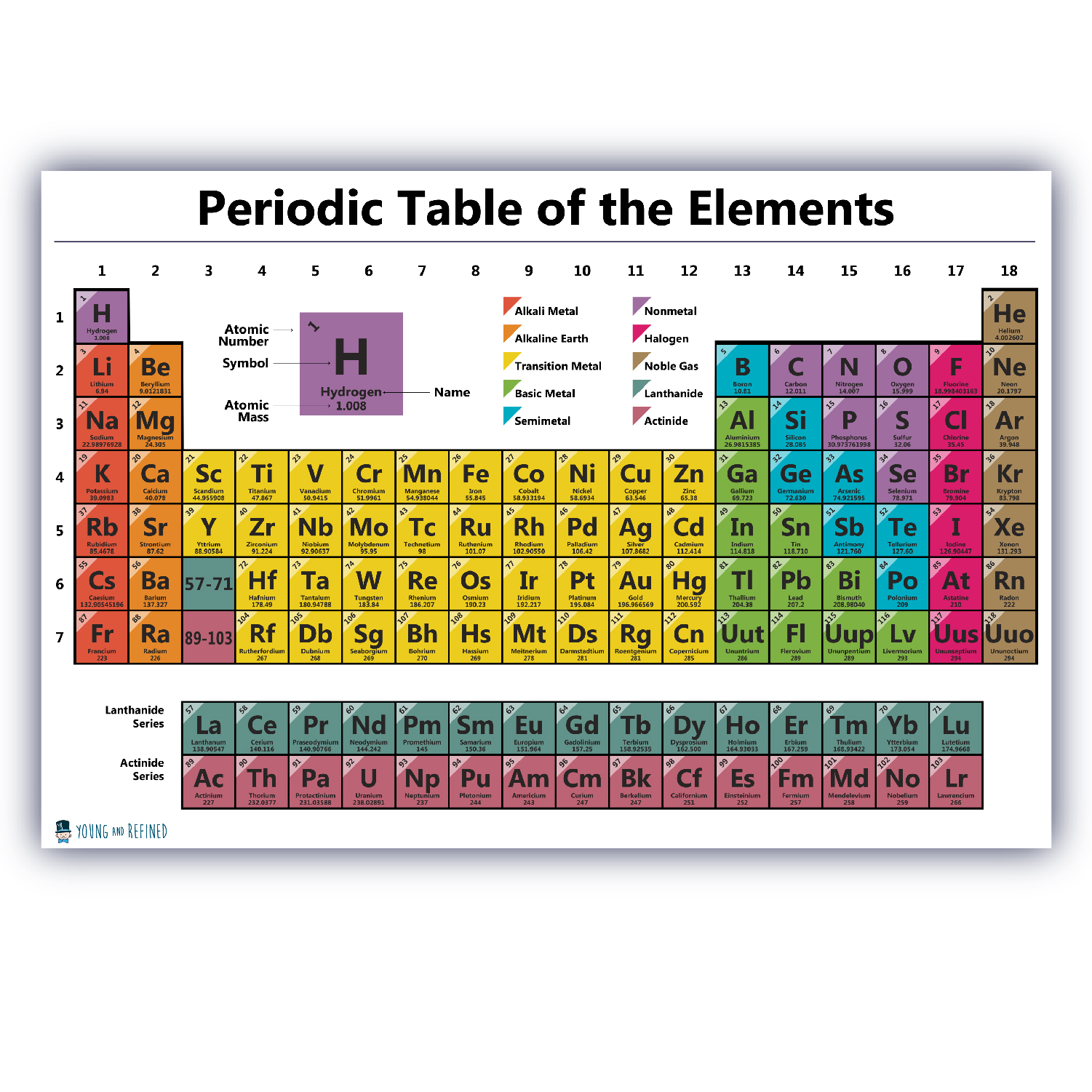
The Printable Periodic Chart Of Elements is available in a convenient size of 24 x 36 inches, making it an excellent resource for both students and educators. This chart organizes all known chemical elements in a visually appealing format that not only serves as a reference tool but also enhances the learning experience. If you are helping your child with homework or preparing for a chemistry class, this chart is designed to make understanding the elements straightforward and engaging.
Understanding the Layout of the Periodic Chart
The layout of the Printable Periodic Chart Of Elements is structured to represent the periodic table clearly and effectively. Each element is displayed in a cell that includes key information such as:
- Element Symbol: The one- or two-letter abbreviation for each element (e.g., H for Hydrogen).
- Atomic Number: This number indicates the number of protons in the nucleus of an atom of the element.
- Atomic Mass: The average mass of atoms of an element, which may vary based on the isotopes present.
This layout helps you quickly locate an element and understand its basic properties at a glance. The color coding often used in these charts also categorizes elements into groups, such as metals, nonmetals, and metalloids, making it easier to recognize patterns in their properties.
Digital Vs. Print: When to Use Each Format
You have the option to either print the periodic chart or use a digital version. Each format has its advantages depending on your needs.
Digital Format
Using a fillable PDF allows you to interact with the chart directly on your computer or tablet. This is particularly useful for digital note-taking or during online classes. You can highlight elements, add notes, or even create custom groupings based on your study requirements.
Print Format
On the other hand, printing the chart provides a tangible resource for study sessions. You can hang it on a wall or keep it in a binder for easy reference during homework or projects. Using a high-quality paper, like cardstock, ensures durability if you plan to use it frequently.
Practical Applications of the Printable Periodic Chart
The Printable Periodic Chart Of Elements can be used in various ways to enhance learning and organization in both home and classroom settings:
- Homework Help: If your child is struggling with chemistry, having a physical chart can help them visualize the relationships between elements.
- Study Tool: Encourage your child to use the chart for memorization exercises. For instance, they can cover the symbols and try to recall the corresponding element names and atomic numbers.
- Science Projects: This chart serves as a foundational tool for any project involving elements, helping students to identify and classify the materials they are studying.
Choosing the Right Size and Quality for Printing
When printing your chart, consider the following tips to ensure the best quality:
- Paper Size: The standard size for most printable periodic charts is 24 x 36 inches. This size allows for clear visibility of the elements and their information.
- Paper Type: For durability, use a heavier paper, such as 100 lb cardstock. This type will hold up better if you plan to handle it often or display it on a wall.
- Printer Settings: Adjust your printer settings to ensure the best quality print. If you have access to a larger format printer, that often produces better results for larger charts.
Additional Resources for Learning Chemistry
In addition to the Printable Periodic Chart Of Elements, consider incorporating other resources to make chemistry more engaging for your family:
- Worksheets and Quizzes: Look for downloadable worksheets that allow students to practice identifying elements and their properties.
- Interactive Apps: Several mobile applications offer interactive periodic tables with additional features like quizzes and element details.
- Coloring Pages: For younger children, coloring pages of the periodic table can make learning fun and visually stimulating.
By using a variety of resources alongside the periodic chart, you can create a comprehensive learning environment that fosters curiosity and understanding of chemistry.