Understanding how to read and use a chord chart can be a useful option for any ukulele player. The Free Printable Uke Chord Chart is an invaluable resource that helps you quickly reference the chords you need while playing your favorite songs. Whether you’re a beginner just starting out or a seasoned player looking for a handy tool, this chart offers an organized way to enhance your practice sessions.
What is a Uke Chord Chart?
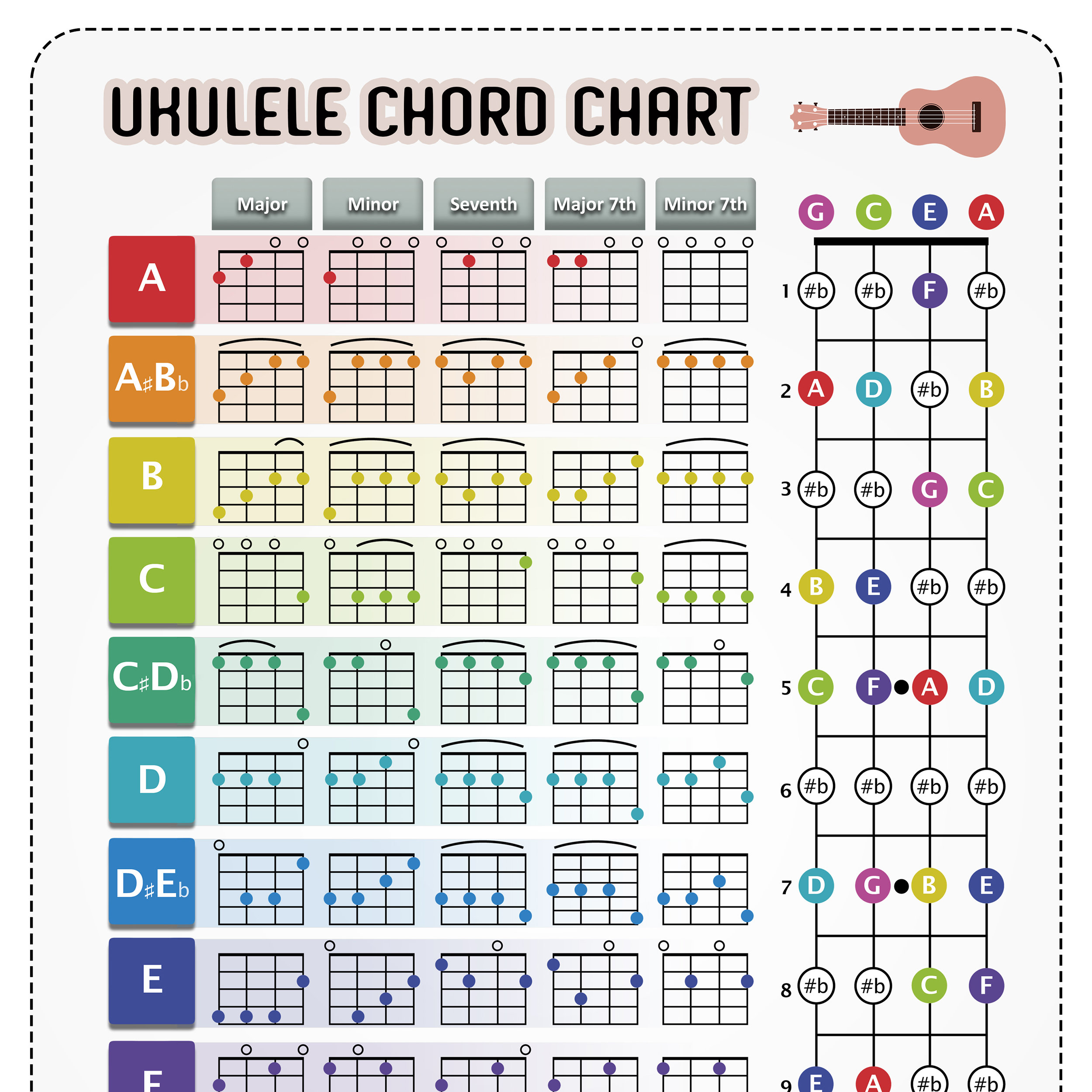
A uke chord chart is a visual representation of various chords you can play on the ukulele. It typically displays chord diagrams that show where to place your fingers on the fretboard for each chord. The Free Printable Uke Chord Chart is designed to fit on a single page, making it easy to print and hang on your wall or keep in your music folder.
Who Can Benefit From the Uke Chord Chart?
This resource is perfect for a wide range of players, including:
- Beginners: If you’re just starting, having a chord chart can help you learn the basics without feeling overwhelmed.
- Parents teaching kids: This chart is a great way to introduce music to your children. It simplifies learning and makes practice fun.
- Experienced players: Even if you know your chords, a chart can be handy for quick references, especially when learning new songs.
How to Read the Uke Chord Chart
Reading the Free Printable Uke Chord Chart is straightforward. Here’s how to interpret the information:
- Chord Diagrams: Each chord is represented by a diagram that shows the fretboard. The vertical lines represent the strings, and the horizontal lines represent the frets.
- Fingering: Dots on the diagram indicate where to place your fingers. Numbers may be included to show which fingers to use (1 for index, 2 for middle, etc.).
- Open Strings: An “O” above a string means you play that string open, while an “X” means you do not play that string at all.
Tips for Using Your Uke Chord Chart
To make the most of your Free Printable Uke Chord Chart, consider these tips:
- Print in Color: If possible, print the chart in color for better visibility. This can help you quickly identify chords.
- Use Cardstock: For durability, print your chart on cardstock. This material stands up better to wear and tear.
- Laminating: If you want it to last longer, consider laminating your chart. This way, you can easily wipe it clean if needed.
Incorporating the Chart Into Your Routine
Integrating the Free Printable Uke Chord Chart into your practice routine can streamline your learning process. Here’s how to do it effectively:
- Daily Practice: Set aside a few minutes each day to practice the chords on the chart. Familiarizing yourself with finger placements will improve your muscle memory.
- Song Selection: Choose a few simple songs that use the chords on your chart. Familiar tunes can make practice more enjoyable and relatable.
- Group Play: If you’re with friends or family who play instruments, use the chart during group jam sessions. It’s a great way to play together and learn from each other.
Downloading and Printing Your Uke Chord Chart
To download your Free Printable Uke Chord Chart, follow these simple steps:
- Visit the Resource Website: Navigate to the printable-resource website that offers the chart.
- Locate the Chart: Search for the “Free Printable Uke Chord Chart” on the site.
- Download: Click on the download link, and save the PDF file to your computer or device.
- Print: Open the PDF and print it using your home printer. Make sure your printer settings are set to print at 100% for accurate sizing.
Customizing Your Uke Chord Chart
You might find that you want to tailor your Free Printable Uke Chord Chart to suit your personal needs. Here are a few ways to customize it:
- Add Notes: Use a pen to jot down any personal notes or tips directly on the chart. This can be especially helpful for specific songs you’re learning.
- Highlight Favorite Chords: If there are certain chords you use more often, consider highlighting them. This can make finding them quicker during practice.