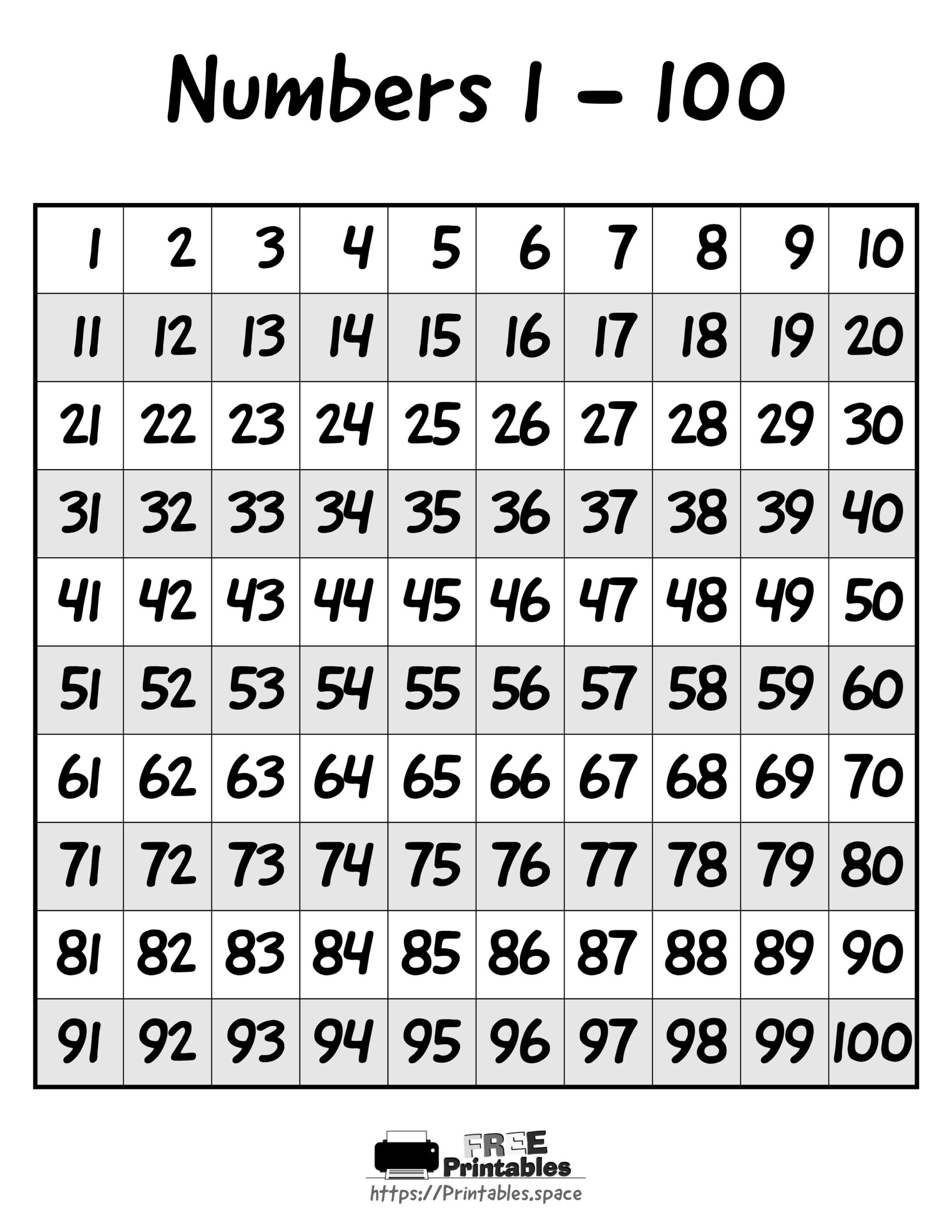
When it comes to helping kids learn their numbers, having a 1-100 Free Printable Chart can be a useful option. This resource is an excellent tool for visual learners, making the process of counting and number recognition much more engaging. In this article, I’ll walk you through how to effectively use this chart, from downloading to printing, and offer tips on how it can fit into your routine.
Understanding the 1-100 Printable Chart
The 1-100 Free Printable Chart is designed to display the numbers 1 through 100 clearly and concisely. Typically, it features a grid format that allows children to see the numbers in a structured way. This layout helps kids recognize patterns, understand sequencing, and even engage in simple math exercises.
If you’re wondering how to incorporate this into your child’s learning, think about the age group you’re working with. For preschoolers and early elementary children, this chart can serve as a daily reference point for number recognition. As they grow, it can transition into a tool for addition and subtraction practice.
Where to Find and Download the Chart
Finding the right printable chart is easy. Many websites offer free downloads of educational resources. Simply search for “1-100 Free Printable Chart” on your preferred search engine, and you’ll find various options to choose from. Look for a reputable site that offers high-resolution PDFs to ensure the best printing quality.
Once you’ve selected a chart, downloading it is usually straightforward. Most sites will have a download button that allows you to save the file directly to your computer or device. I recommend checking the file format; a PDF is usually the best choice as it preserves the formatting and ensures that the chart prints correctly.
Printing Tips for Best Results
When it comes to printing your chart, there are a few things to keep in mind. If you’re using a home printer, make sure you have enough ink and the correct paper size. Most printable charts are designed for standard letter size (8.5 x 11 inches), but double-check the specifications to avoid any surprises.
Here are some quick tips for printing:
- Paper Type: Use bright white paper for the best contrast. If the chart will be used frequently, consider printing on cardstock for durability.
- Orientation: Most charts are portrait-oriented, but if yours is landscape, make sure to adjust your printer settings accordingly.
- Quality Settings: Choose a high-quality print setting to ensure the numbers are clear and easy to read.
Setting Up a Learning Environment
Once you’ve printed your chart, think about where it will be displayed. A visible location, such as a wall in a playroom or a corner of your kitchen, can serve as a constant reminder for your kids. You could also laminate the chart to make it more durable and able to withstand daily use.
Consider creating a mini learning corner with other resources, such as flashcards or counting manipulatives. This setup not only encourages learning but also makes it fun and interactive. Having a dedicated space for learning can help your child feel more engaged and motivated.
Using the Chart in Daily Activities
Integrating the 1-100 Free Printable Chart into your daily routine can enhance your child’s understanding of numbers. Here are a few engaging activities you can try:
- Counting Games: Use the chart as a reference while counting objects around the house. This could be anything from toys to snacks.
- Number Hunt: Challenge your child to find specific numbers on the chart. This can help improve their number recognition skills.
- Math Practice: As your child progresses, you can use the chart for simple addition and subtraction problems. For example, ask them to find the sum of 5 and 3 by counting up the numbers on the chart.
Additional Activities to Reinforce Learning
Incorporating hands-on activities can also reinforce number recognition. Here are some ideas to supplement the chart:
- Coloring: Encourage your child to color in the numbers on the chart as they learn them. This can make the process more engaging and memorable.
- Flashcards: Create flashcards using the numbers from the chart. This will allow for quick recognition practice and can be turned into a fun game.
- Songs and Rhymes: Use songs or rhymes that involve counting. This auditory approach can help reinforce what they see on the chart.