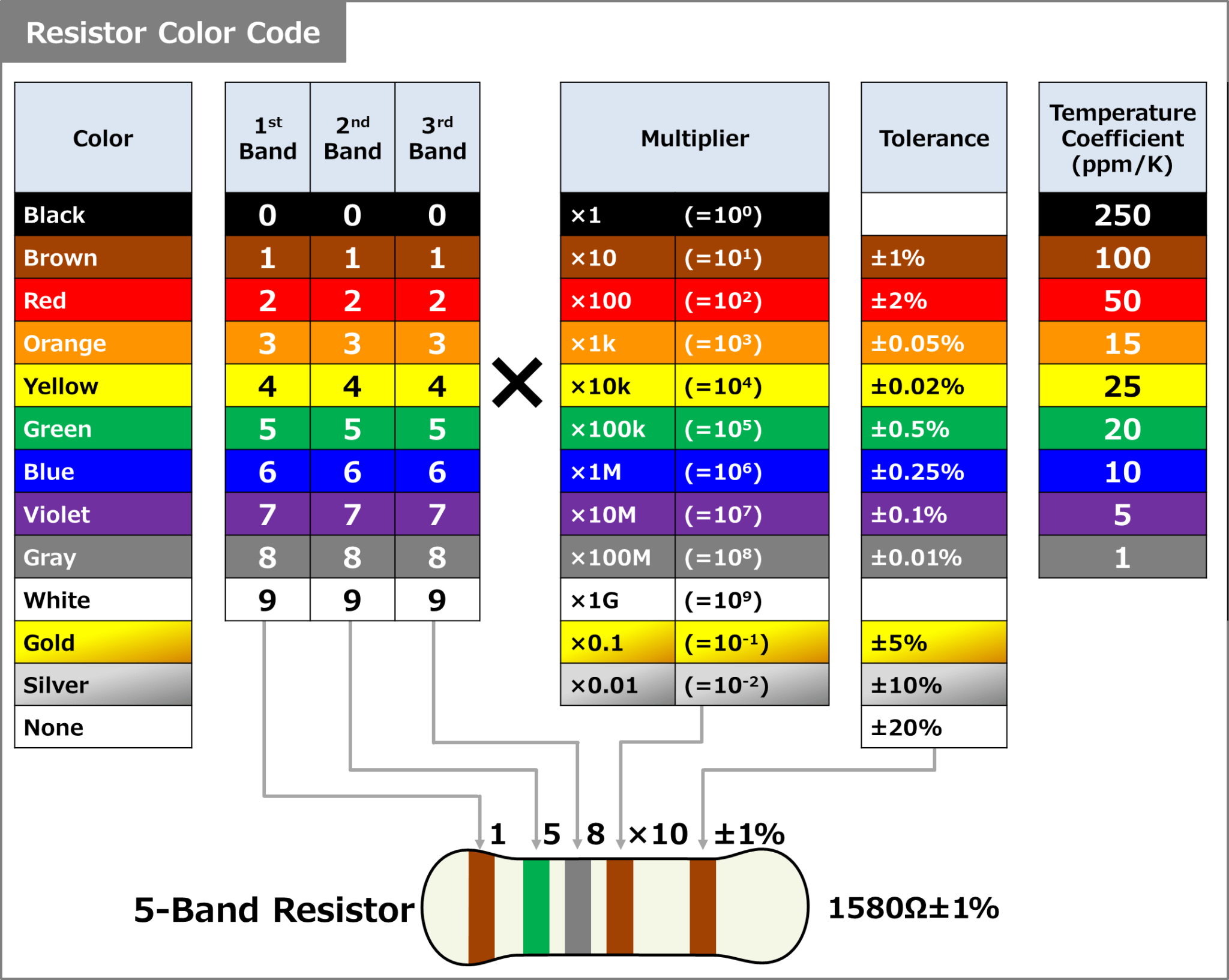
Understanding resistor values can be a challenge, especially if you’re new to electronics. A Resistor Color Code Chart Printable can help simplify this process by providing a visual reference for interpreting resistor color bands. This handy tool allows you to quickly determine the resistance value and tolerance of resistors, making it an invaluable resource for hobbyists, students, and professionals alike.
What is a Resistor Color Code Chart?
A resistor color code chart is a tool that uses colored bands on a resistor to indicate its resistance value. Each color corresponds to a specific number, which helps you decode the resistance. Typically, resistors have four or five color bands, with the first two (or three) bands representing significant digits, the next band indicating a multiplier, and the last band representing tolerance.
A printable chart allows you to have a reference handy without needing to memorize the colors. You can keep it in your workshop, on your desk, or even in your toolbox. This way, you can quickly check resistor values while working on your projects.
How to Use the Resistor Color Code Chart
Using the Resistor Color Code Chart Printable is straightforward. Here’s how you can easily decode a resistor’s value:
- Identify the Color Bands: Look at the colored bands on the resistor. Note the colors in order from left to right.
- Refer to the Chart: Using the printable chart, match each color to its corresponding number.
- Calculate the Resistance:
- For four-band resistors: The first two bands give you the first two digits, the third band is the multiplier (10 raised to the power of the number indicated), and the fourth band indicates tolerance.
- For five-band resistors: The first three bands provide the first three digits, followed by the multiplier and tolerance.
For example, if you see a resistor with bands of red, yellow, brown, and gold, you would find:
- Red = 2
- Yellow = 4
- Brown = x10
- Gold = ±5% tolerance
This means the resistor has a value of 240 ohms with a tolerance of 5%.
Where to Download Your Resistor Color Code Chart Printable
Finding a reliable source for your Resistor Color Code Chart Printable is essential. Many websites offer free downloads of these charts in various formats, including PDF and image files. Here are some tips on what to look for:
- PDF Format: A PDF version ensures that the chart maintains its formatting when printed, avoiding any reformatting issues that can occur with image files.
- High Resolution: Look for charts with high resolution to ensure that the colors are clear and vibrant when printed.
- Size Options: Some sites offer different sizes, so you can choose one that fits your workspace best. A standard letter size (8.5 x 11 inches) is typically a good choice for most printing needs.
You can easily search for “Resistor Color Code Chart Printable” on Bing or Google to find a variety of options.
Printing Tips for Your Resistor Color Code Chart
Once you’ve downloaded your Resistor Color Code Chart Printable, printing it correctly is crucial to ensure clarity and usability. Here are some practical tips:
- Use Quality Paper: For durability, consider printing on cardstock instead of regular printer paper. Cardstock holds up better if you plan to laminate the chart for long-term use.
- Orientation Matters: Portrait layout tends to work better for most home printers, but if your chart is wide, landscape may be a better option.
- Check Print Settings: Before printing, go to your print settings and ensure that the scale is set to 100% to avoid resizing the chart, which can distort the colors and make them harder to read.
- Consider Lamination: If you expect to use the chart frequently, laminating it can protect it from wear and tear, allowing you to wipe it clean if needed.
Creative Uses for Your Resistor Color Code Chart
Once you have your Resistor Color Code Chart Printable ready, think about how you can use it creatively:
- Framing: You might choose to frame the chart for a more polished look. This can be especially appealing if you want to display it in your workspace or classroom.
- Gifts: If you know someone who is into electronics, giving them a nicely printed and framed version can make a thoughtful gift.
- Portfolio: If you’re working on a project that requires various resistors, keep a portfolio of charts or notes alongside your work. This way, you can easily refer to the values as you build your circuits.
By incorporating your Resistor Color Code Chart into your workspace or projects, you can enhance both your efficiency and your enjoyment of electronics.
Ensuring Accuracy and Reliability
To get the most out of your Resistor Color Code Chart Printable, it’s essential to ensure the information is accurate. Always double-check the values you derive from the chart against known standards, especially if you’re working on critical projects. If you’re unsure about a resistor’s value, consider using a multimeter to verify the resistance.
Final Practical Tip
When downloading your Resistor Color Code Chart Printable, look for a reputable site that offers educational resources. This ensures you’re getting a reliable chart that adheres to standard color coding practices. Having a trustworthy reference at your fingertips can significantly enhance your electronics projects and learning experience.