Using a Printable Eye Chart 20 Feet can be a practical way to check your vision without needing a trip to the eye doctor. This resource is particularly useful for families wanting to monitor eyesight at home or for individuals who want to keep track of their visual health. The eye chart’s design allows for easy printing and use, making it accessible for everyone. Let’s explore how to effectively use this eye chart, its layout, and tips for maintaining your eye health.
Understanding the Layout of the Eye Chart
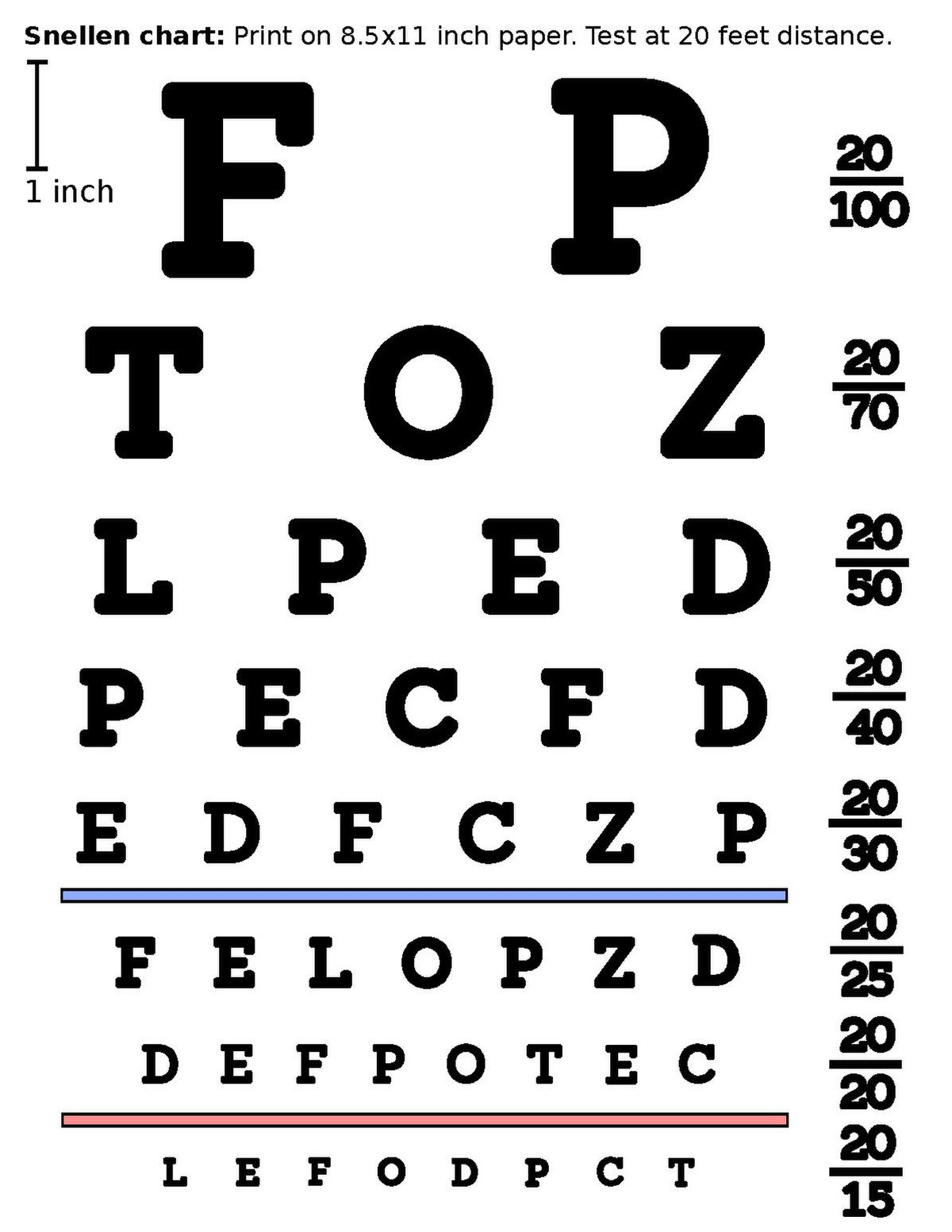
The Printable Eye Chart 20 Feet typically features letters arranged in rows, with larger letters at the top and progressively smaller letters as you move down. This design follows the standard format used in vision tests, allowing you to assess visual acuity accurately.
Key Elements of the Eye Chart
- Letter Size: Each row contains letters that decrease in size. The top row often includes the largest letters, which are easily readable for individuals with good vision. The smallest letters at the bottom are meant for those with better acuity.
- Spacing: The letters are spaced out evenly, which helps in making it easier to distinguish between them when testing vision.
- Measurement: The chart is usually designed to be viewed from a distance of 20 feet. Ensuring you maintain this distance is crucial for accurate results.
How to Use the Eye Chart Effectively
Using the eye chart effectively involves more than just printing it out. Here’s how to do it correctly:
- Print the Chart: Make sure to print the eye chart at 100% scale. Sometimes, printing software can shrink or enlarge the image, which affects accuracy. Use a standard letter size (8.5″ x 11″) for best results.
- Set Up the Test Area: Position the chart at eye level on a wall or a flat surface. Ensure there’s adequate lighting to avoid shadows that can obscure visibility.
- Measure the Distance: Stand exactly 20 feet away from the chart when testing vision. If you don’t have that space, you can use a smaller size chart designed for 10 feet, but it will require adjustments in the interpretation of results.
- Cover One Eye: To get an accurate reading, cover one eye while reading the letters. After completing the test with one eye, switch and test the other eye.
- Record Results: It’s helpful to keep a log of your results over time. You can note the smallest line of letters you can read accurately for each eye. This will help track any changes in your vision.
Tips for Maintaining Eye Health
While using a Printable Eye Chart 20 Feet is a great way to monitor your vision, maintaining overall eye health is equally important. Here are some practical tips:
- Regular Breaks: If you spend a lot of time on screens, remember the 20-20-20 rule: every 20 minutes, take a 20-second break to look at something 20 feet away. This helps reduce eye strain.
- Diet and Nutrition: Eating a balanced diet rich in vitamins C and E, zinc, and omega-3 fatty acids can help maintain eye health. Foods like leafy greens, fish, and nuts are excellent choices.
- Protective Eyewear: If you’re often in bright environments or working with screens, consider wearing sunglasses and blue light glasses to protect your eyes from harmful rays.
- Regular Check-ups: Despite the convenience of a printable eye chart, regular visits to an eye care professional are essential. They can provide comprehensive exams that an eye chart at home cannot replace.
When to Seek Professional Help
If you notice any significant changes in your vision, such as blurred vision, difficulty seeing at night, or persistent eye strain, it’s important to consult with an eye care professional. They have the tools and expertise to conduct a thorough examination and provide tailored recommendations.