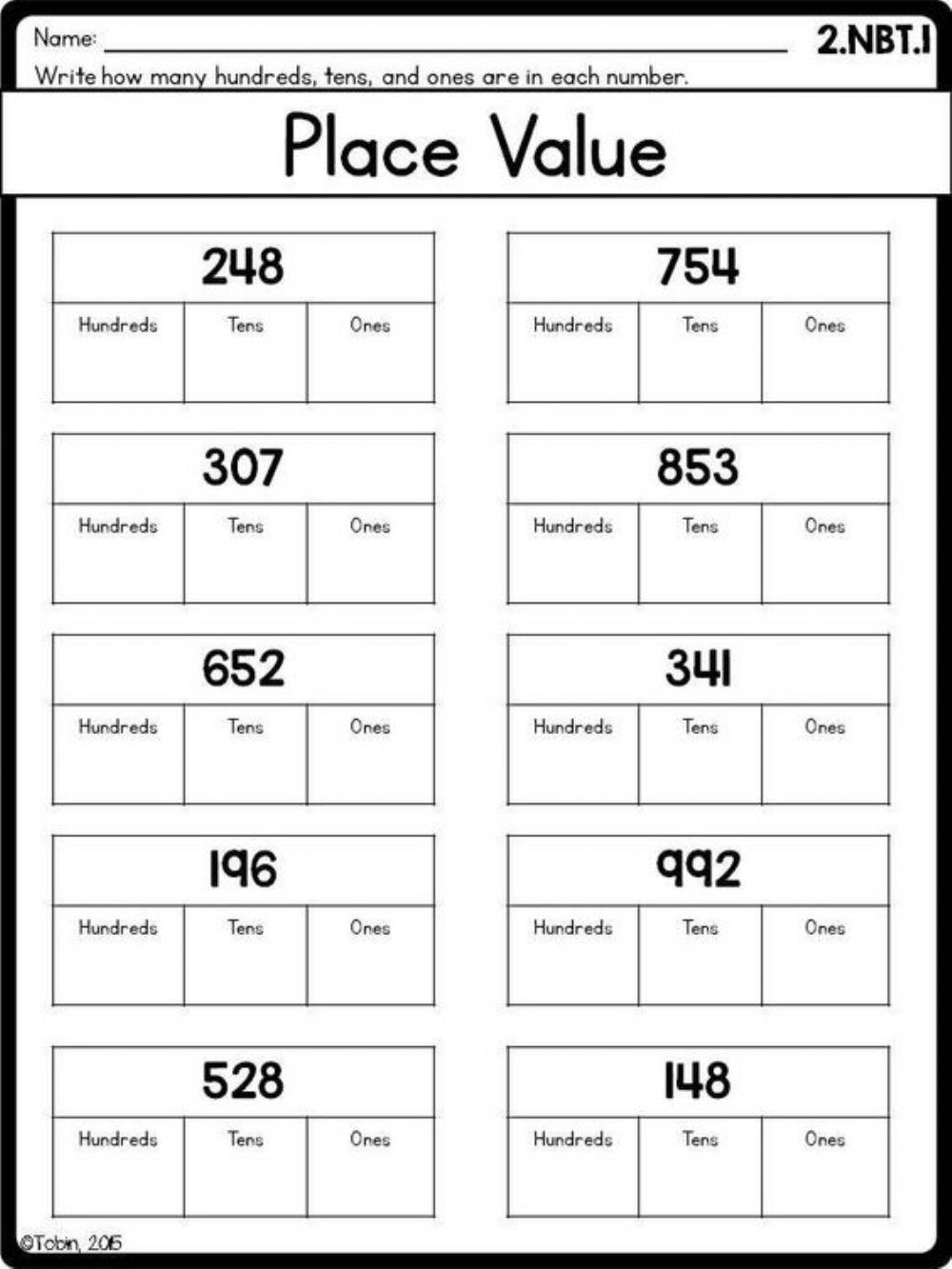
Understanding place value is a fundamental math skill that 2nd graders need to master, and a 2nd Grade Place Value Chart Printable can be a tremendous asset in this learning process. Typically formatted as a simple grid, this chart visually breaks down numbers into their respective place values, such as ones, tens, and hundreds. By providing a clear visual reference, it helps children recognize the value of each digit in a number, reinforcing their understanding of how numbers are structured.
What is a Place Value Chart?
A place value chart serves as a visual aid that illustrates how numbers are composed. In a standard 2nd Grade Place Value Chart Printable, you will typically find columns labeled for each place value (ones, tens, hundreds, etc.). For example, in the number 345, the ‘3’ represents three hundreds, the ‘4’ represents four tens, and the ‘5’ represents five ones.
This format not only helps students identify the values of digits within multi-digit numbers but also assists in performing operations like addition and subtraction by lining up numbers according to their place values. The layout allows for easy filling in and manipulation, making it a versatile tool for both classroom and home use.
How to Use the Place Value Chart
Using a place value chart is straightforward, but there are effective strategies to maximize its benefits.
Filling it Out
- Start with a Number: Choose a number you wish to break down. For instance, if you select 482, write it in the appropriate section.
- Identify Each Digit’s Value: Place the digits in the corresponding columns. Write ‘4’ in the hundreds column, ‘8’ in the tens column, and ‘2’ in the ones column.
- Visualize: This visual representation helps students see that 482 is composed of 4 hundreds, 8 tens, and 2 ones.
Practice Activities
Consider incorporating fun activities with the chart to deepen understanding:
- Number Matching: Call out random numbers and have your child fill in the chart.
- Building Numbers: Provide digits and ask your child to create the largest or smallest possible number using the chart.
By making the learning process interactive, you not only engage your child but also enhance their retention of the concept.
Where to Use the Place Value Chart
This chart can be used in various settings, from the classroom to home study sessions. Here are a few practical applications:
Homework Help
When your child encounters homework involving larger numbers, refer to the place value chart. It acts as a supportive tool to visualize their work, making it easier to tackle complex problems.
Classroom Activities
Teachers can incorporate the chart into group activities, where students work together to fill out their charts based on given numbers. This promotes collaboration and peer learning.
At Home
Incorporate the chart into daily routines, such as counting items during grocery shopping or estimating costs. This real-world application reinforces what they learn in a fun and engaging way.
Tips for Printing and Using Your Chart
When you’re ready to print the 2nd Grade Place Value Chart Printable, here are a few tips to ensure you get the best results:
Paper Choice
Opt for cardstock or heavier paper if you plan to use the chart multiple times. This will ensure durability, especially if you want to laminate it for long-term use.
Print Settings
Adjust your printer settings to ensure that the chart prints in its intended size. A standard letter size (8.5 x 11 inches) typically works well for most home printers. Make sure to check the scaling option to avoid any unwanted resizing.
Accessibility
Consider making multiple copies if you have more than one child or want to keep the chart handy for different subjects. Having several copies on hand can facilitate quick access during study sessions.
Common Mistakes to Avoid
Even with a helpful resource like the 2nd Grade Place Value Chart Printable, there are common pitfalls parents and children can encounter:
Misreading the Values
Ensure that your child understands that each column represents a different place value. Confusion often arises when they misplace digits or misunderstand their values. Take the time to explain that the position of a digit affects its value drastically.
Skipping Practice
It’s tempting to use the chart only when needed, but regular practice is crucial. Encourage your child to use the chart daily or weekly to reinforce their understanding of place values.
Relying Solely on the Chart
While the chart is a fantastic tool, it shouldn’t be the only method of learning. Complement the use of the chart with various activities, such as number games or hands-on manipulatives, to build a well-rounded understanding of place value.